
When I first came to Prainha over twenty years ago, it was still relatively common to see women working on pieces of labirinto embroidery — a form of drawn thread work with a strong presence in North East Brazil, particularly in Ceará. The income the women gained from this work helped sustain families who otherwise depended on fishing, never a predictable livelihood.
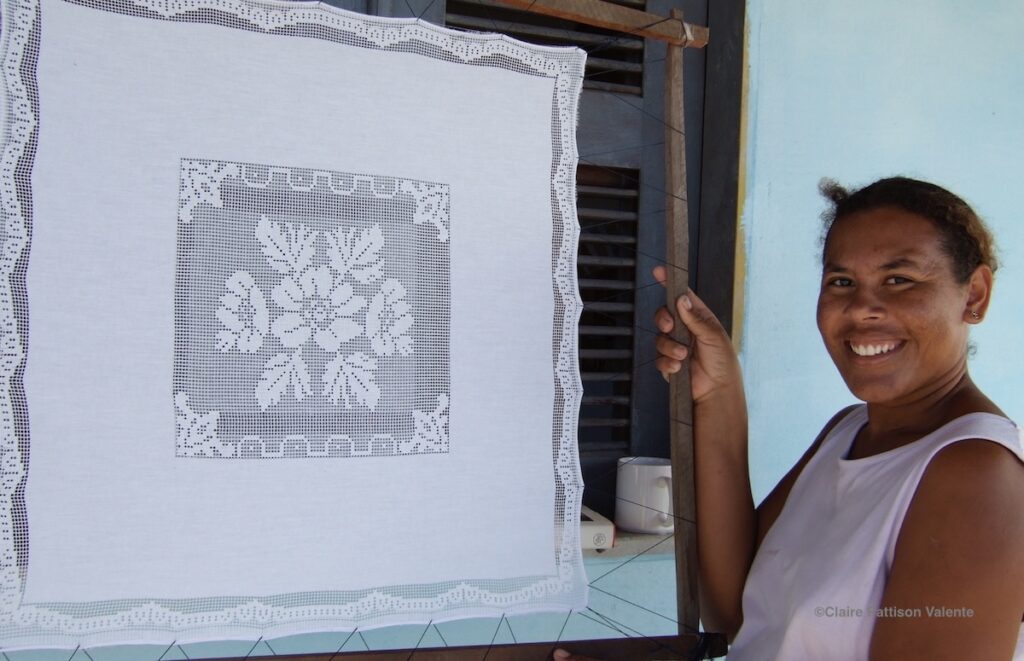
Labirinto belongs to an ancient and widespread family of decorative techniques known variously as openwork, whitework, cutwork, or drawnwork. Examples have been found on Egyptian mummies and across many countries, particularly in Europe. While regional styles differ, the basic technique involves removing threads from a woven fabric — often linen — then wrapping or weaving the remaining threads into decorative patterns. It is a tradition with deep roots worldwide:
A non exhaustive list of countries and styles includes:
🇺🇦 Ukraine — Merezhka / Vyrizuvannya. 🇷🇴 Romania — Firele Trase / Șabac / Tăietură. 🇨🇾 Cyprus — Lefkaritika.
🇮🇹 Italy — Reticella / Punto in Aria / Punto Tirato. 🇩🇪 Germany — Schwalm / Point de Saxe. 🇸🇪 Sweden — Utdragsöm / Hålsöm / Vitbroderi.
🇬🇧 United Kingdom — Hardanger / Ayrshire / Broderie Anglaise / Ruskin Lace. 🇮🇪 Ireland — Carrickmacross / Limerick.
🇩🇰 Denmark — Hedebo 🇳🇴 Norway — Hardanger. 🇵🇹 Portugal — Crivo / Bordado de Guimarães / Bordado da Madeira.
🇨🇳 China — Ribbon work. 🇮🇳 India — Doori embroidery. 🇲🇽 Mexico — Deshilado. 🇧🇷 Brazil — Labirinto / Crivo.
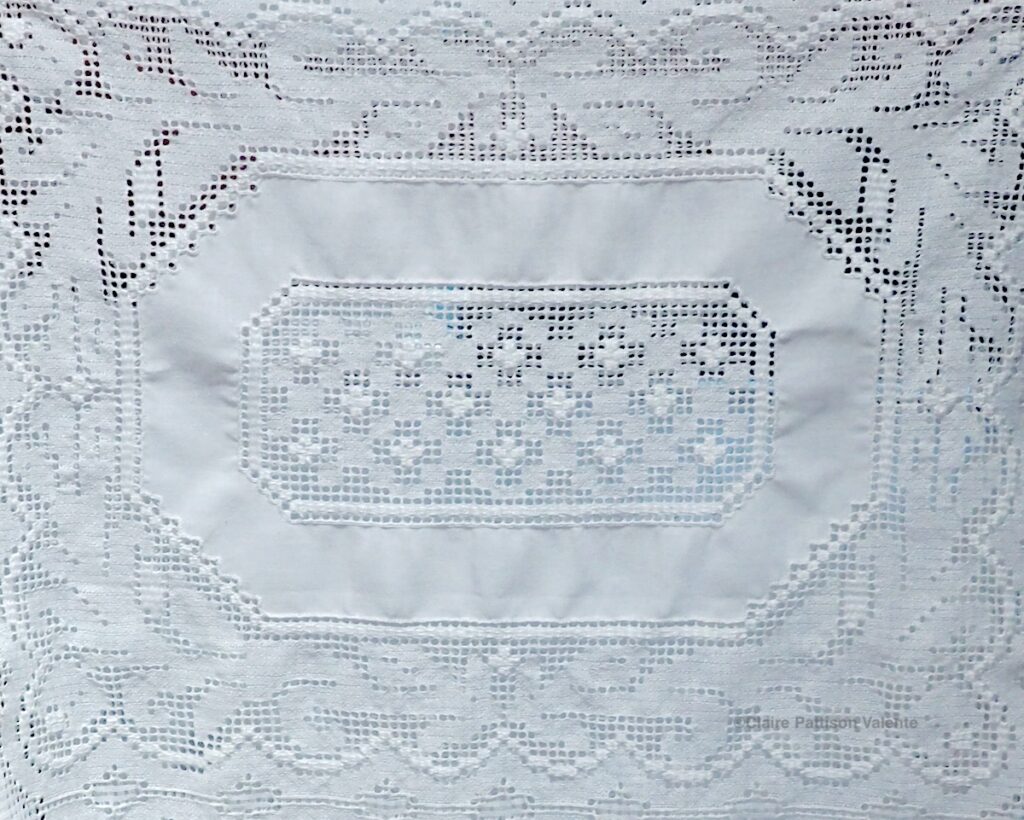
How labirinto arrived in Brazil is a question with several competing answers.
The most widely cited theory holds that it came during the 17th century with immigrants from Madeira, a Portuguese territory where crivo is an ancient tradition. Another points to the Dutch colonial period (1630–1654), noting similarities with Belgian embroidery — a theory I’ve heard from labirinteiras in Majorlândia, a neighbouring district where many people claim Dutch ancestry. A third traces it directly to crivo lusitano, a technique common across many regions of Portugal. Like many things, I suspect the truth is a blend of these histories. Artisans have always loved to share what they know.
The Jesuit missionaries of the 16th to 18th centuries — mostly from Spain, France, Italy and Portugal — also played a significant role, teaching European needlework skills to Indigenous women for the production of vestments for the church, and as part of their efforts to convert the population to Catholicism. As the Jesuits were active across Asia, Africa and the Americas simultaneously, techniques from many cultures may well have cross-pollinated through their teaching.
From the 1880s onwards, industrialisation steadily eroded the market for handmade crafts worldwide. Mass-produced clothing, which took hold in the 1970s, dealt a further blow. Labour-intensive needlework — most often the work of women — became increasingly difficult to sell for anything close to a fair return.
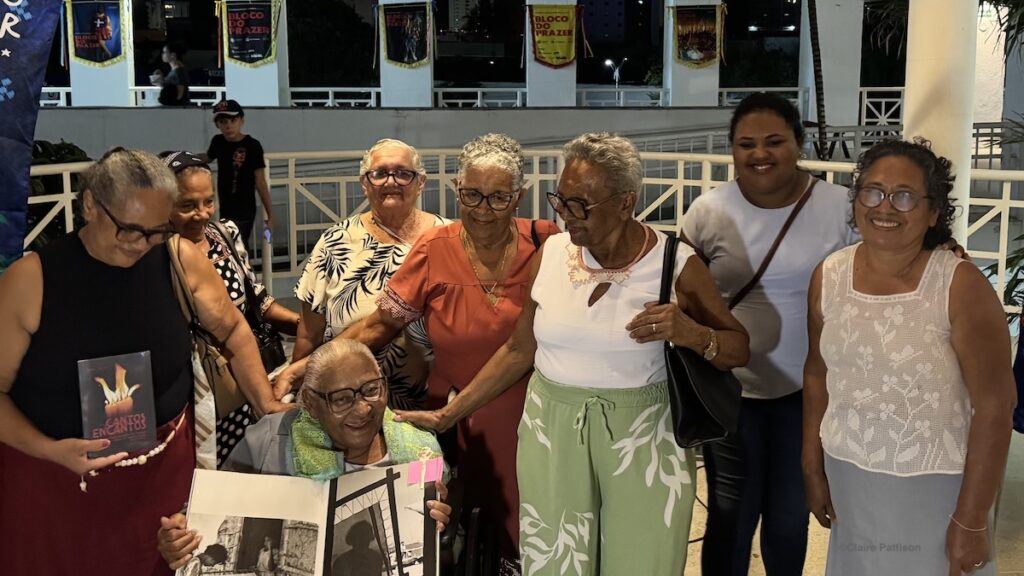
The Dragão do Mar Center of Art and Culture in Fortaleza recently held a talk on labirinto as part of a broader programme. Among the speakers were Mestra Bia from Aracati, my friend Aila from Prainha, and researcher Izabel Gurgel, who has spent many years studying labirinto in Ceará
Izabel spoke of how vital this work has been for generations of women in the region — many of whom, in the days before electricity (which only reached Prainha do Canto Verde in 1999), worked by lamplight after sunset, which as we’re so close to the equator falls daily at around 6pm, year round. Through their labour, these women and girls kept their families from abject poverty at a time when there was little or no governmental support.
Mestra Bia, now 85, spoke with deep emotion about what labirinto means to her — her love of teaching, her pride in the work itself, and her hopes and fears for its future. Some of the elderly women in the audience were daughters of the woman who, many decades ago, had taught Mestra Bia’s mother the craft, which was then passed on to her at the age of eight. With tears in her eyes, she recalled the first thing she bought with her own labirinto earnings: a block of rapadura (jaggery) and some sweetcorn for her mother to make mingau, a kind of porridge.
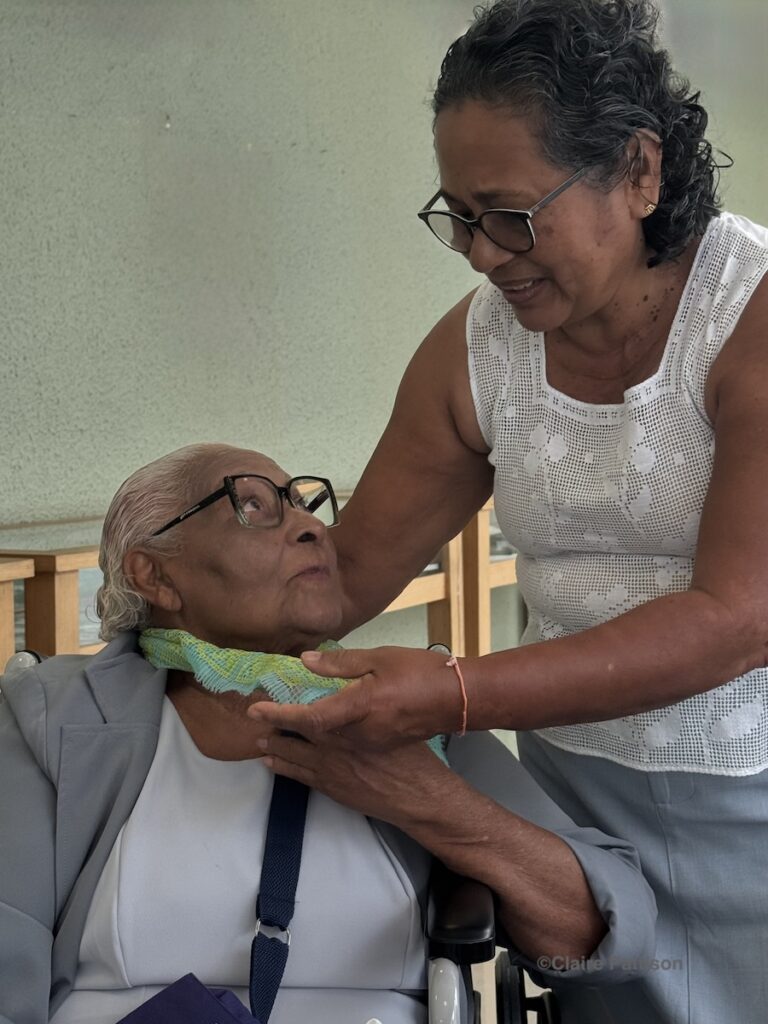
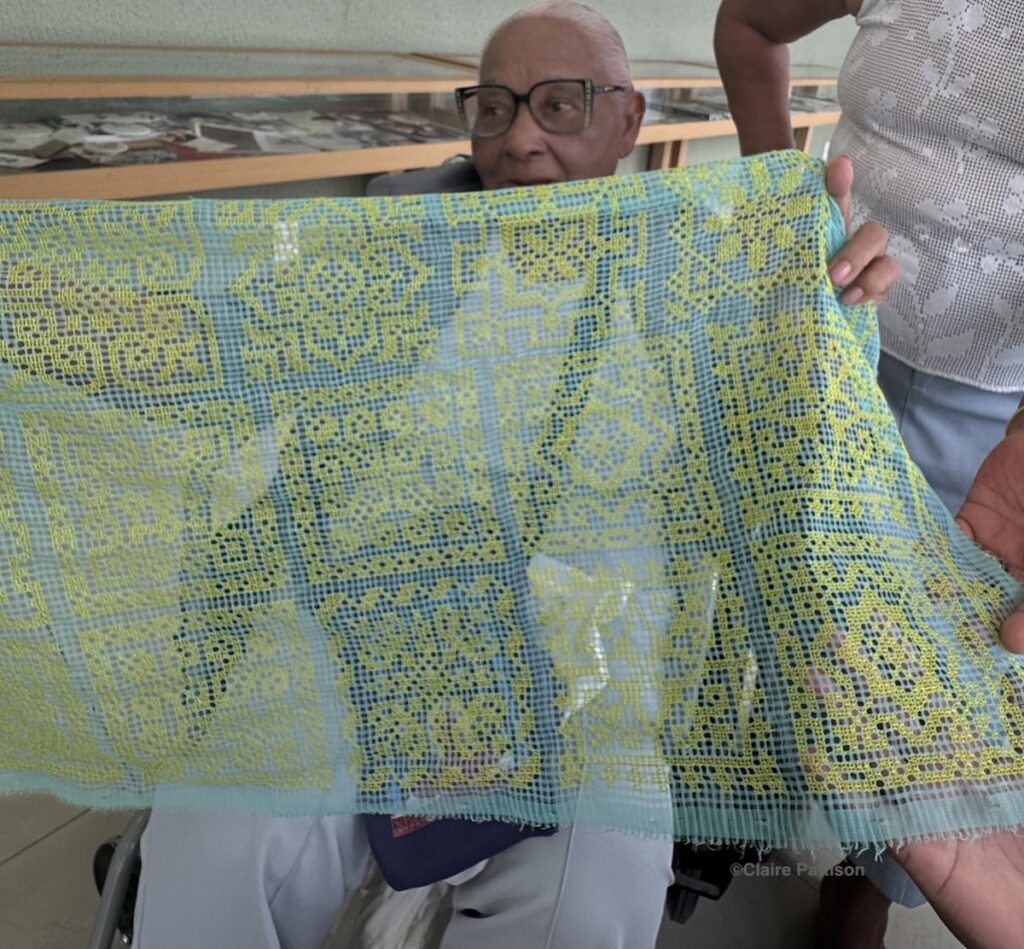
Mestra Bia had brought with her a beautiful piece of delicate labirinto. It reminded me immediately of the decorative ceramic tiles seen on Aracati’s older buildings, in the style of those found in Portugal and Mestra Bia confirmed that yes, the tiles were exactly her inspiration.
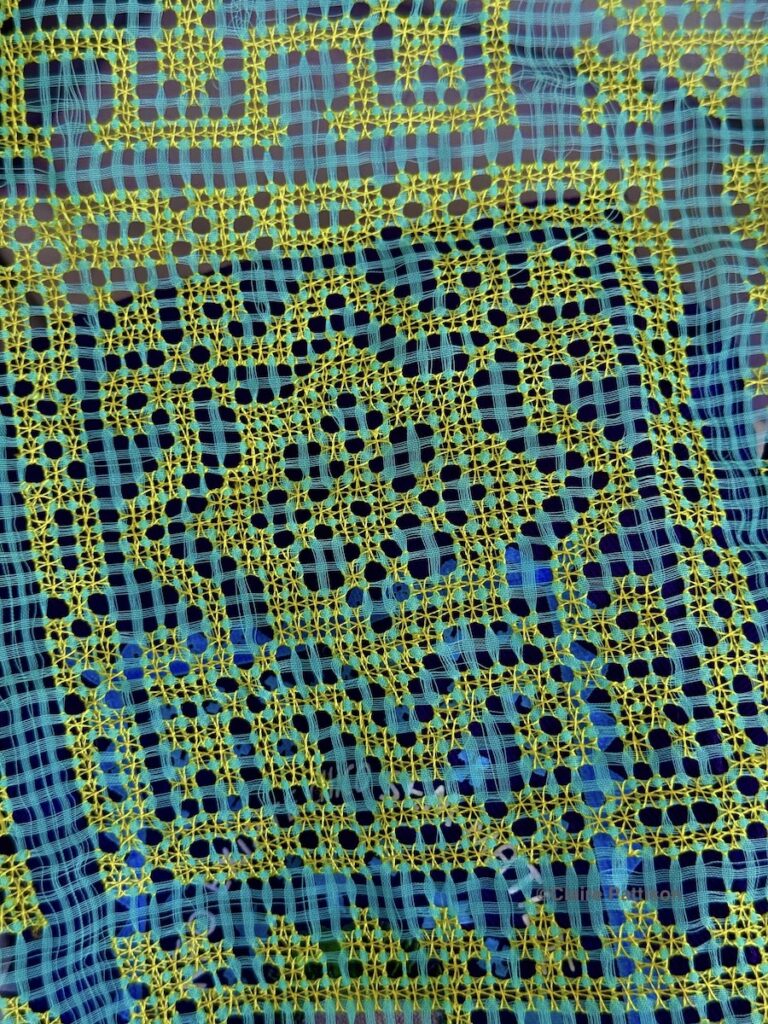
Aila told me she felt deeply honoured to speak alongside Mestra Bia. She too learned labirinto at eight years of age and, while she has not yet received the formal title of Mestra, she is widely respected for the beauty of her work, her teaching, and her tireless promotion of the craft. Through the small shop attached to her guesthouse, she provides the women of Prainha a rare and vital outlet for their pieces — without which, much of this work would simply go unseen. I hope that soon she will receive the title of Mestra which she so deserves.
One of the particular challenges facing labirinto is that it is a craft of several distinct steps, traditionally carried out by different individuals who may not know the steps that come before or after their own. Aila says the most difficult is the corte — the careful cutting of warp or weft threads before they are drawn out to create the basic design. In Prainha, only Aila’s sister knows how to execute the more complex cuts. Like so many traditional crafts, the knowledge is concentrated in fewer and fewer hands, and most of those hands belong to older women.
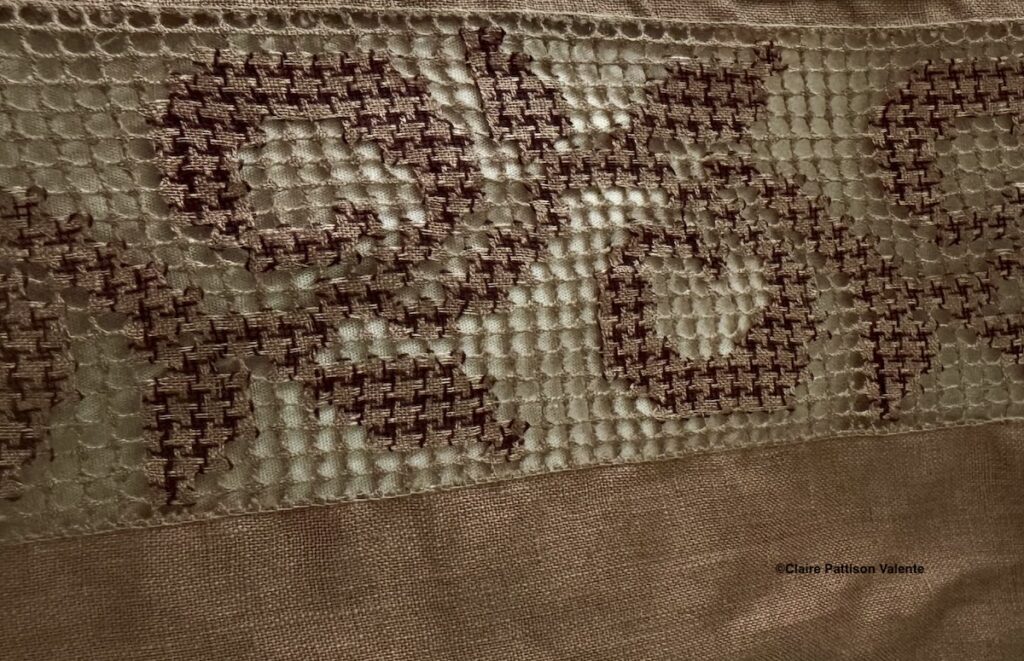
Labirinto in shades of brown
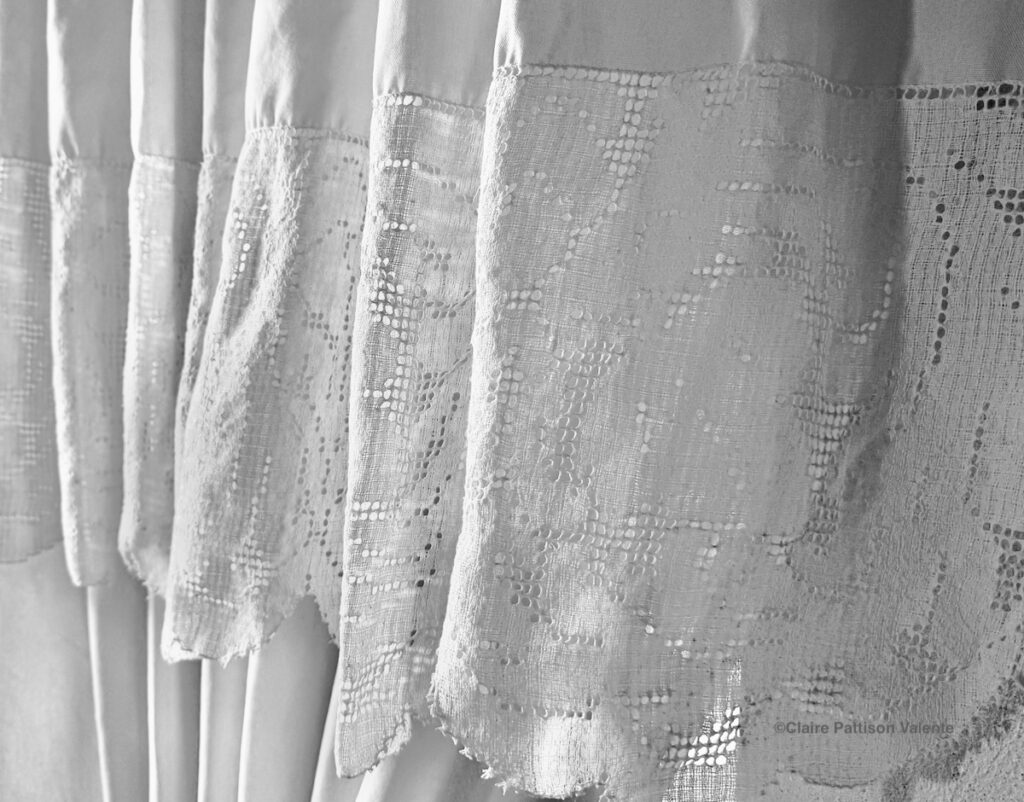
White cotton curtain with labirinto border
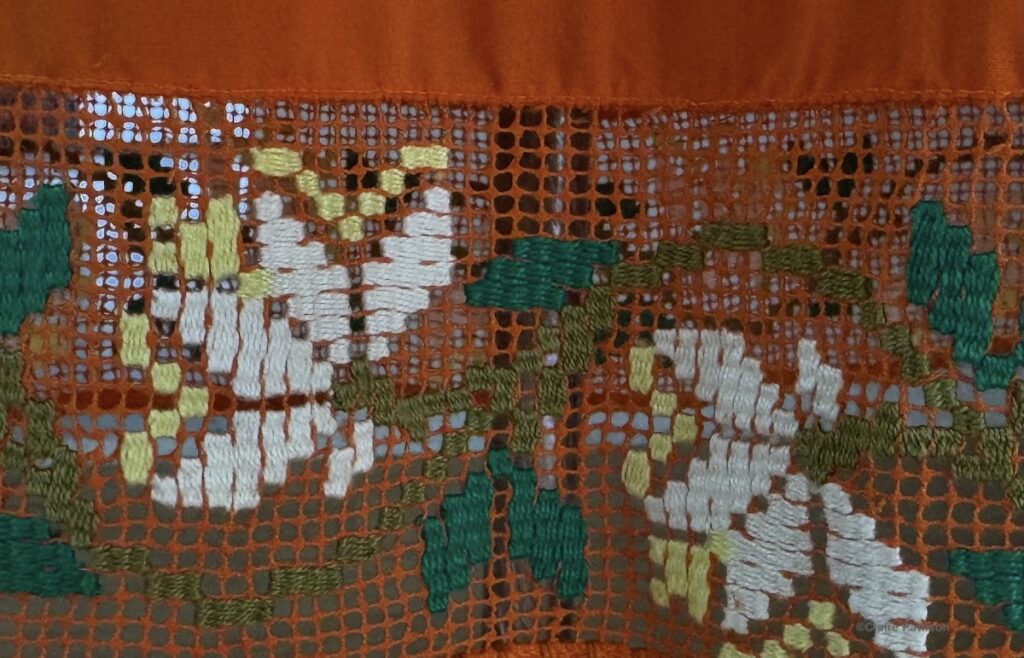
Hem detail
However, there are reasons for hope for artisans and their skills around the world. The Crafts Council UK has noted a post-pandemic shift in the demographics of crafting, and social media is now full of beautiful handmade work. Here in Ceará a state government body known as CeArt is focused on valuing, training and promoting Ceará’s handicrafts, including labirinto, and generates income for artisans through the sale of authentic handmade products in their centre in Fortaleza. Aila and I often attend craft fairs where she sells the work and gives workshops on the techniques and the number of these fairs seems to be ever growing. This coming weekend, 16th to 18th of May, we will be at the Povos do Mar event organised by SESC at Beira Mar, Fortaleza.
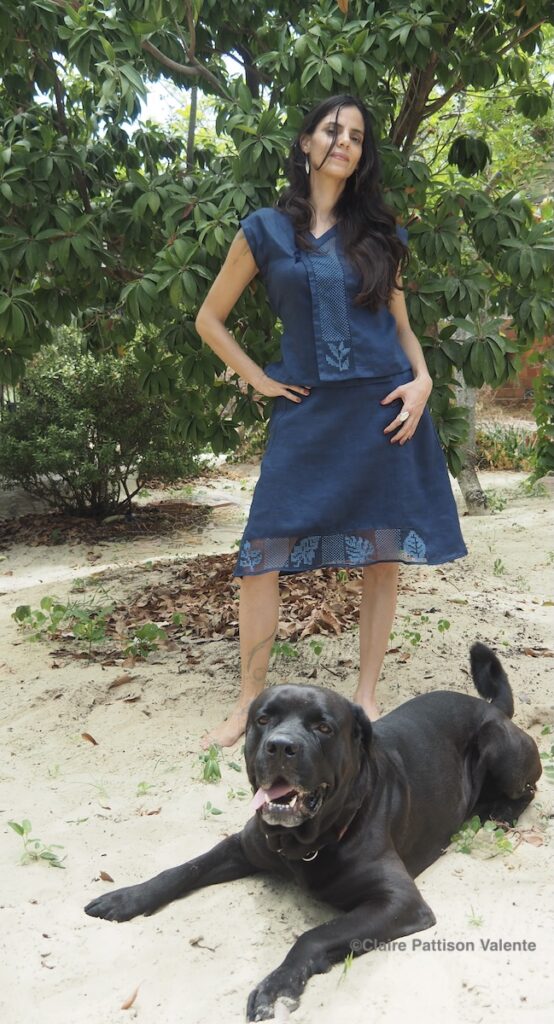
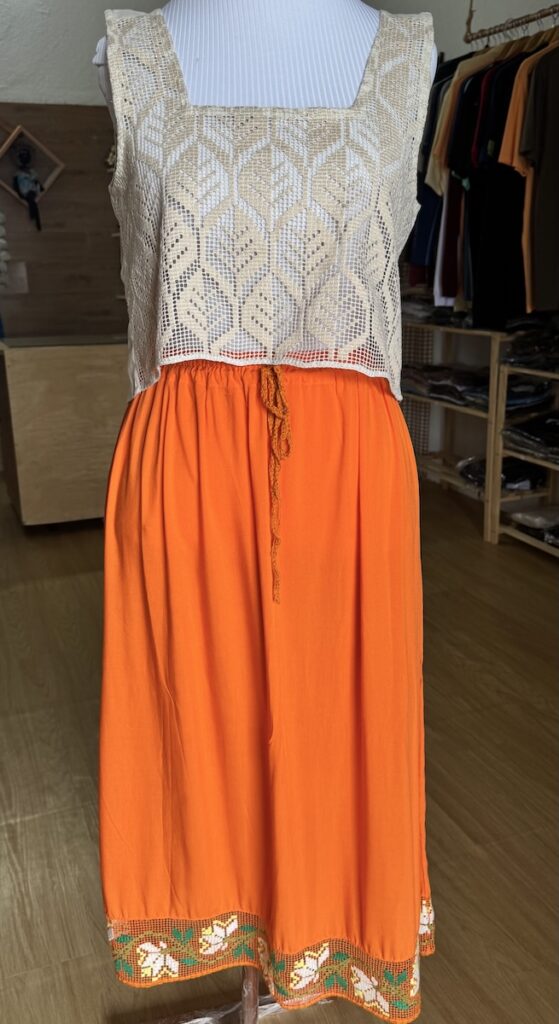
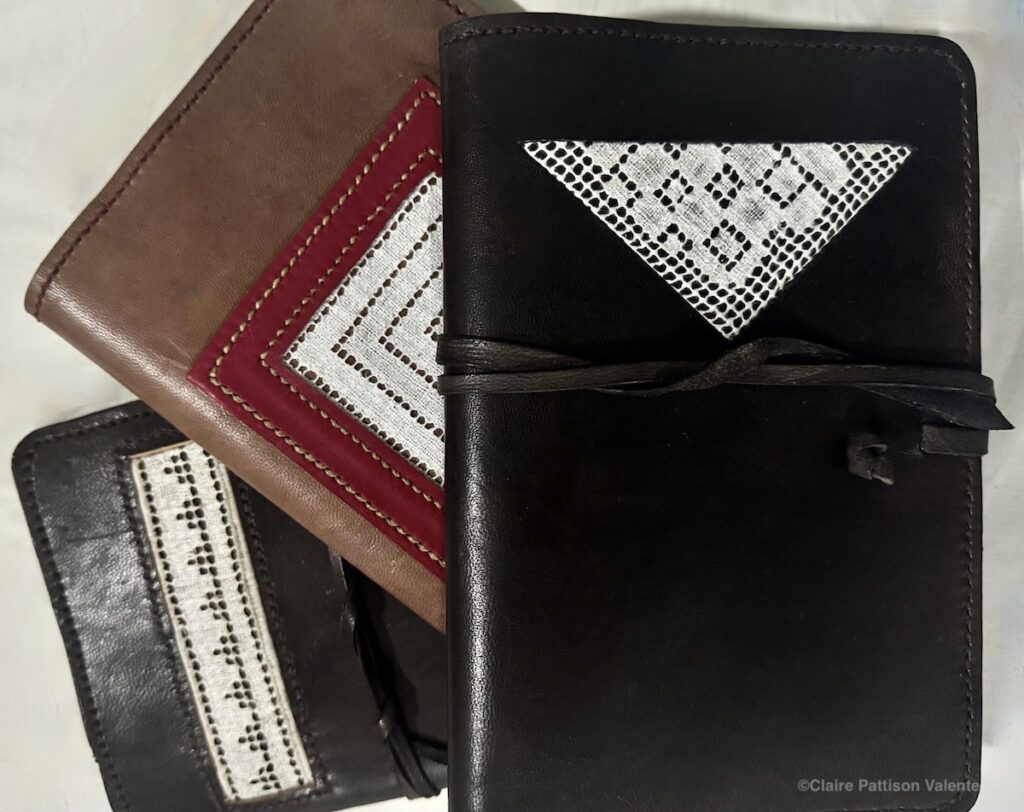
Aila’s daughter Jaila and her friend Iza have created a company, Arveri, with labirinto at its heart, their clothing line (examples above) has been warmly received and provides income for several women in the village and I incorporate labirinto into my leatherwork and paintings (below)
Social entrepreneurs are working with groups of women in several towns and cities in the region with the aim of promoting and developing the technique. Hopefully many more people will find new contexts for using labirinto and more young people will be drawn to learning this skill that deserves to endure.
Sources: