
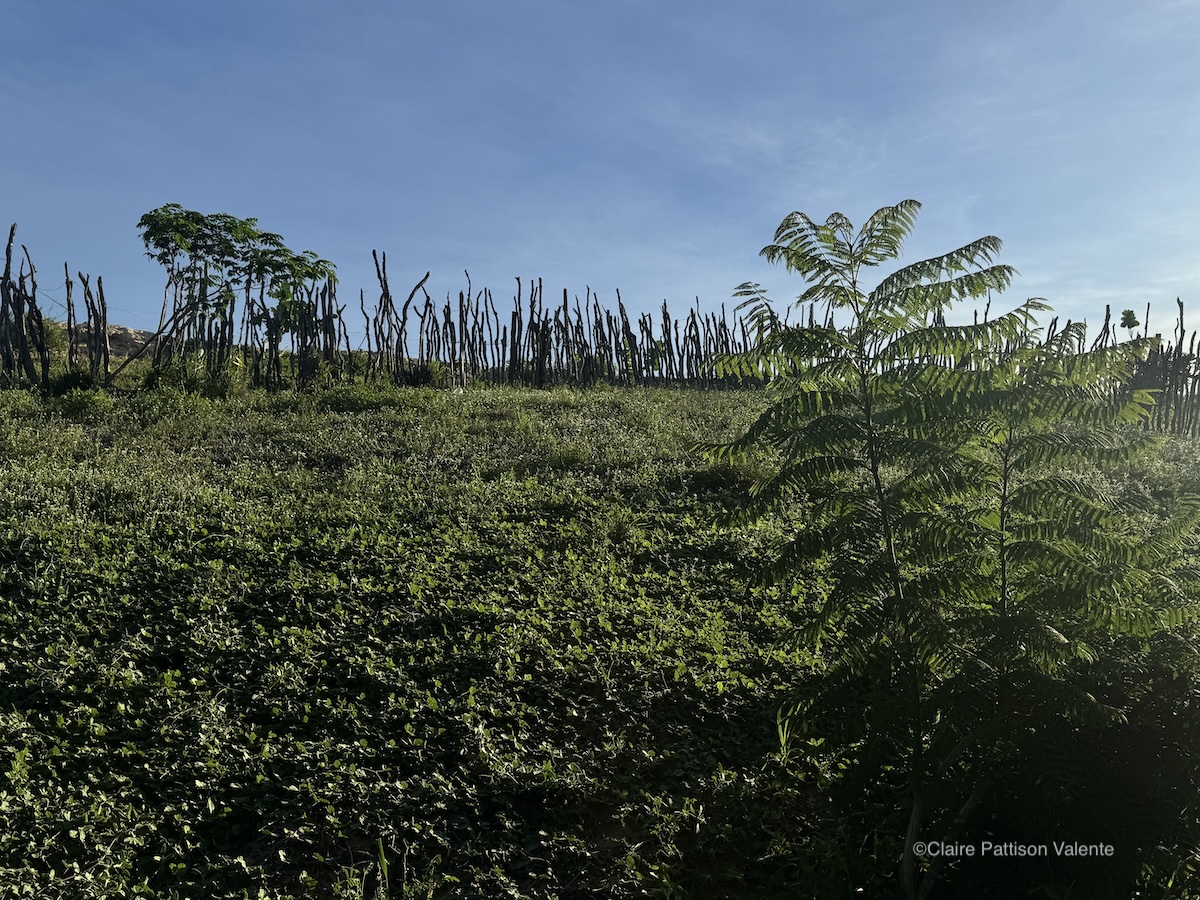
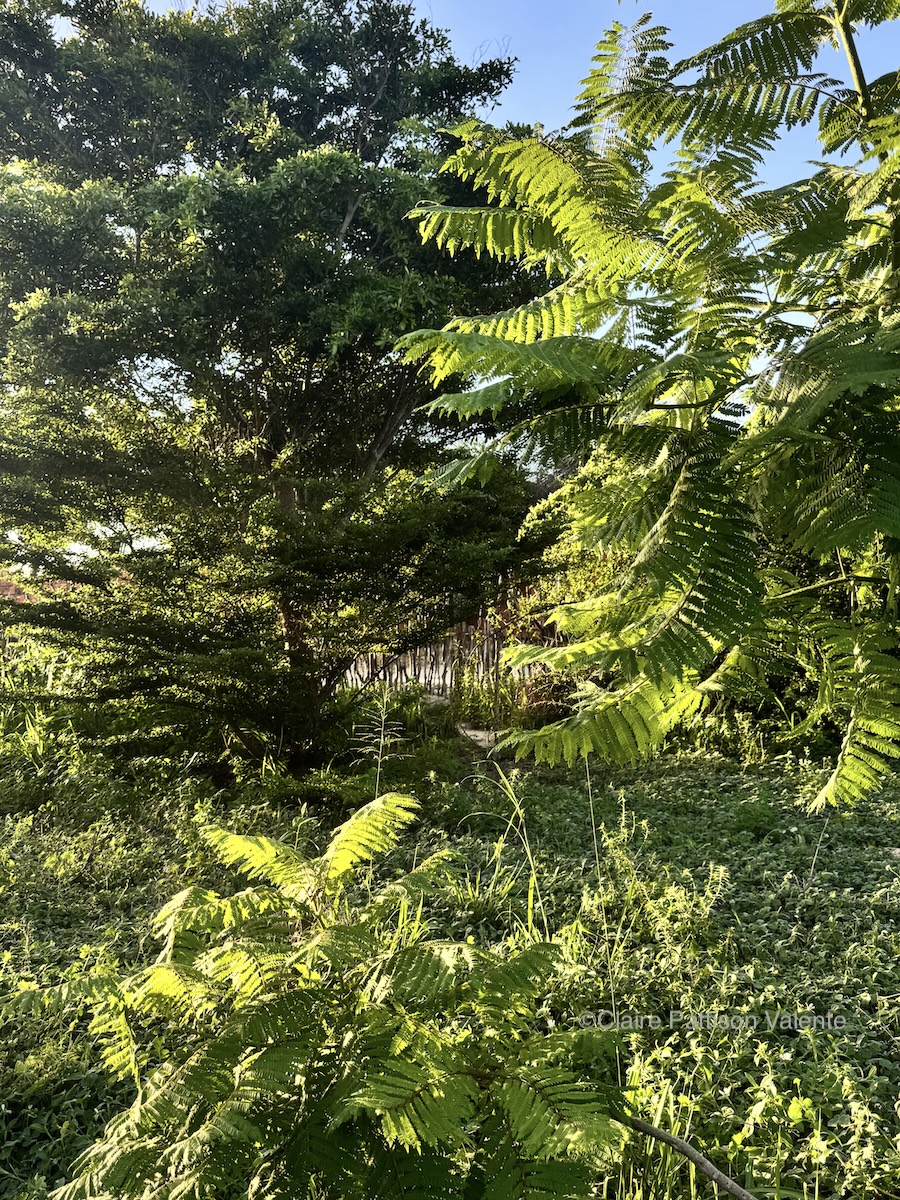
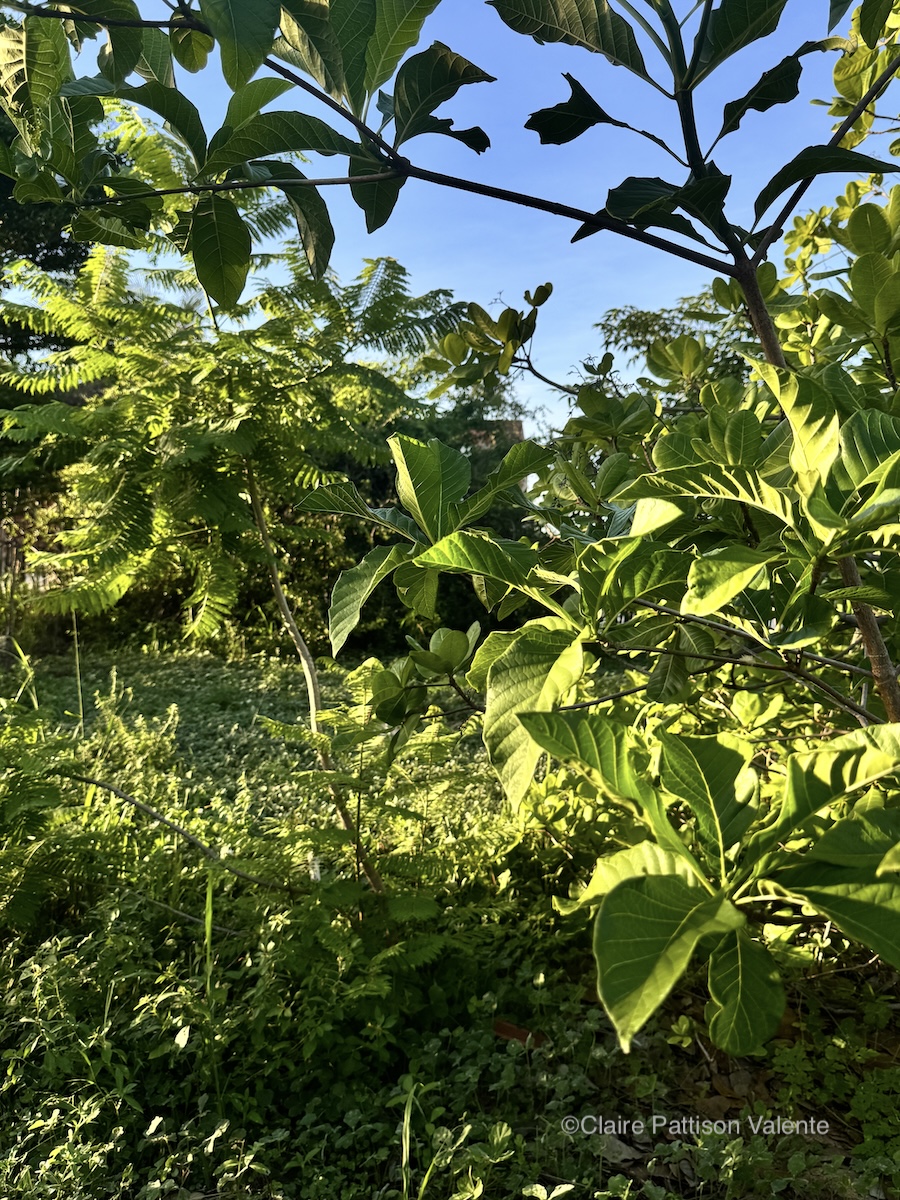
For several years, we’ve been planting trees on a small plot, which is split between flat ground and a steep, challenging slope. At the top, the wind is often fierce and the sand is very dry, so most things struggle to grow, and while a couple of trees have survived, they remain stunted and wind blown. Lower down however, the trees have flourished, with a few growing into magnificent, tall specimens.
Originally I only wanted to plant trees native to the region but saplings were hard to find. I then extended this to trees native to Brazil but have ended up with some imported species. Those I’ve planted are not an issue because they will not spread, unlike the Neem tree (Azadirachta indica) which I didn’t plant but which grows like a weed here, I spend a lot of time trying to be rid of it. This invasive species is a serious threat to native forests as it impedes the growth of native species through its rapid growth and by substances it releases into the soil.
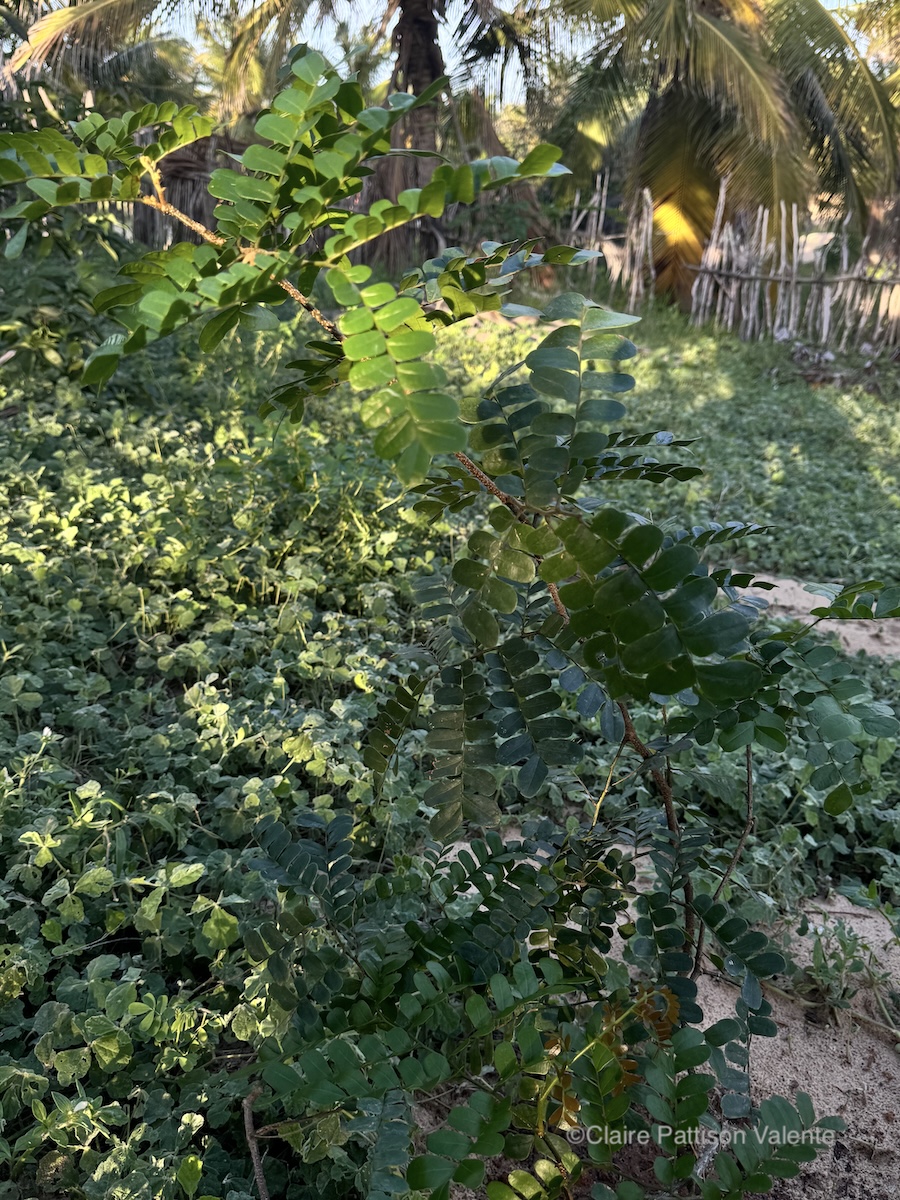
Over time I have spent a small fortune on saplings and whenever possible I collect seeds from trees that should do well on the plot. Sadly the fail rate is quite high. While I always use as much compost as I can, we are still planting basically into sand and watering is a bit of a task because we only have a hand pump on the plot (good arm exercise though). During the dry season, it only takes a few days of us not being able to get there, for saplings to become dried up dead twigs.
Last week I went to pick up my husband Neu from hospital but having left a bit earlier than needed, I stopped off at a large garden centre where I found, as I’d hoped, a Pau-brasil, the tree that is said to have given Brazil it’s name. This is the 5th one of these I have purchased, the others were all smaller and sadly didn’t make it, I’m hoping this larger one, being almost a metre tall, will have a better chance.
We had a few other saplings at home already and ICMBio1 had given me a couple of others (which I have been begging them for since forever) so my son and I planted them all the other day. We are now in the rainy season which is a great time to be planting as it obviously really helps with getting any plant established, in fact things take off so fast at this time of year, my garden currently resembles a jungle. Since planting last week, it has rained pretty much ever since, I hope they don’t drown.
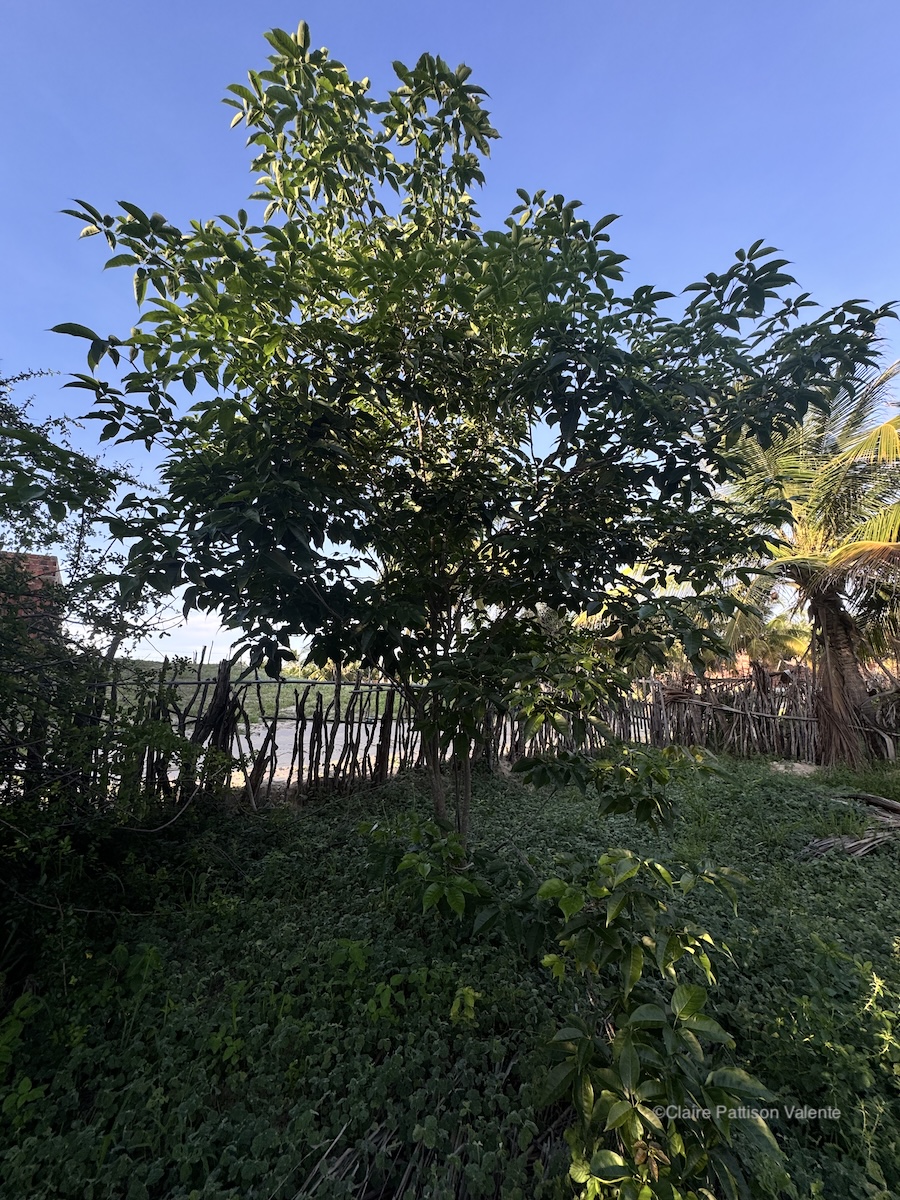
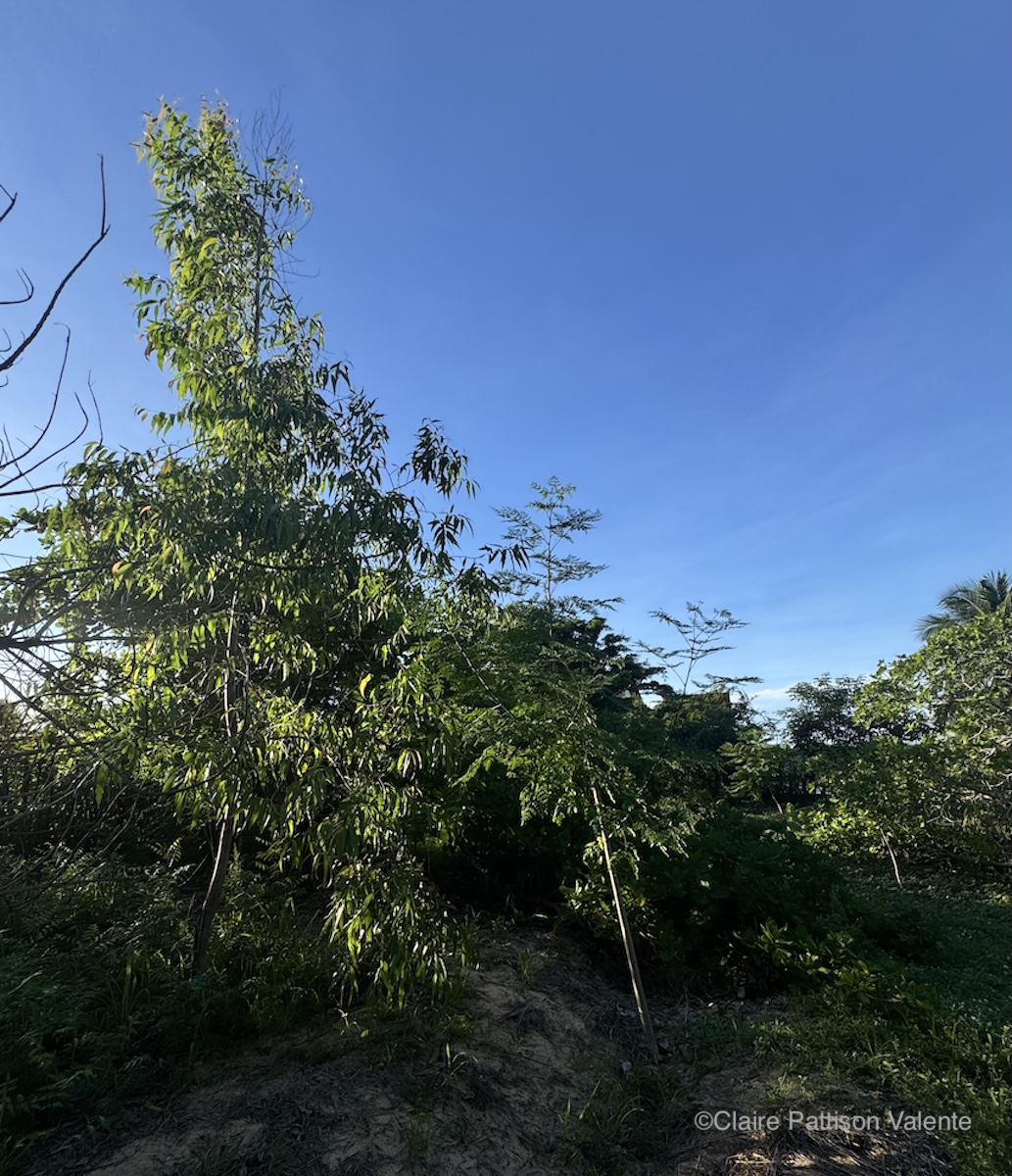
The women’s group tree planting.
As I mentioned in the previous post, I take part in the Women’s Group of Prainha do Canto Verde. At one of our meetings some time back, it was decided to plant trees around the community to create shaded areas, improve air quality (which sounds weird as we are such a small place by the sea but we get a lot of dust here from the clay surfaced roads) and increase biodiversity.
Yesterday, some of us carried out the first plantings at the centre. We had been asked to get there before ten, when it was expected that ICMBio would arrive for photos to be taken of the planting process. A few of us arrived in advance to decide where to plant and prepare the holes as we had been told that ICMBio had a very tight schedule and so wouldn’t be able to stay with us for long.
It had rained fairly heavily all through the night but eased off in the early morning. Would it be baking hot by ten?
As soon as I left the house it started to rain and I was absolutely soaked through by the time I arrived at the community centre, as were the others who arrived round about the same time as me. The rain was perfect for the trees — even if it wasn’t so great for us !
There is renovation work going on at the community centre so we were limited in where we could plant, doesn’t seem much point in putting in the trees if they are going to get trampled on and not fair on the workers to expect them to avoid the newly planted trees. We dug 6 or 7 holes in a line on one side of the centre, placed some compost in the holes and waited for ICMBio to arrive. And waited.
At ten one member of the team, who lives close by, arrived but told us to wait for the others who were on their way. We waited.
Waiting is something we are used to here and generally accept, as it’s rare for things to start on time but we were soaked and cold and there was no sign of the rain stopping. Some more members of ICMBio arrived but they began a meeting in the centre and said we should wait for someone else who was on the way. Eventually we asked for one of them, any one of them, to come and be photographed with us planting the saplings in the holes we had dug.
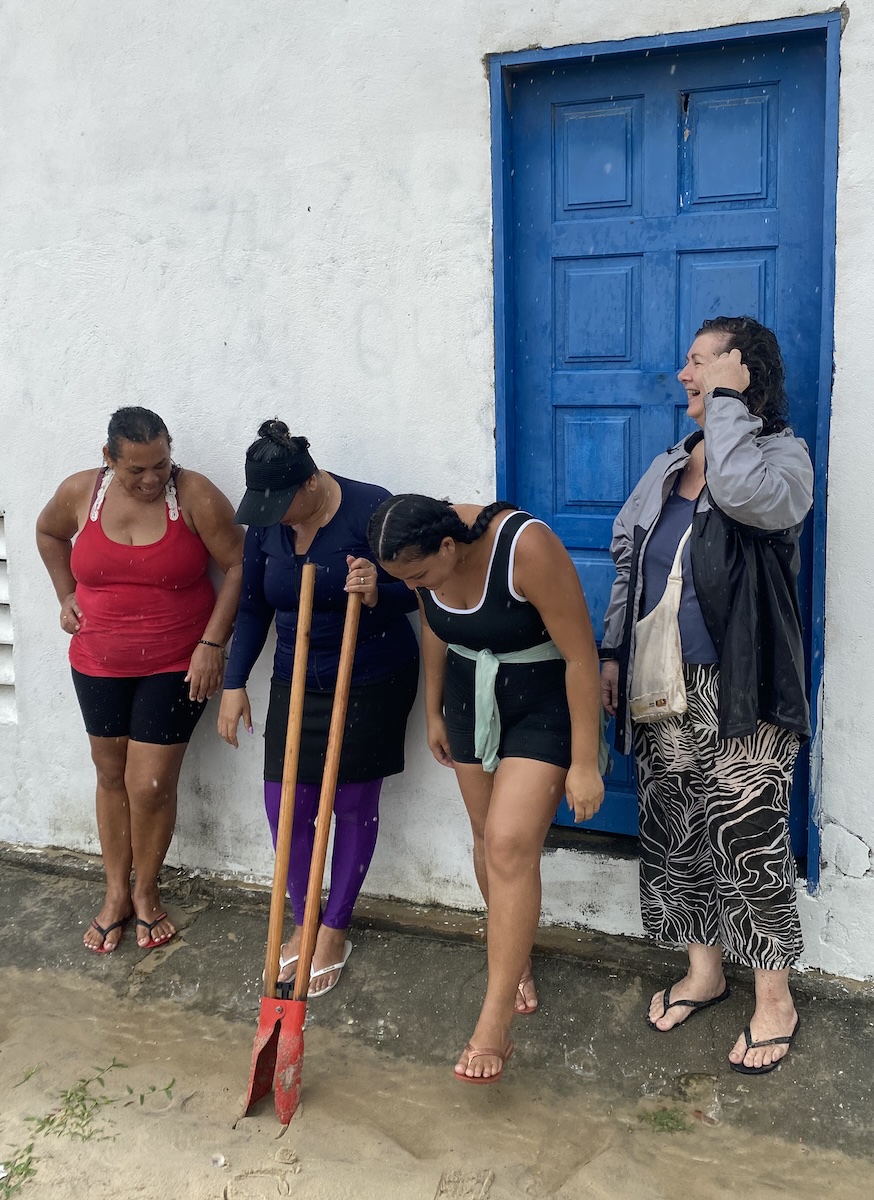
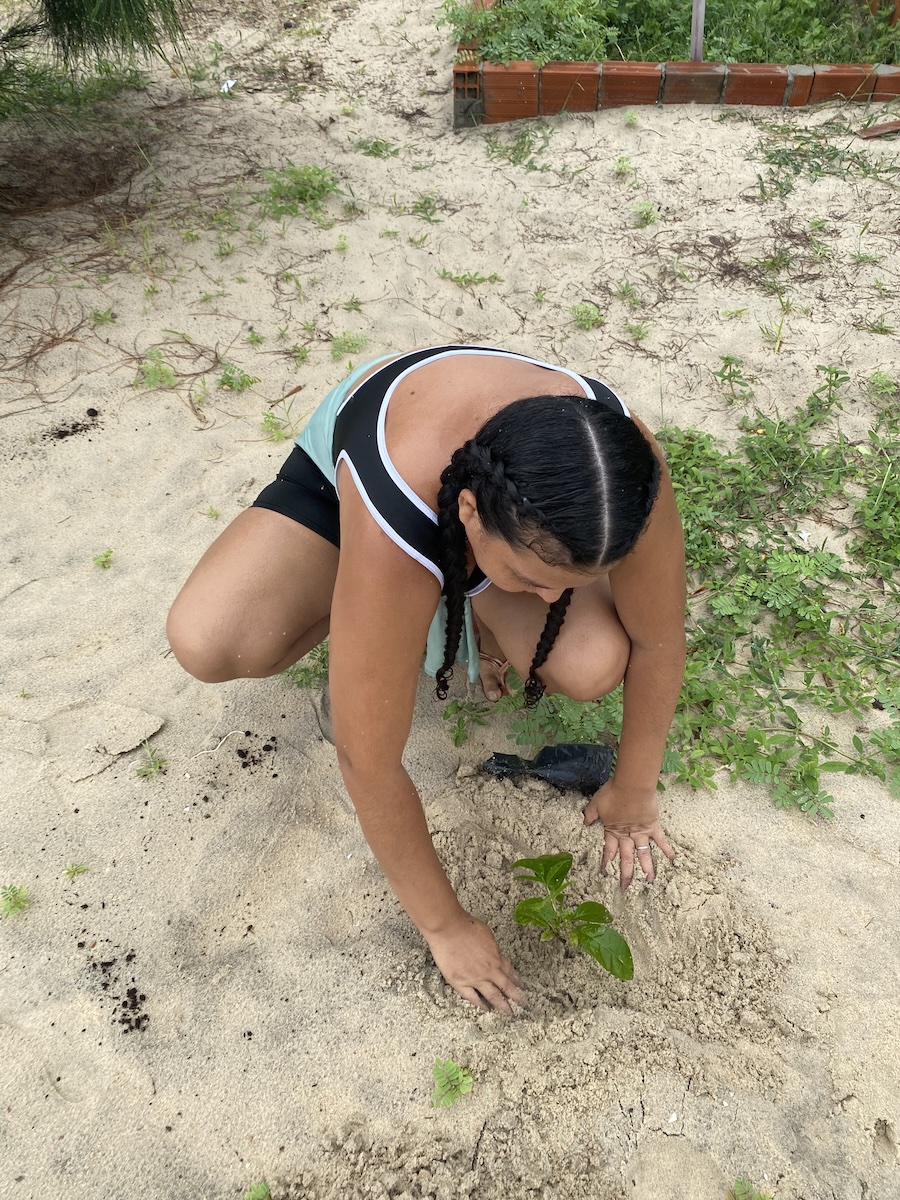
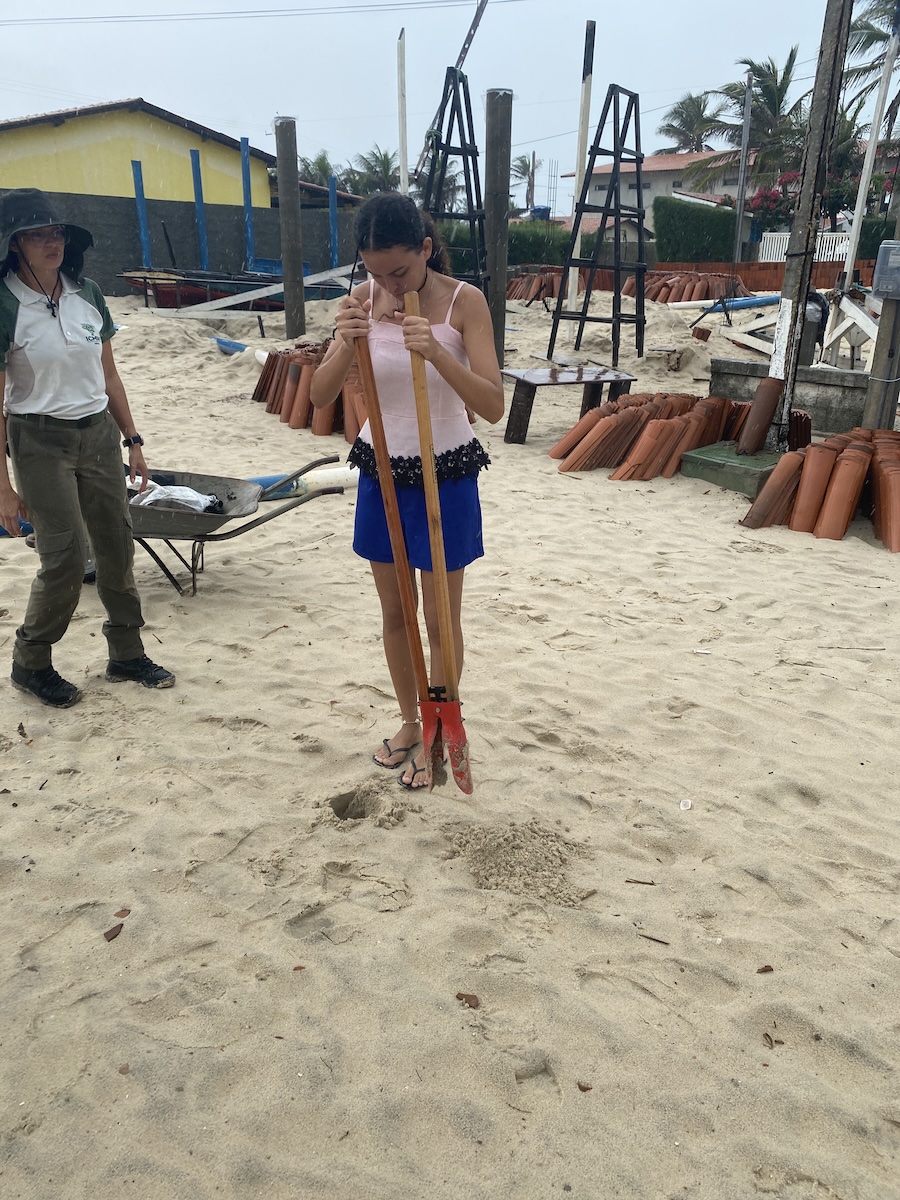
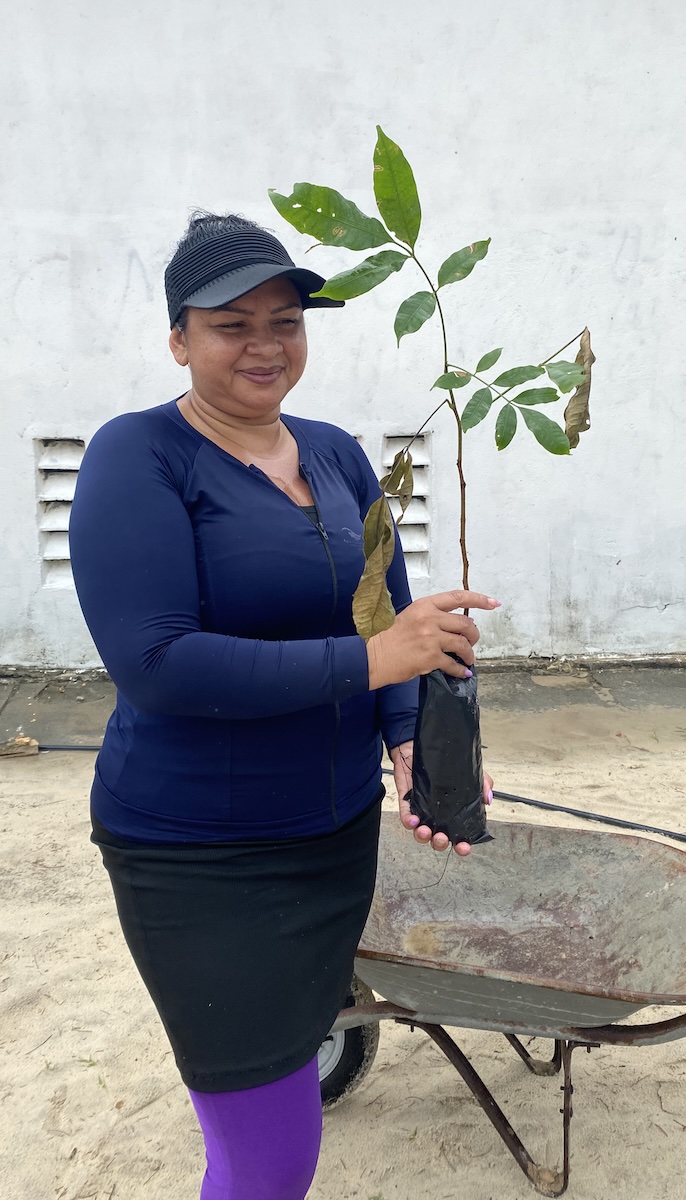
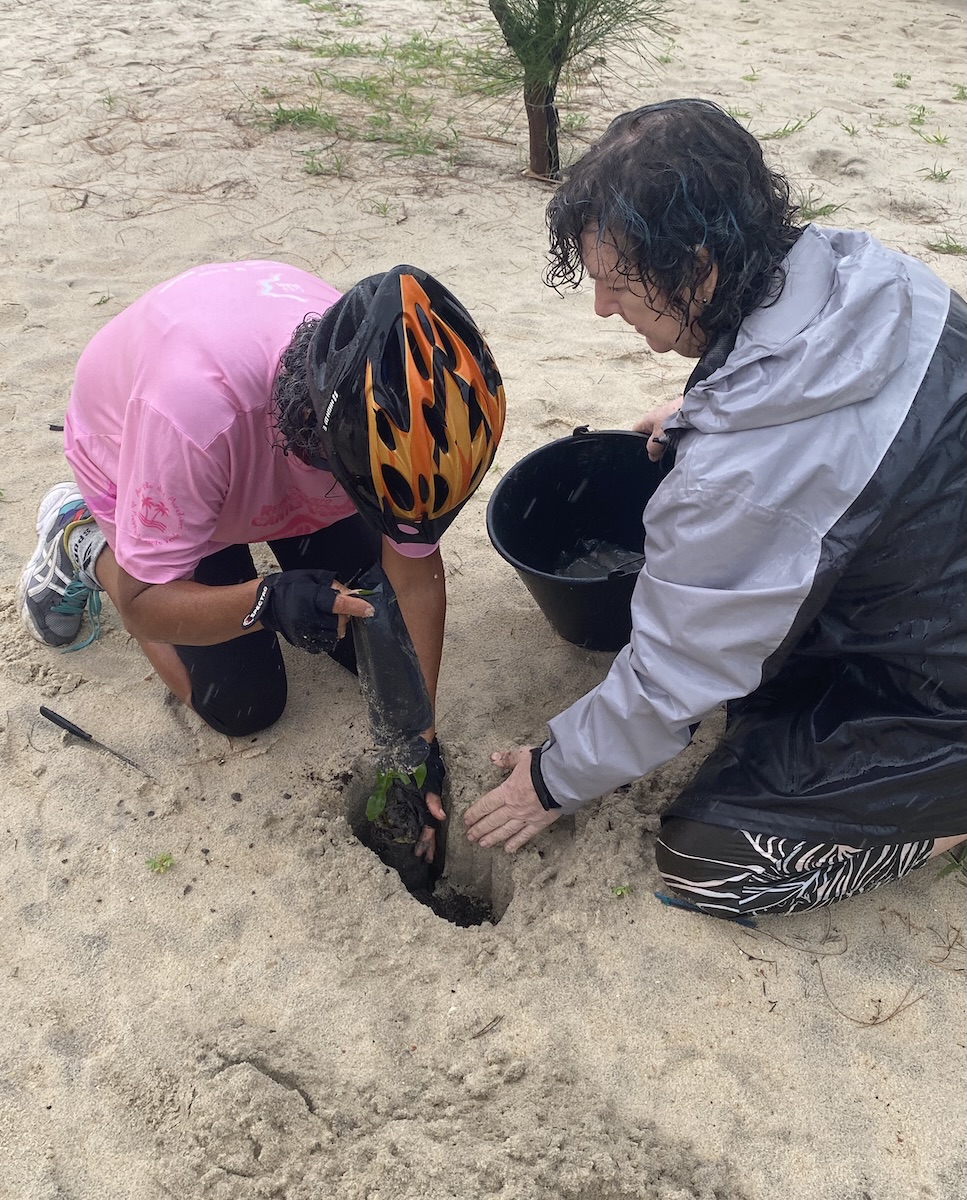
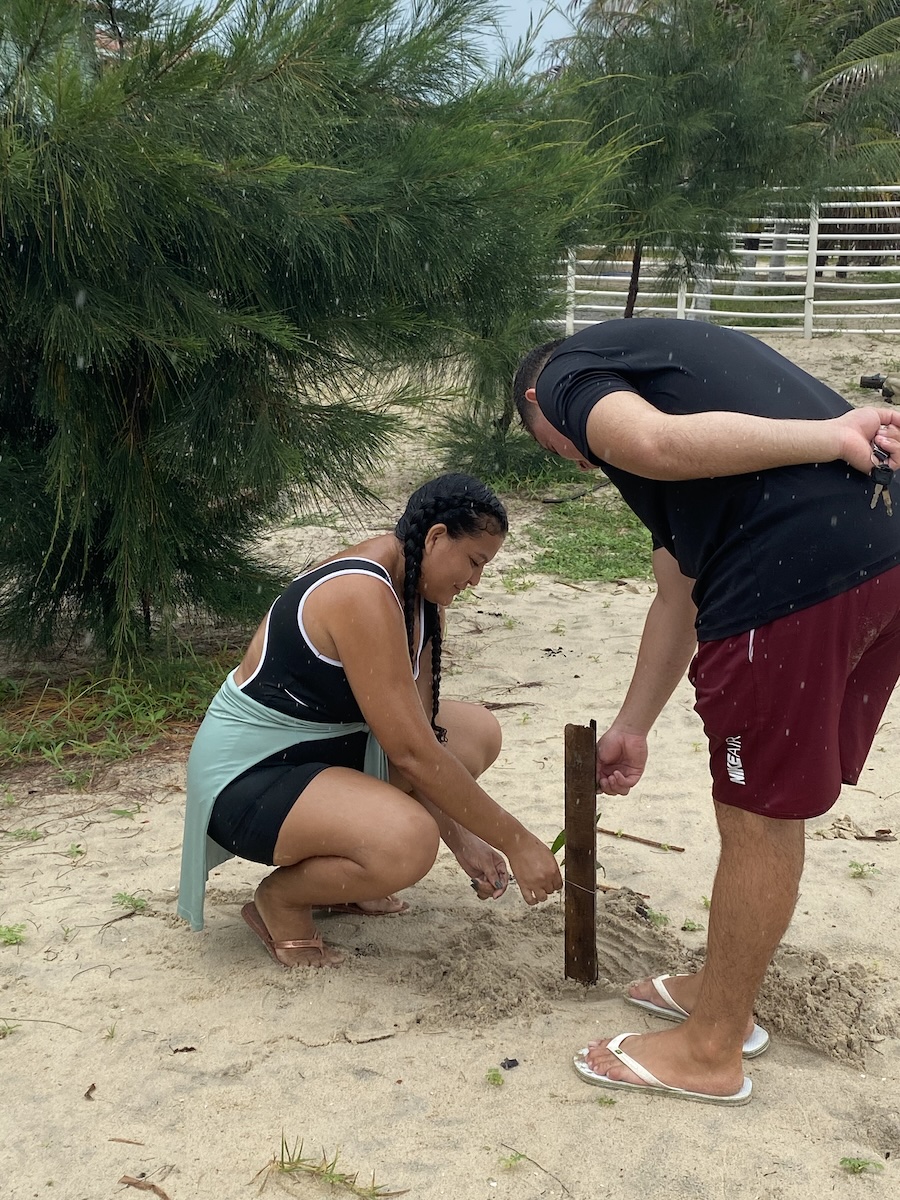
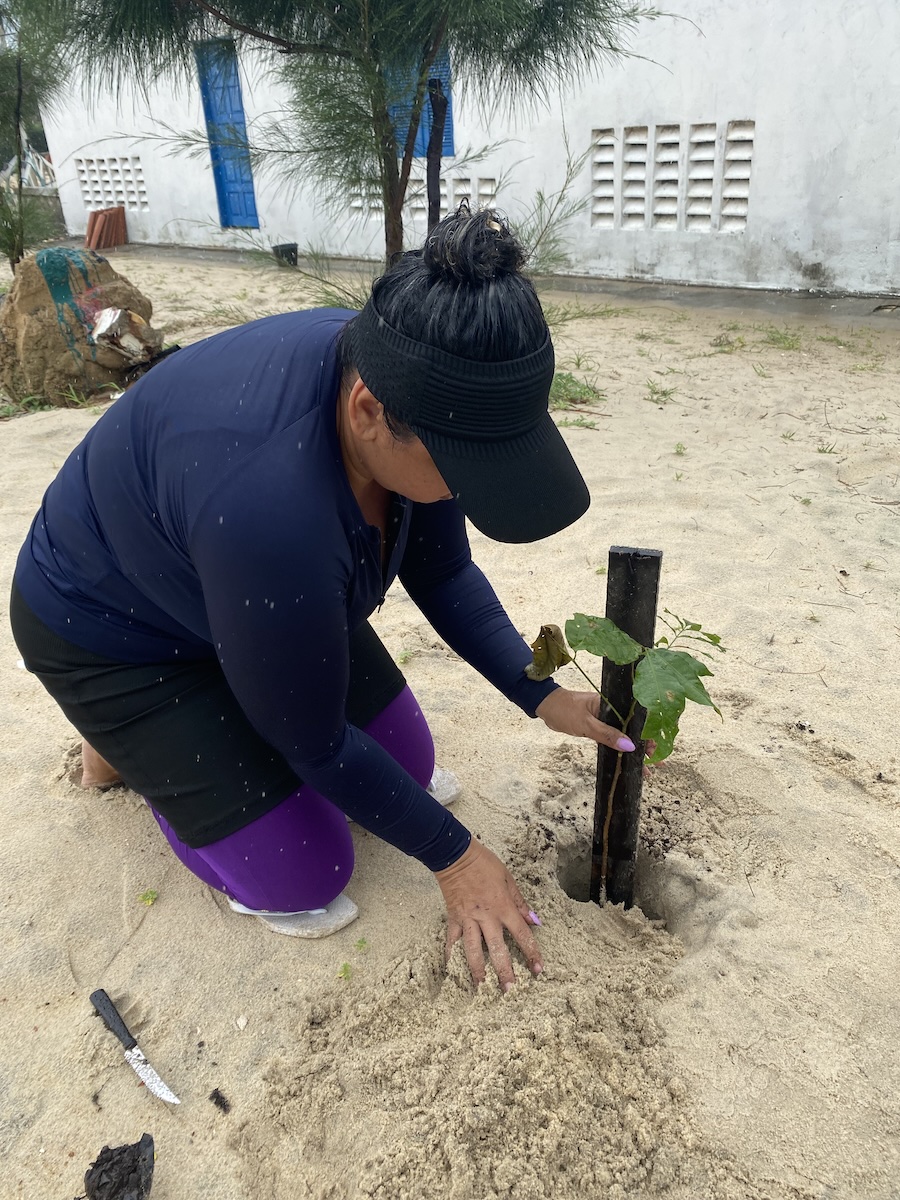
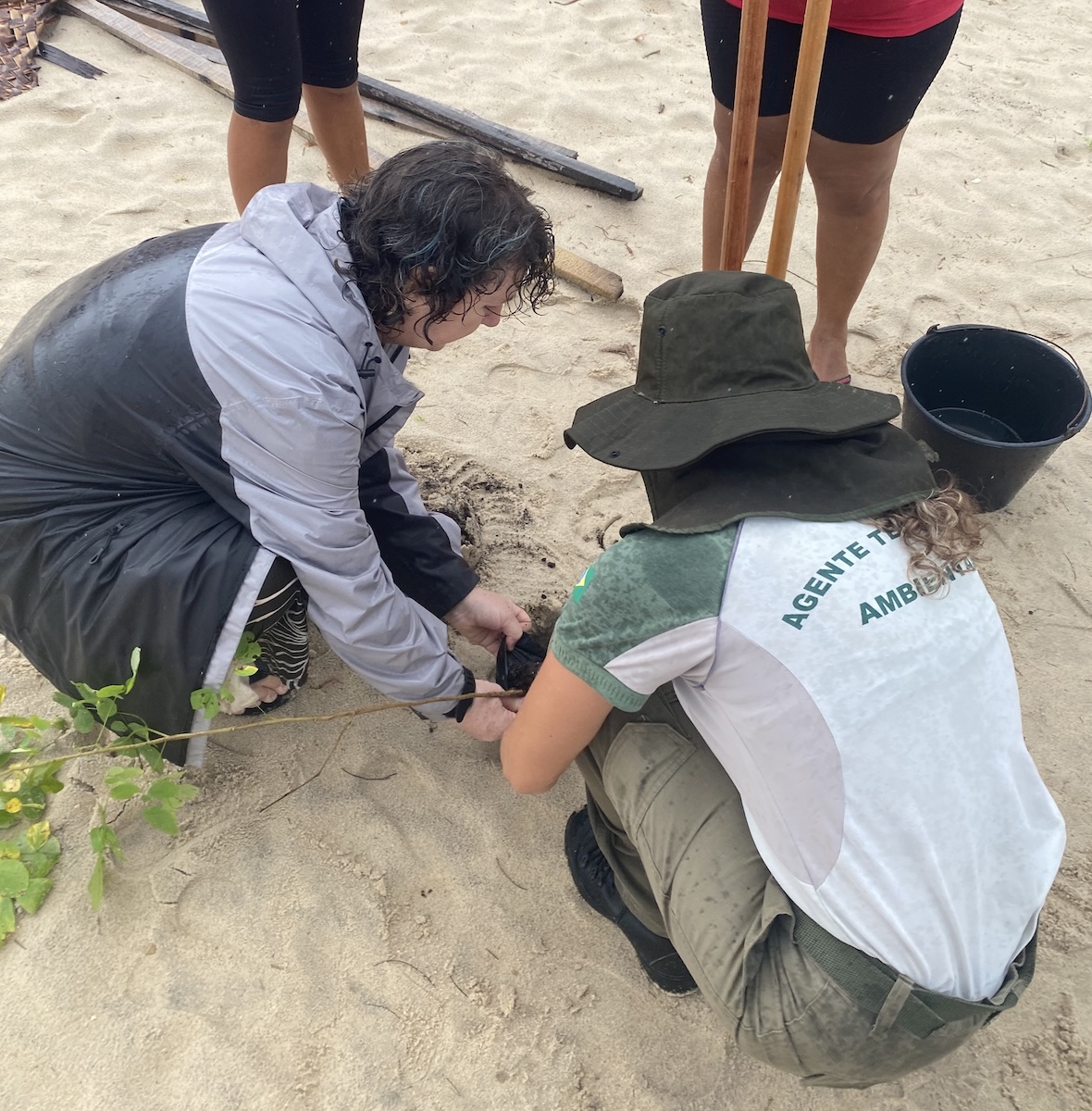
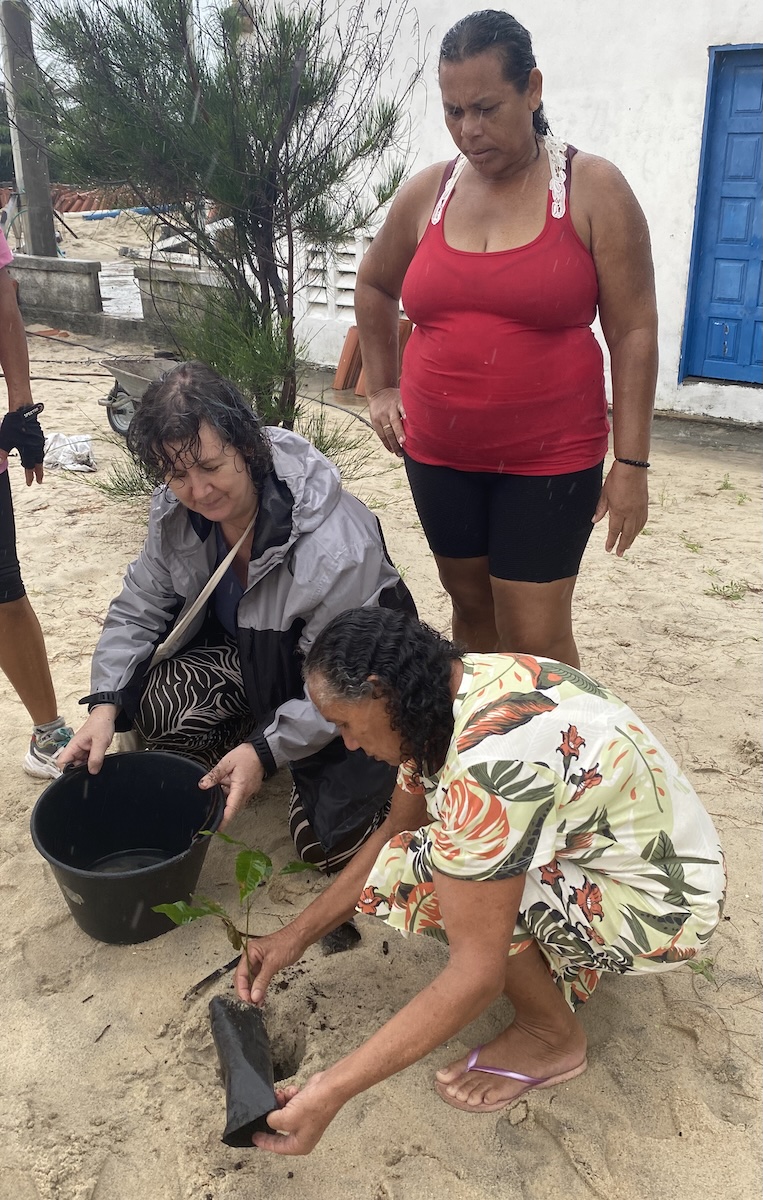
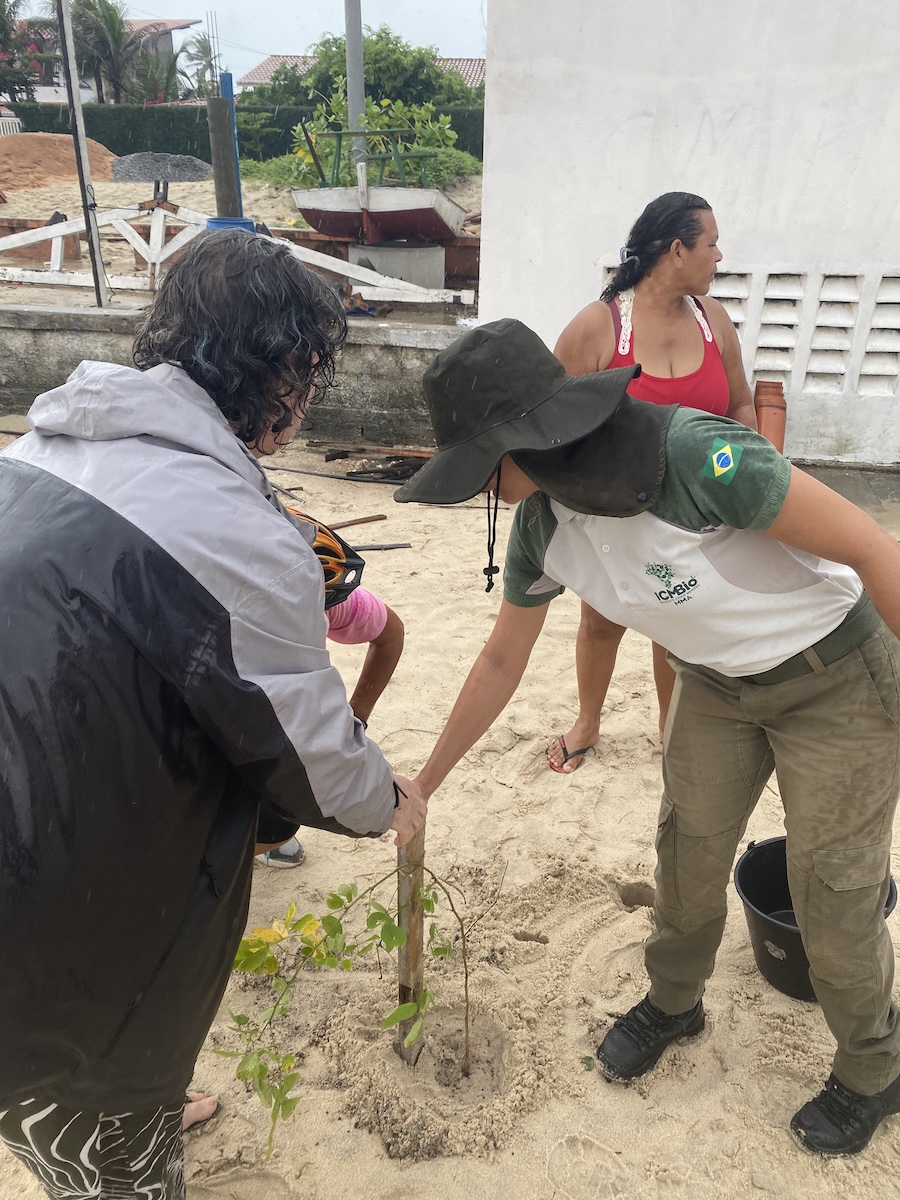
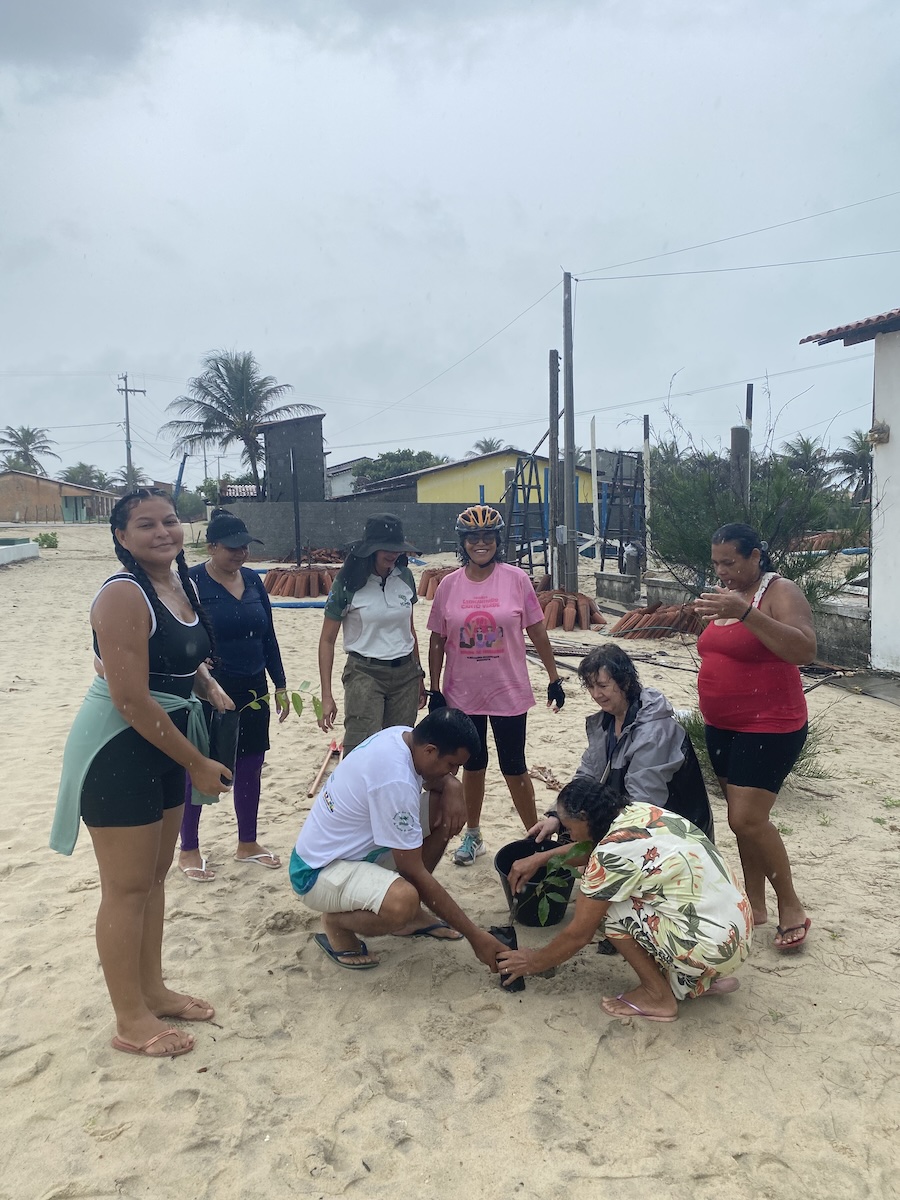
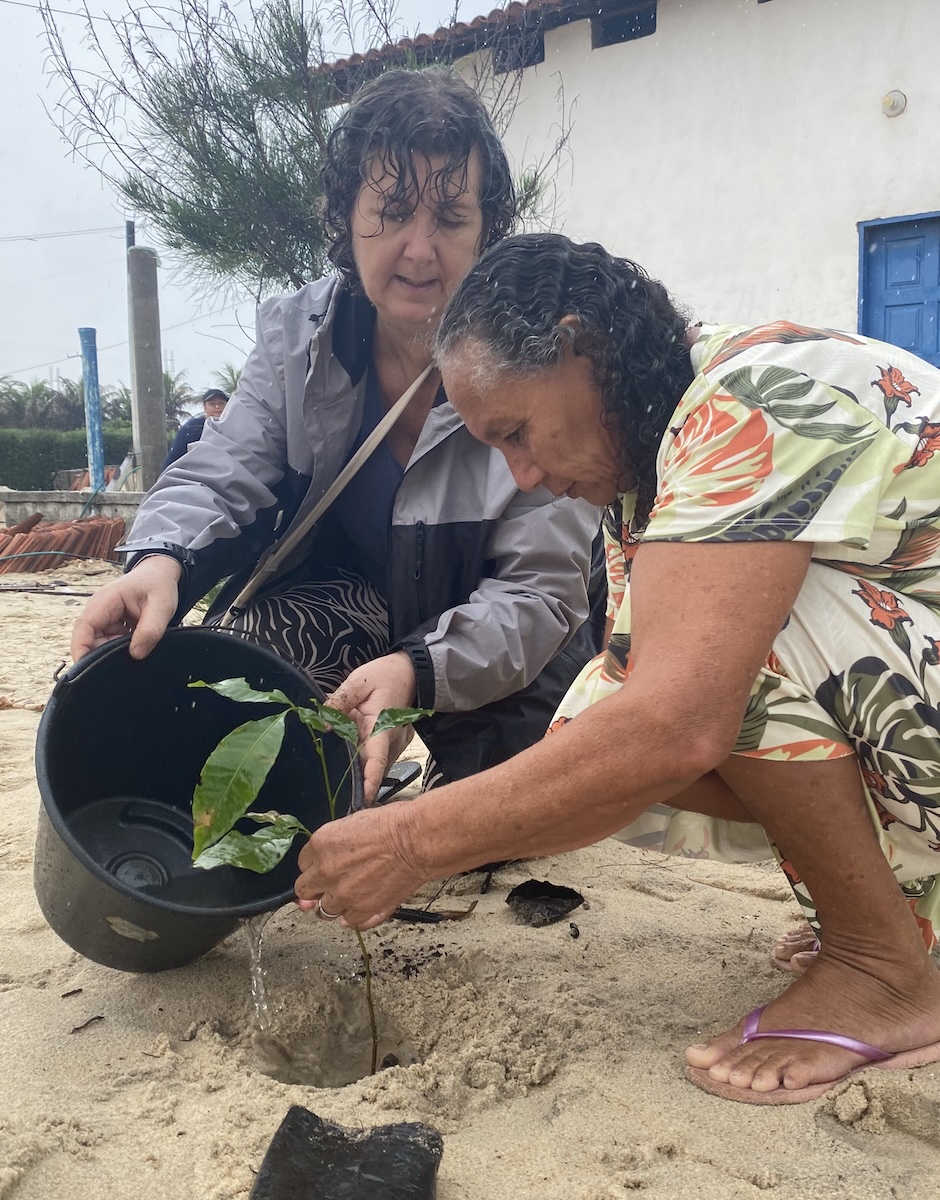
Photographs courtesy of Larissa Gomes and Samille Gomes
Trees in, photos taken, job well done!
We set off home and of course the rain stopped shortly after.
There are still more trees to plant, but it was decided to wait until the renovation work at the centre is finished and we can see what will do well where.
A big thank you to the team from ICMBio for the saplings and to everyone who helped! As always, there was plenty of laughter in the group, even in the rain.
- ICMBio stands for the Chico Mendes Institute for Biodiversity Conservation (Instituto Chico Mendes de Conservação da Biodiversidade). It is a Brazilian federal government agency linked to the Ministry of the Environment, created in 2007 to manage federal protected areas, protect biodiversity, and enforce environmental regulations.
Prainha do Canto Verde is an Extractive reserve (RESEX) and ICMBio act as the primary federal management authority for overseeing the protection of natural resources and facilitating sustainable development for the traditional communities within the RESEX.
Key roles of ICMBio in Brazilian Extractive Reserves include:
Management and Planning: Establishing and implementing Management Plans, which are essential for directing permitted sustainable activities and preventing environmental degradation.
Conflict Resolution and Governance: Conducting participatory management through advisory councils, where local residents and associations are heavily involved.
Monitoring and Control: Tracking biodiversity and the sustainable use of fauna/flora through initiatives like the Monitora Program.
Enforcement: Monitoring illegal activities such as land grabbing and unauthorised deforestation in protected areas.
Promotion of Sustainable Economies: Partnering with organisations to strengthen productive chains of traditional populations, such as in the Sustenta.Bio program.
Legal Tenure: Regularising the land and formalising the rights of traditional populations.
↩︎