
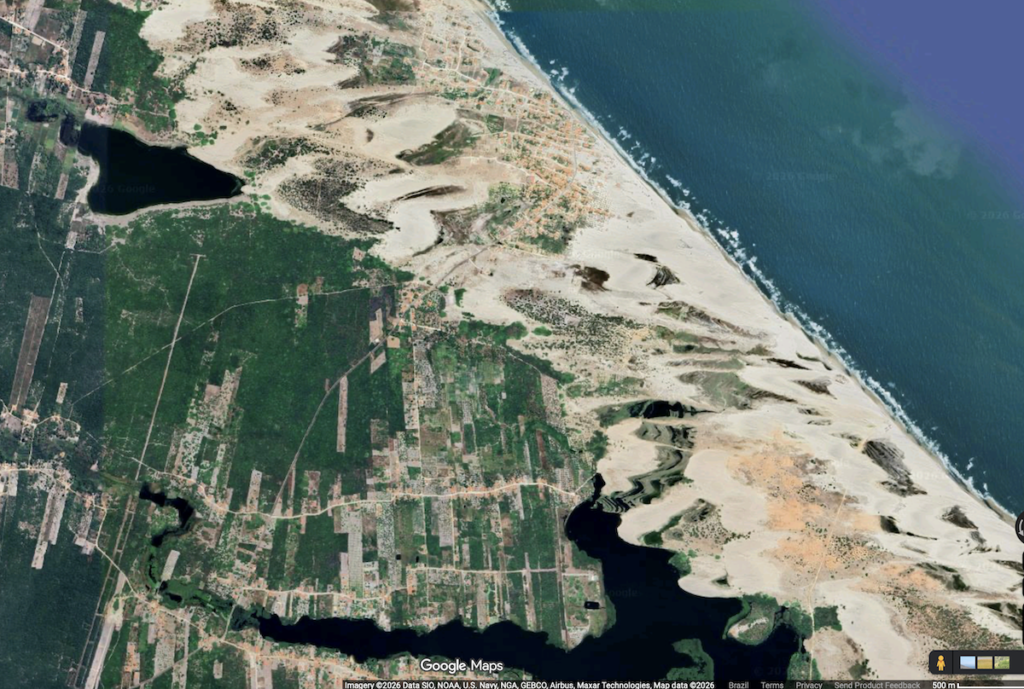
Prainha do Canto Verde sits on the northeast coast of Brazil, 123 kilometres from Fortaleza, tucked between the Atlantic Ocean and miles of rolling sand dunes. Within the dunes lies a scattering of freshwater lagoons that catch the light in the early morning like mirrors left out in the sand and beyond is the Mata Tabuleiro, a low-level forest of surprising richness.
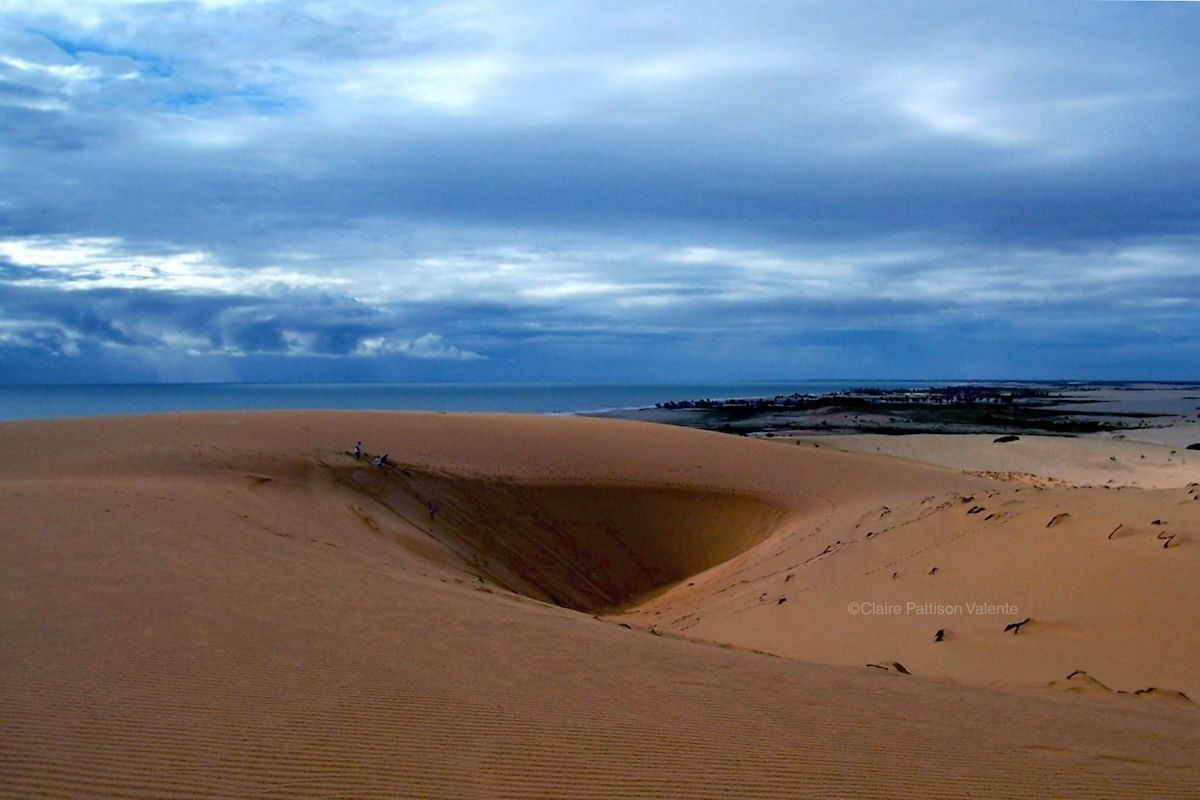
Canto Verde means Green Corner, and the village lives up to its name. Coconut palms line the shore, their fronds turning in the constant wind, throwing pools of shade onto the sand below. The beach stretches to the horizon in both directions — wide, largely deserted, and at low tide so vast it feels like the sea has simply forgotten to come back.
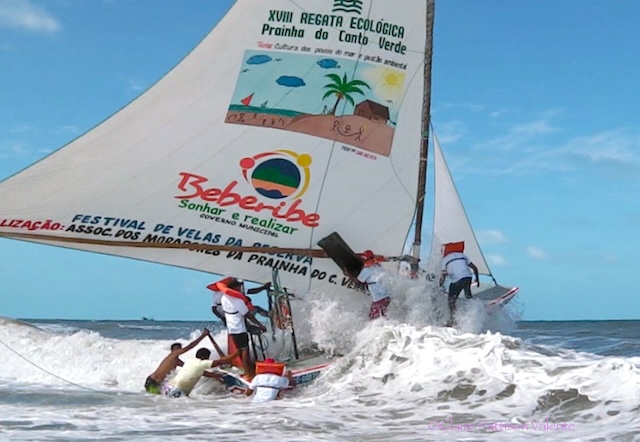
The fishermen leave before dawn. By the time most people are awake the jangadas — traditional sail rafts that have worked these waters for generations — are already out beyond the breakers. Fresh fish can be bought from the fishermen on their return, cool and fresh from the sea.
The forests and wetlands behind the village are alive with birds — eagles, owls, egrets, and countless smaller species moving through the canopy. Vultures rise without effort on the thermal currents. At the shoreline, sea birds skim the waves or pick their way among the crabs. Turtles are regularly seen in the shallow coastal waters. Dolphins pass through occasionally, as if checking that everything is as it should be.
It is one of those places that once experienced, never leaves you.
A village that fought for itself
The northeast coast of Brazil is one of the most beautiful coastlines in the world, and beauty has a price. For decades, developers moved along this coast buying land, building hotels, and transforming traditional fishing villages into resorts — a process that almost always ended with the native population relocated inland, severed from the sea that had sustained them for generations.
The people of Prainha said no!
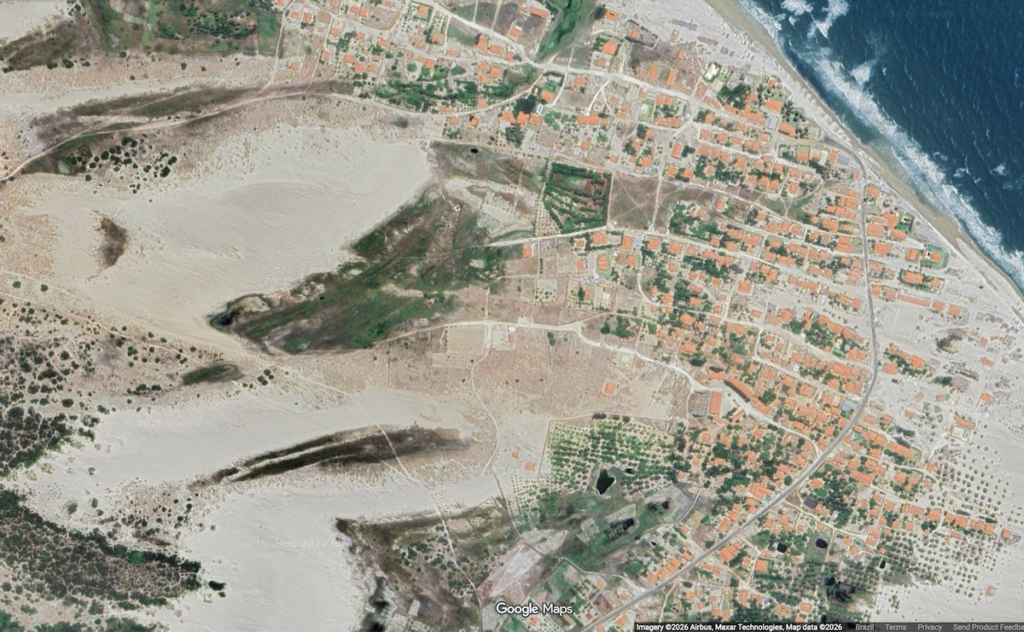
In 1976 a property developer purchased a strip of land some distance from the beach, using it to persuade a judge that his purchase extended all the way to the sea and included the 749 hectares of Canto Verde. The community fought back. With legal support from the Brazilian human rights organisation Centro de Defesa e Promoção dos Direitos Humanos, they challenged the claim through the courts. The pressure to abandon the fight was intense. Hired gunmen came to the village and issued death threats. Buildings were burned. A fence was erected cutting off access to the beach entirely. The residents built again, tore down the fence, and continued.
In 1993 the village took its fight to the world. To draw attention to the land rights struggle and the devastating effects of predatory lobster fishing on the local community, four fishermen sailed a jangada from Canto Verde to Rio de Janeiro, with two young women mirroring their journey on land to give statistical support. A journey of nearly 3,000 kilometres completed in 74 days. The voyage echoed one made fifty years earlier in 1941, when four fishermen made the same journey to highlight poverty and the absence of government support. That original voyage inspired Orson Welles’ film It’s All True.
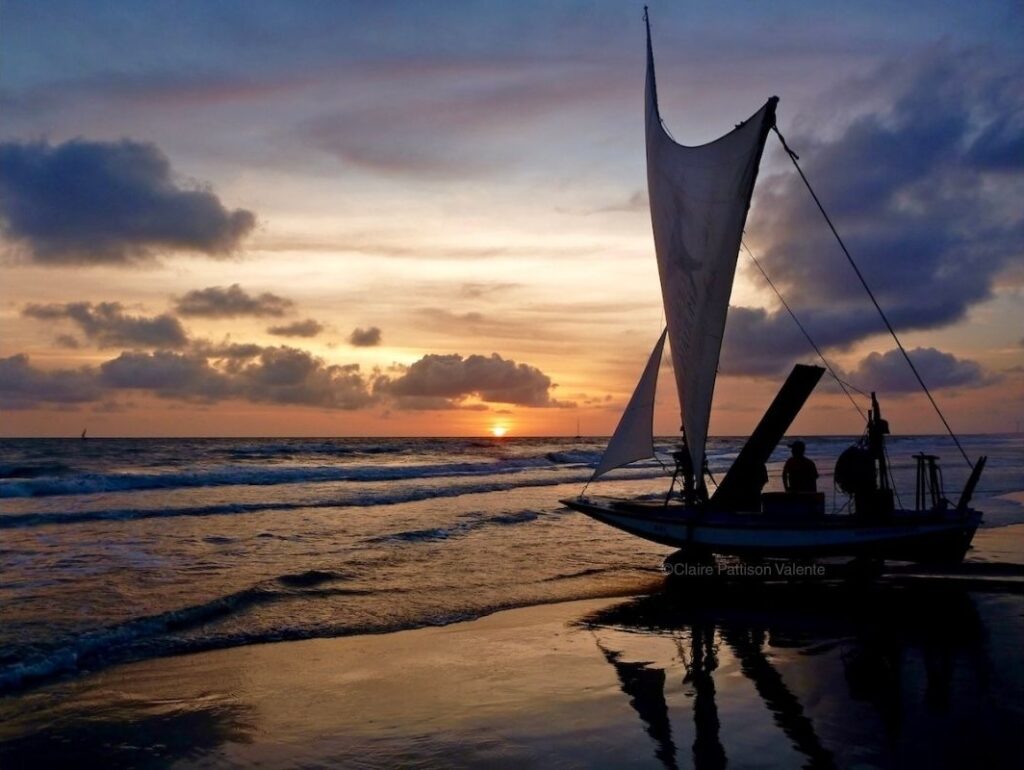
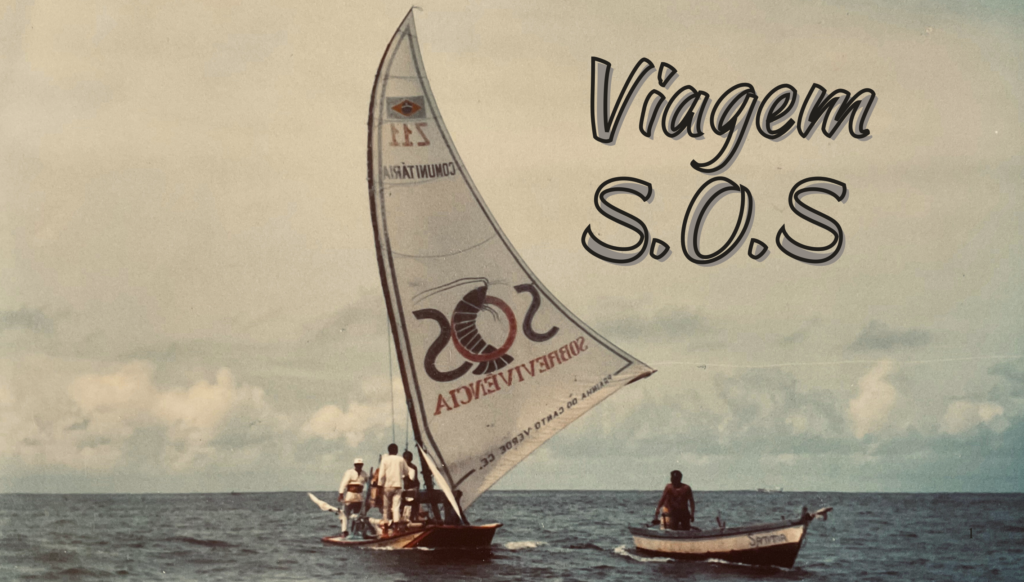
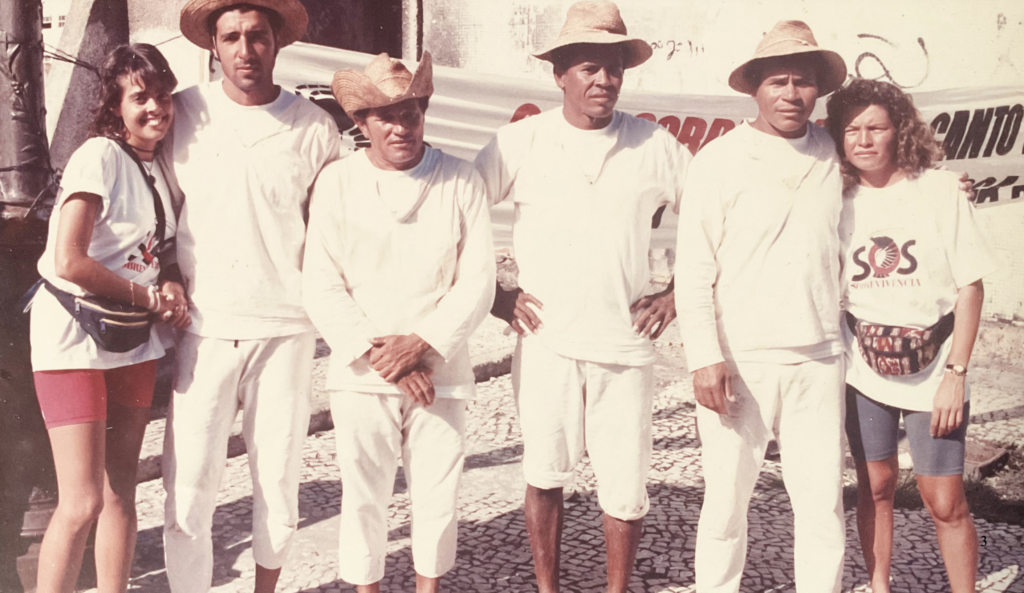
One of the crew on the 1993 voyage was Chico Augusto, my brother-in-law. He described the journey simply as “tough”, which seems to me a considerable understatement for 74 days at sea on a basic sail raft, facing waves of up to 25 feet, far from home and family, in waters none of them knew.
The men and women were well received wherever they landed, often in places where the local inhabitants faced even worse issues over land rights than those in Prainha. Sadly, despite making headlines around the world, the journey failed to have the longterm impact that had been hoped, predatory fishing and land rights issues are as big a problem as ever.
However, the publicity the voyage generated was used to mobilise international support and fund the continued legal battle. A fax campaign to the Governor of Ceará called for an end to the attacks on the village. Meanwhile the legal battle continued with the property developer appealing each time he lost in court, finally reaching the high court where all three judges ruled in the residents favour and refused the developer further right to appeal. This ruling almost thirty years after the fight began, opened the door for Prainha do Canto Verde in 2009 to be officially recognised by Presidential decree as an Extractive Reserve, a protected designation intended to preserve the territory for the community that had always lived and worked there.
It was a remarkable victory.
What has followed has been more complicated. Reserves require enforcement as well as designation and the years since have brought new pressures and new battles. The story of Prainha is still unfolding and if you want to understand it more fully, you will find much of it threaded through the posts on this site.
Visiting Prainha do Canto Verde
Prainha do Canto Verde welcomes visitors. There are several small pousadas (guesthouses) run by local families, and the community has long been part of Tucum, a network that supports and promotes community-based tourism along the Ceará coast. Tourism here stays local. The people you meet, eat with and buy from are the people whose families built this place.
If you are planning a visit and would like advice on getting here, finding accommodation or making the most of your time, feel free to get in touch using the contact form, I am always happy to help.