
There is a history of activism amongst the women of Prainha do Canto Verde.
It was women who first raised their voices against the developer who was illegally trying to take over Prainha do Canto Verde. Theirs were the first steps in the long fight that culminated in the creation of the Extractive Reserve (also known as a RESEX) that we have today. The women’s group is still very active, and I am pleased to be among the women who serve as coordinators.
In May we went on a day trip. Our first stop was Caponga, about an hour’s drive along the coast from Prainha. We were met by a group of local women who provided us with a fantastic breakfast, followed by a talk detailing the issues they face — mostly the lack of available land, now that so much has been built on by outsiders.
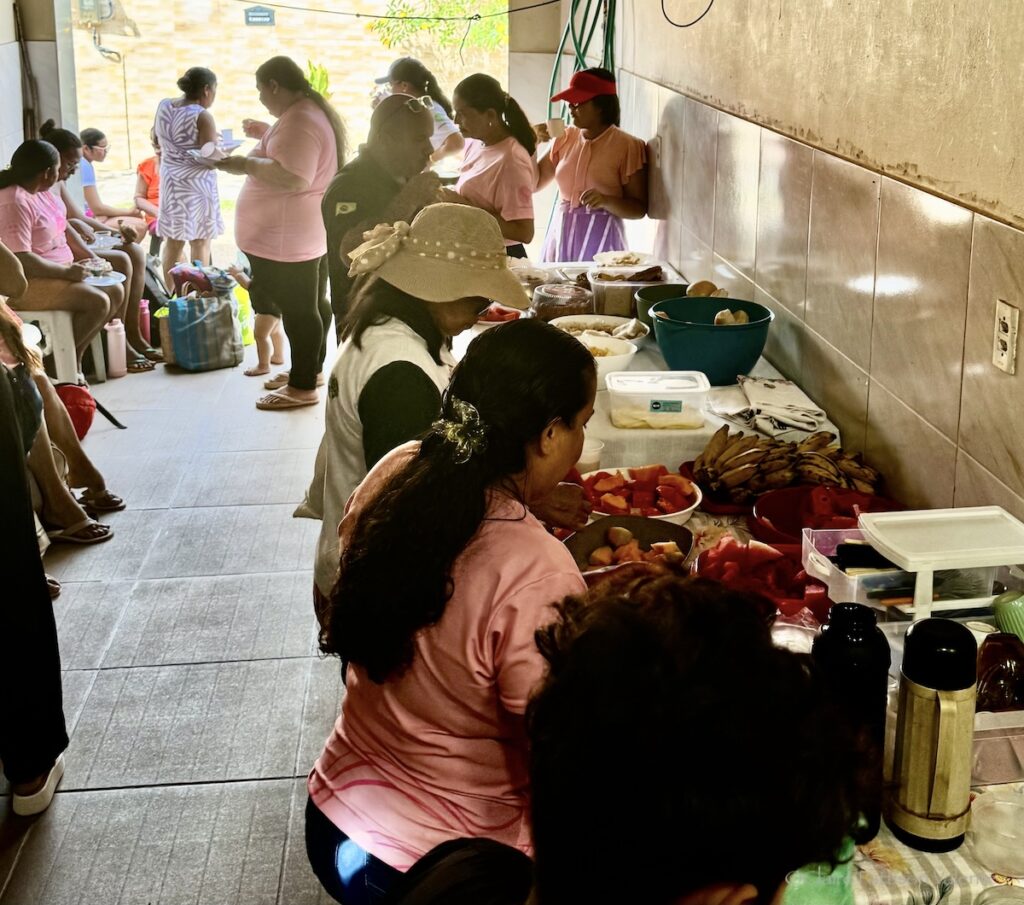
Not that many years ago, Caponga was a fishing village, just like Prainha do Canto Verde and land speculators had given them both the same story. Construction would bring jobs, tourism would bring jobs, everyone would benefit from hotels, condominiums and large homes for the wealthy. It all sounds wonderful, but the reality is very different and thankfully Prainha said No. In Caponga, the work dried up the moment the building stopped, and the promise of tourism jobs was never realised. Today there is nowhere left for young families to build their own homes, leading in many cases to three generations of one family living under one roof.
It has to be said that it was local people who sold the land to outsiders, and the women were the first to acknowledge that their own community also bore some responsibility — for lack of unity, for lack of understanding, and for believing it wouldn’t make any difference to sell one small plot (which was often dramatically extended after purchase). Sadly, the situation isn’t as simple as saying they should have known better; we are not talking about a level playing field. Most people in fishing communities are on a low income and the money offered for land, though often way below the real market value, would have seemed like a fortune and the promise of a better future.
The difference in the level of construction between Caponga and Prainha do Canto Verde is easily visible on these comparison maps
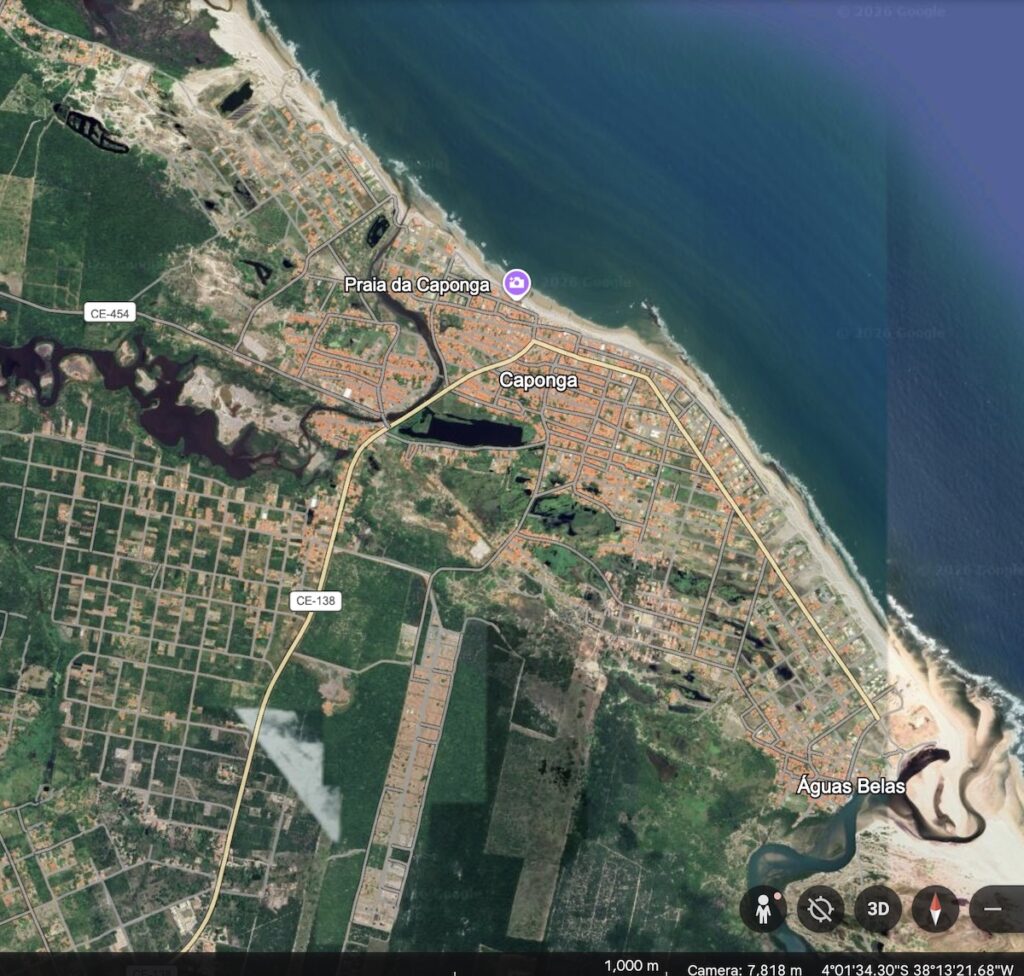
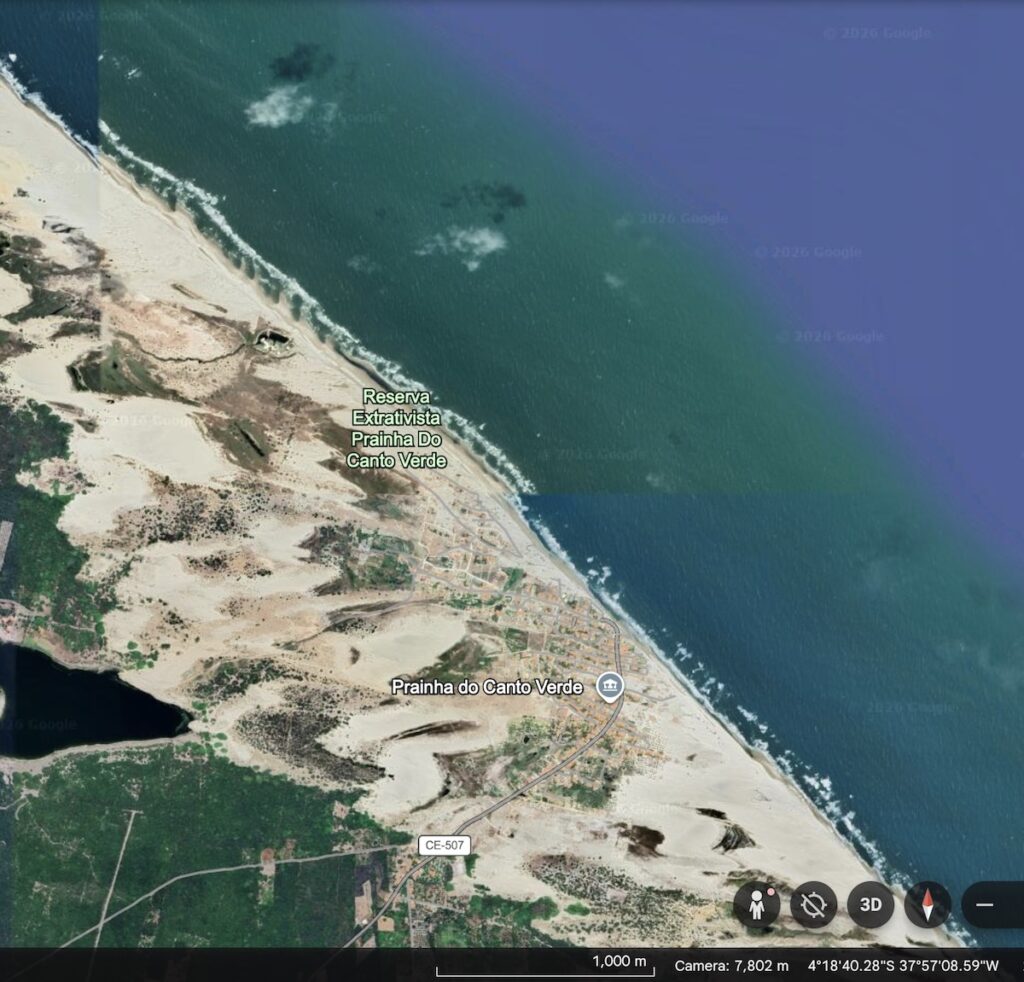
Whatever the rights and wrongs of what happened in the past, the result has been the same in many, many places along this coast and in coastal regions around the world. The people who have traditionally made their living from the sea are pushed further and further away from it. They have lost not only their land and their traditional way of life, but also their culture — and that is a loss to all of humanity.
The women from Caponga spoke of how desperately they wished they too had Extractive Reserve status. They are fighting on so many fronts to hold on to what is left: fighting against land speculation, prawn farms, and — a threat felt by many coastal communities — the offshore wind farms planned all along the coast.
In years gone by the area was covered in mangrove swamps. When people began destroying them for prawn farms or building developments, locals complained to the authorities, but nothing was done to stop the destruction. Now, with so little land available, some local residents have begun to build in what’s left of the mangroves, and the authorities have acted against them.
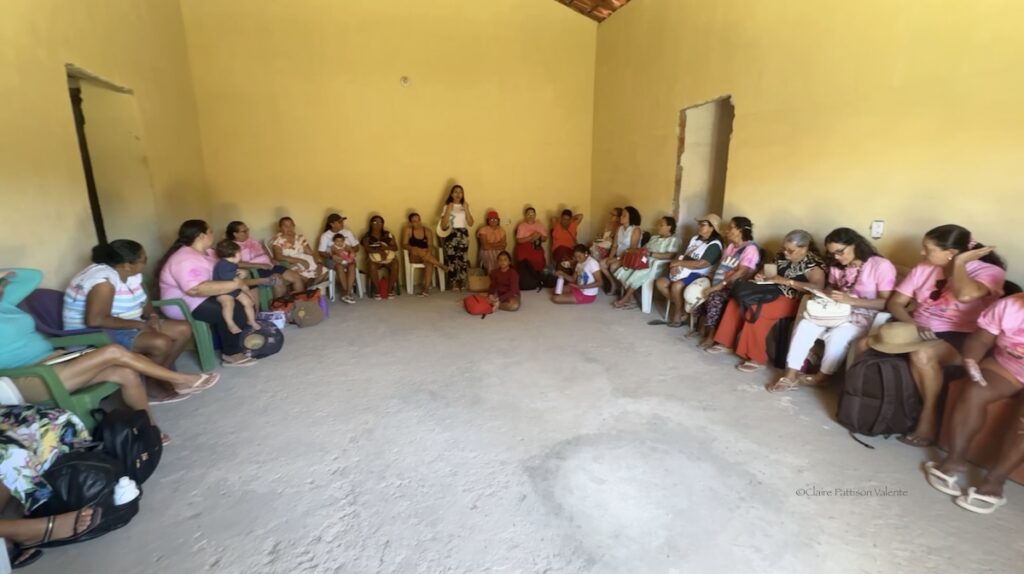
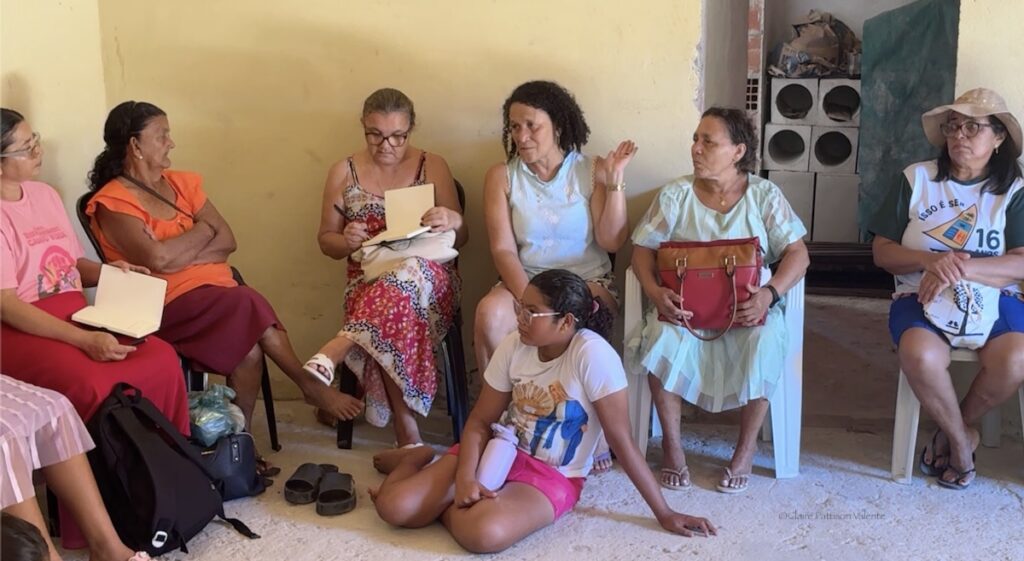
Clearly what remains of the mangroves needs to be protected, but it is understandable that many feel the injustice of wealthy individuals seemingly able to break the law with impunity, while those with little or nothing are penalised. Time and again, the women urged us to appreciate how fortunate we are to have the level of protection that Reserve status offers. Their message for those selling land in Canto Verde* was simple: “When all the land is sold, where will your children live?”
*Under Reserve status, it is illegal to buy or sell land to anyone who is not a native resident, yet some people continue to do so.
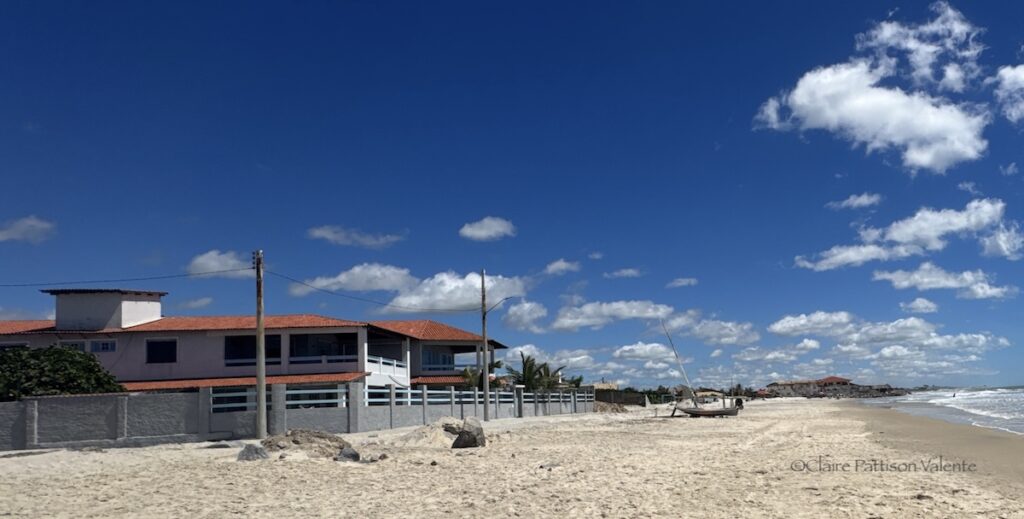
After further discussions on a range of topics affecting us all in this region — fishing, land rights, access to water and climate change — we walked down to the beach. Along the way, the issue of land scarcity was very, very apparent. In Canto Verde we have only one tarmac road, and while some houses along it are built close together, most are widely spaced. Canto Verde spreads out along generally wide, spacious pathways that lead off from the main road, with houses mostly set apart from one another.
In Caponga, we walked in single file through an incredibly narrow alley between the high walls of two houses, emerging onto a wider road lined with houses built against each other. We were right by the sea, yet couldn’t see it for the buildings. Caponga has become an urban area — a small city, in effect — and this transformation has happened in a very short space of time.
It was a sobering reality check for anyone who had doubted that, without Reserve status, Canto Verde could have ended up the same way.
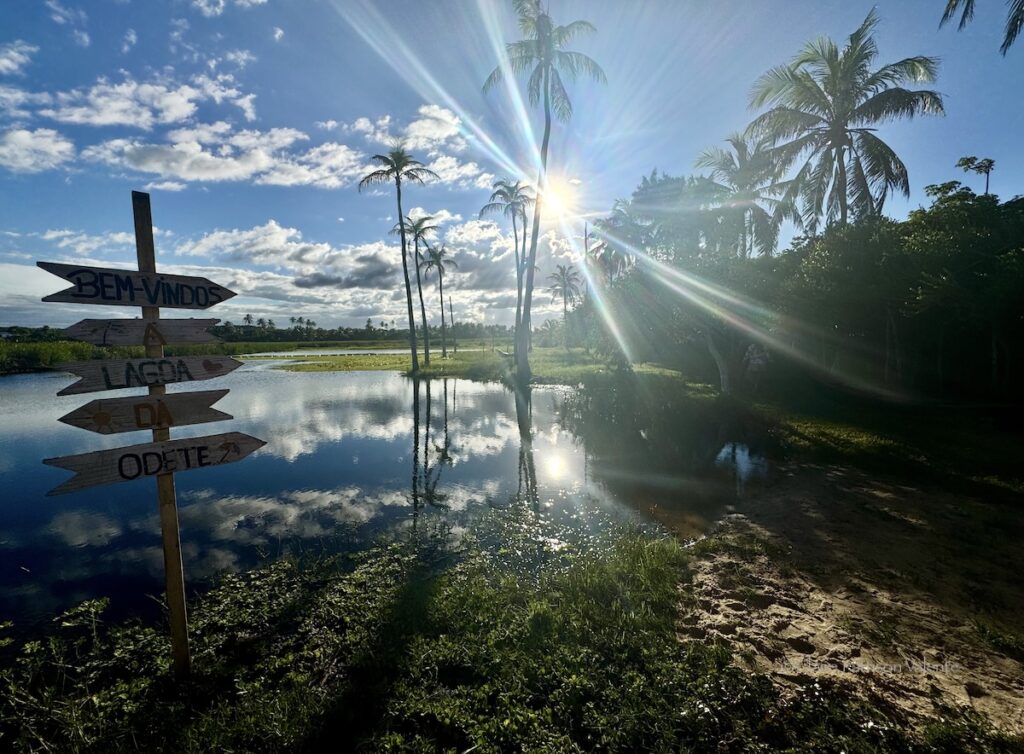
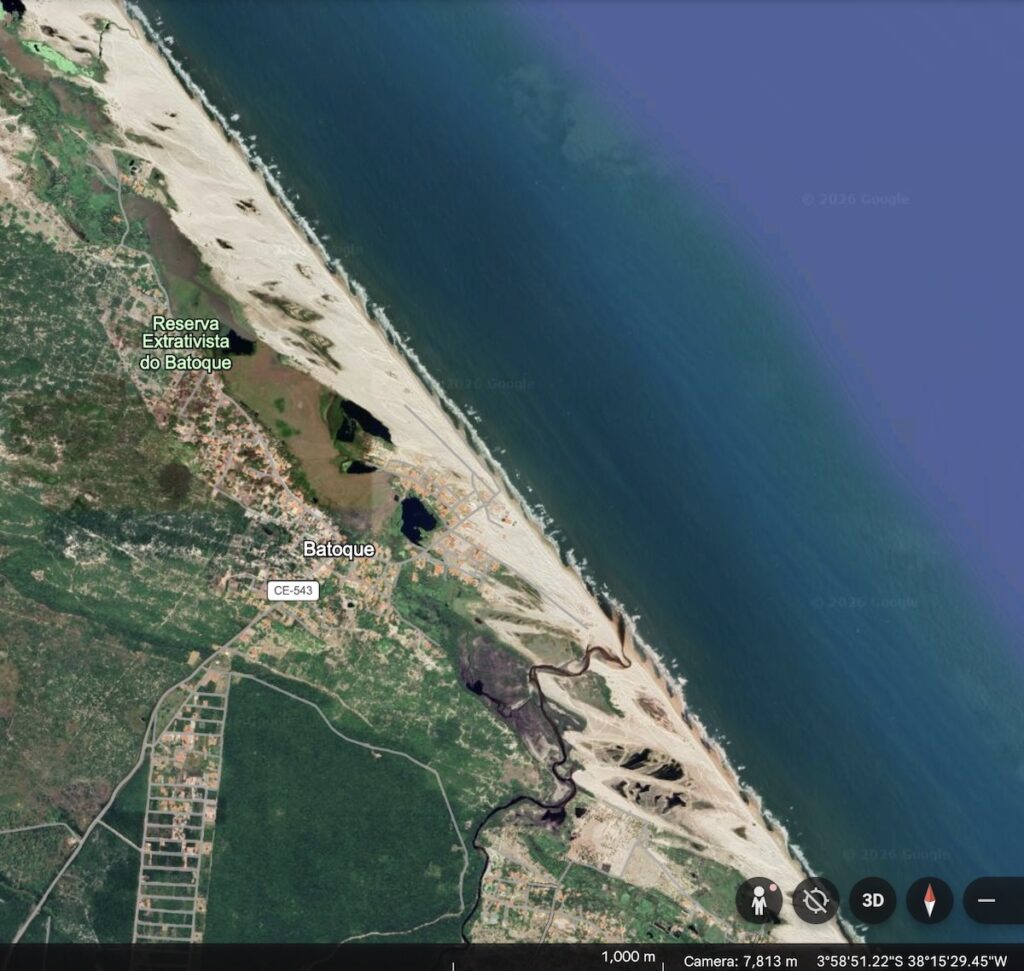
Our next stop was Batoque, another Extractive Reserve, where we were hosted by Odete and her family beside her home, with a view over a peaceful lagoon that looked wonderfully inviting on such a hot day. Odete is a remarkable woman who fought long and hard to protect her native land from speculation, enduring serious and repeated threats to her life before Batoque was granted Reserve status. She is truly courageous, and I greatly admire her.
We discussed the issues raised by the women of Caponga and what we had gained from the experience. For many of us, it brought home just how much the Reserve status — imperfect as it is — protects us. We each noted down something we felt was important for the future of Prainha, or something we had learned from the day.
I led a meditation and relaxation session and then we read out the notes we had made, being rewarded for our efforts with a delicious handmade truffle, crafted by another of our coordinators.
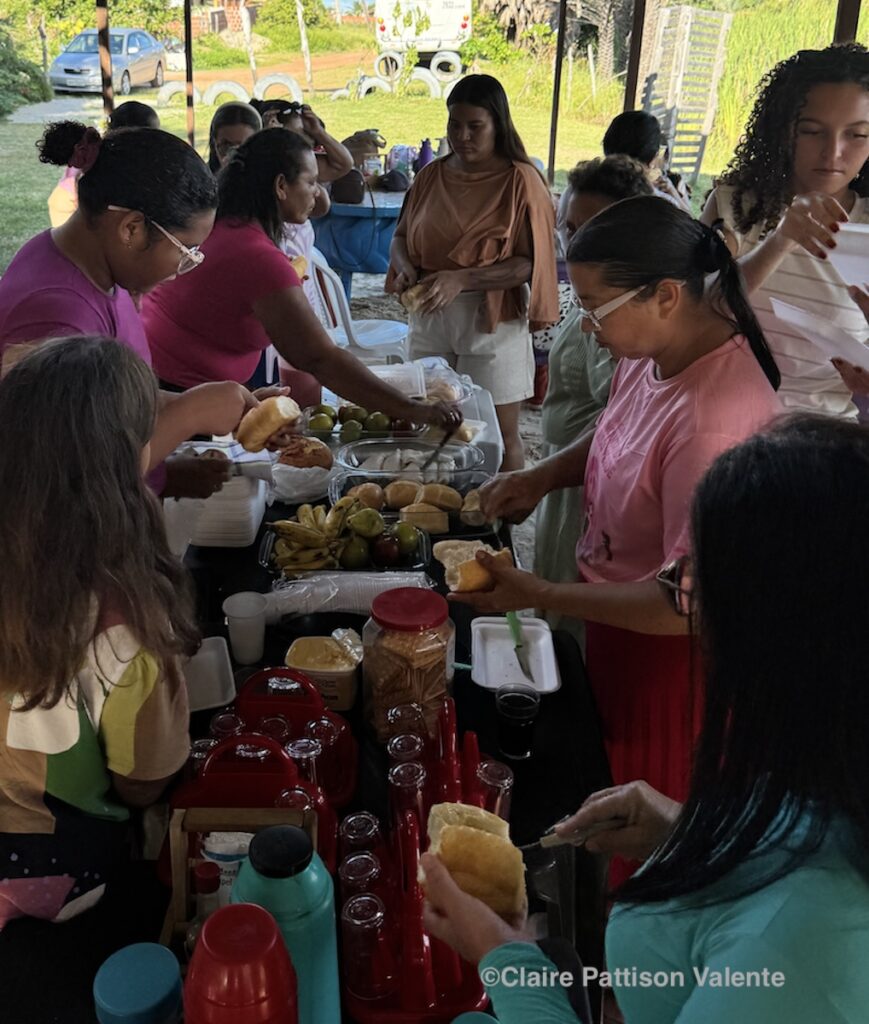
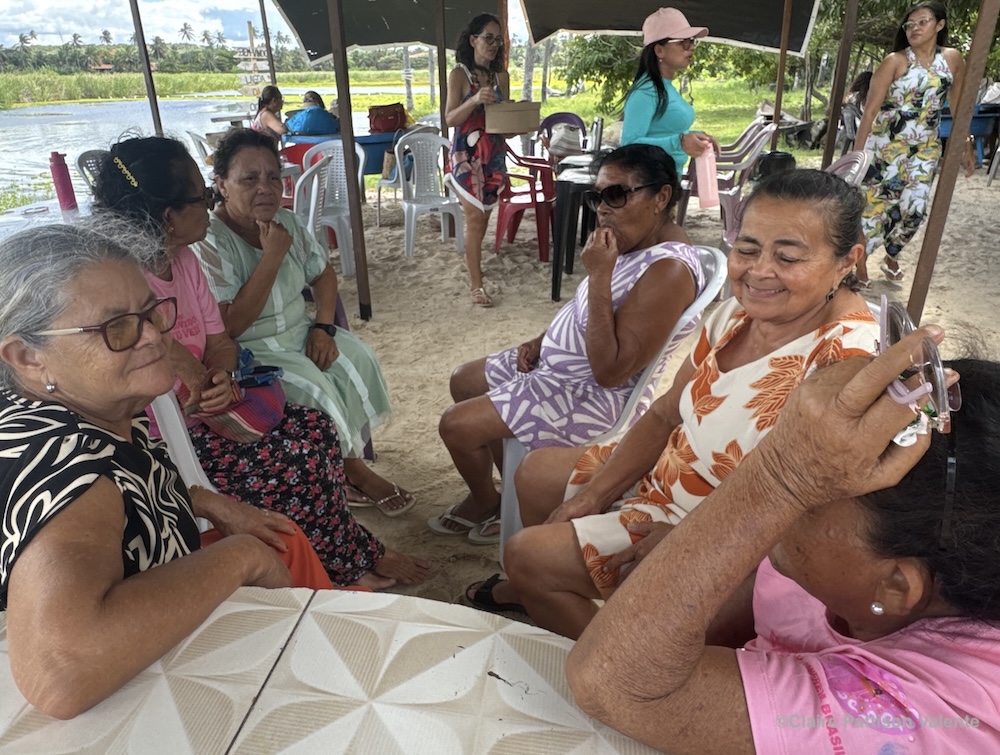
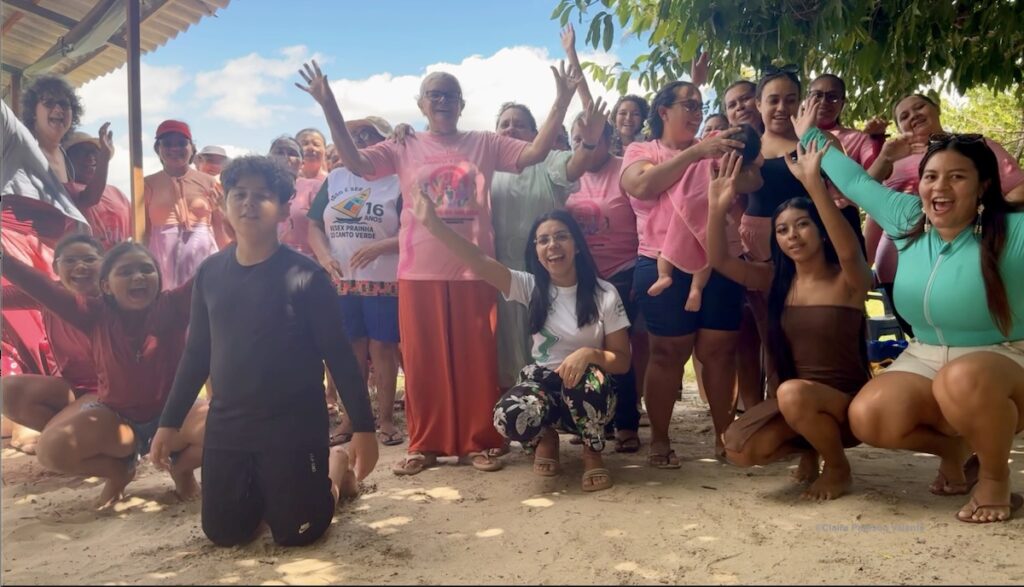
We enjoyed a wonderful lunch and then relaxed by the lagoon or went to the beach until it was time to head home. Everyone happy, relaxed and glad they had come.
A week or so later, a group of fifty or more women came together to walk to various points in the village, carrying placards covering a range of issues — from women’s rights to the illegal buying and selling of land in the village. We were warmly received, and all very much enjoyed raising our voices. As I said at the beginning, the women of this community have a history of speaking up, and we are reigniting a light that burned brightly in the past. May this walk be the first of many.
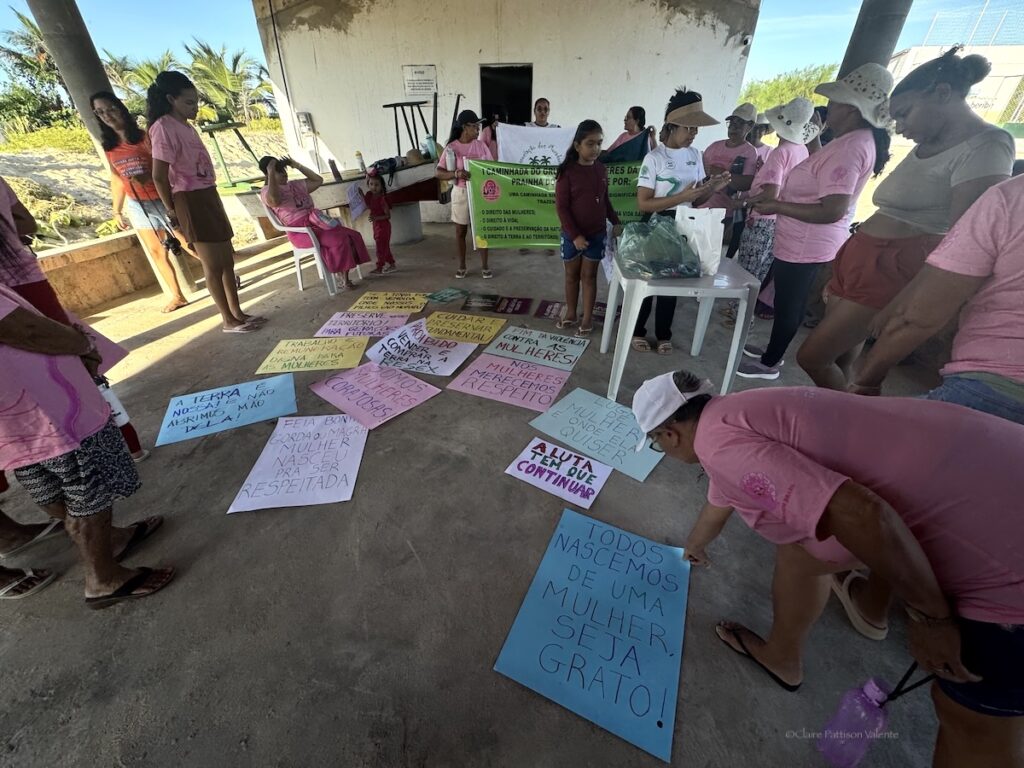
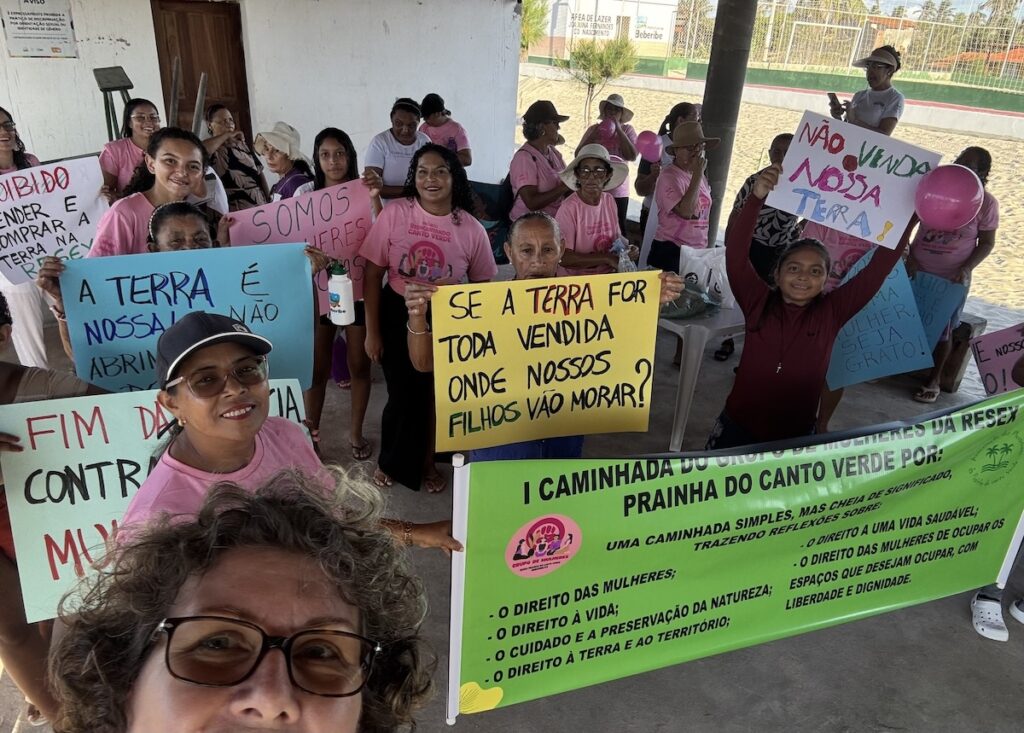
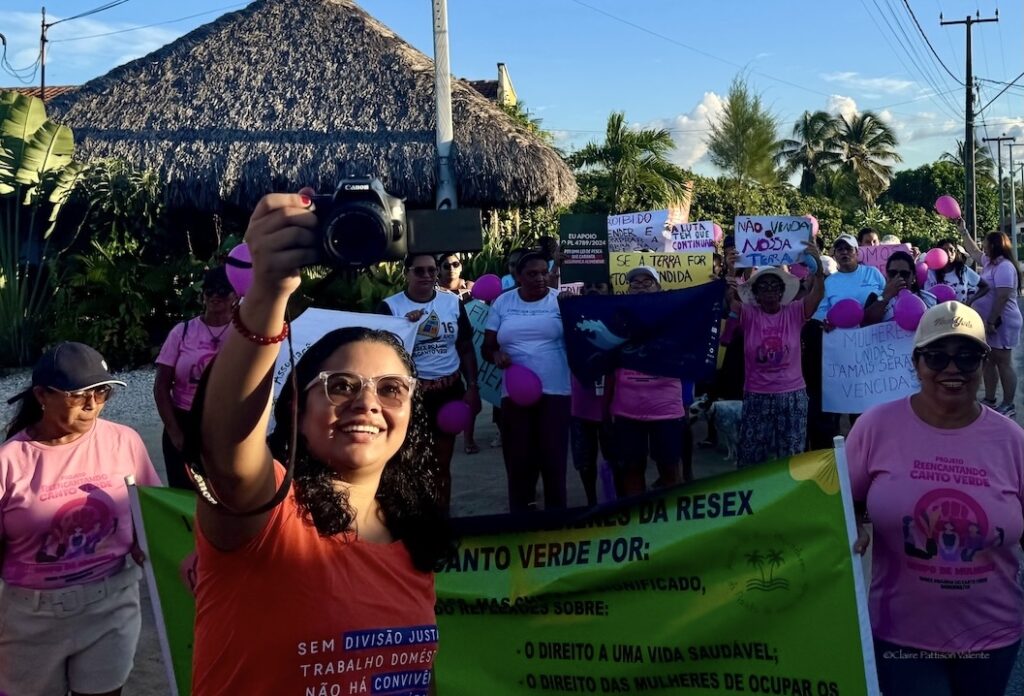
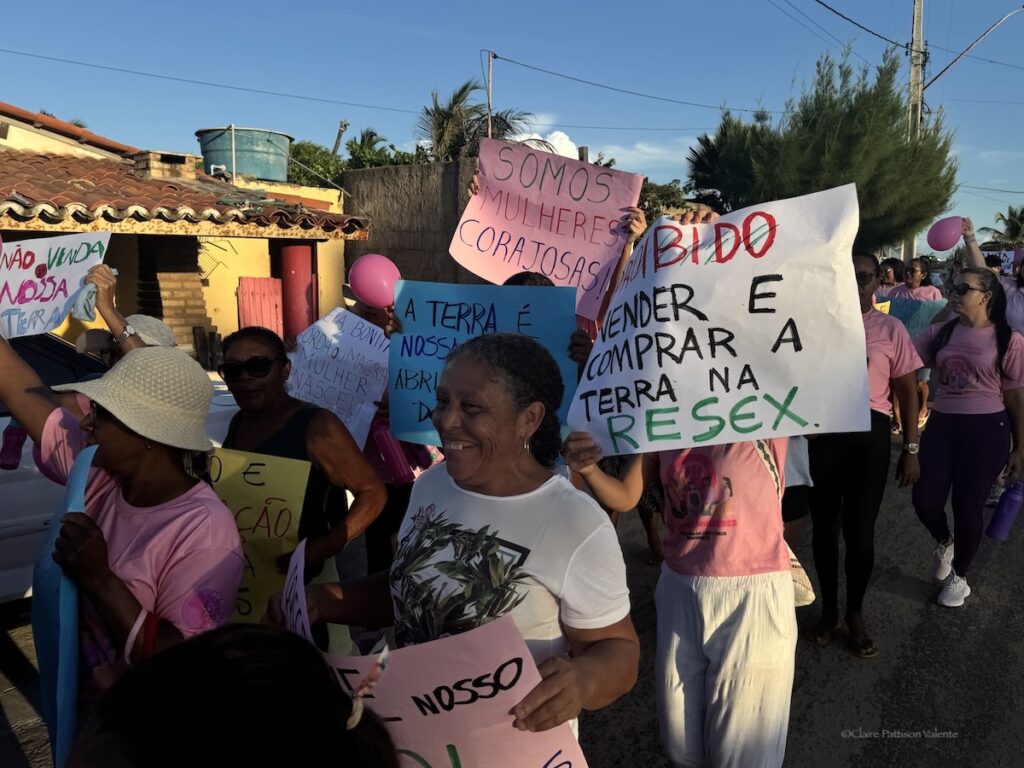
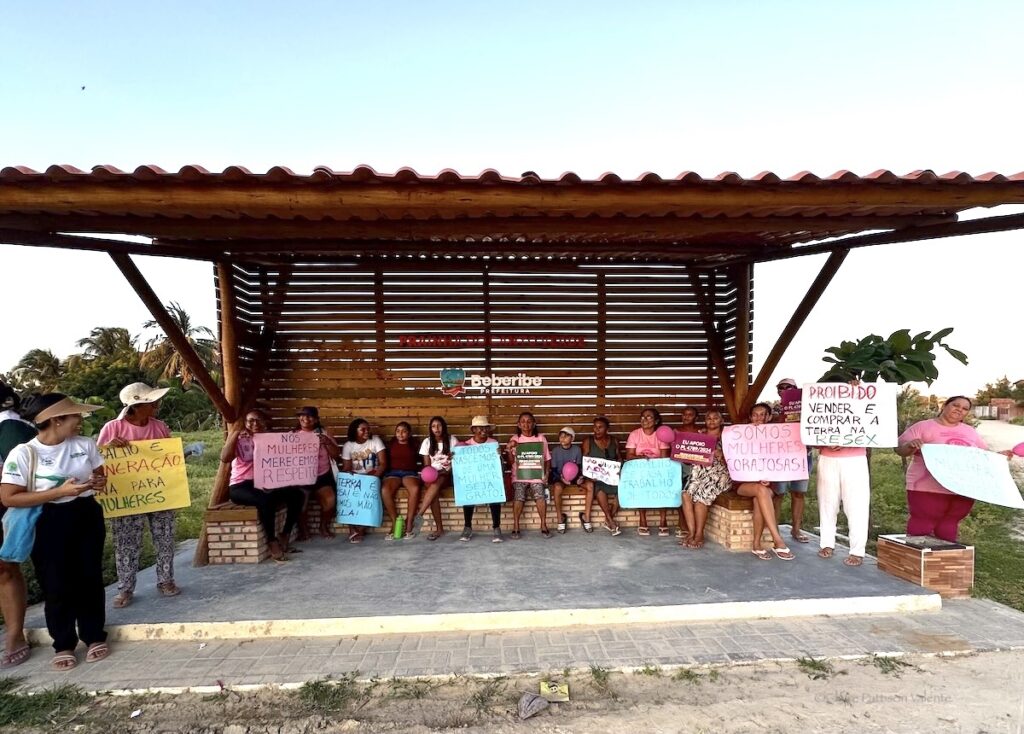
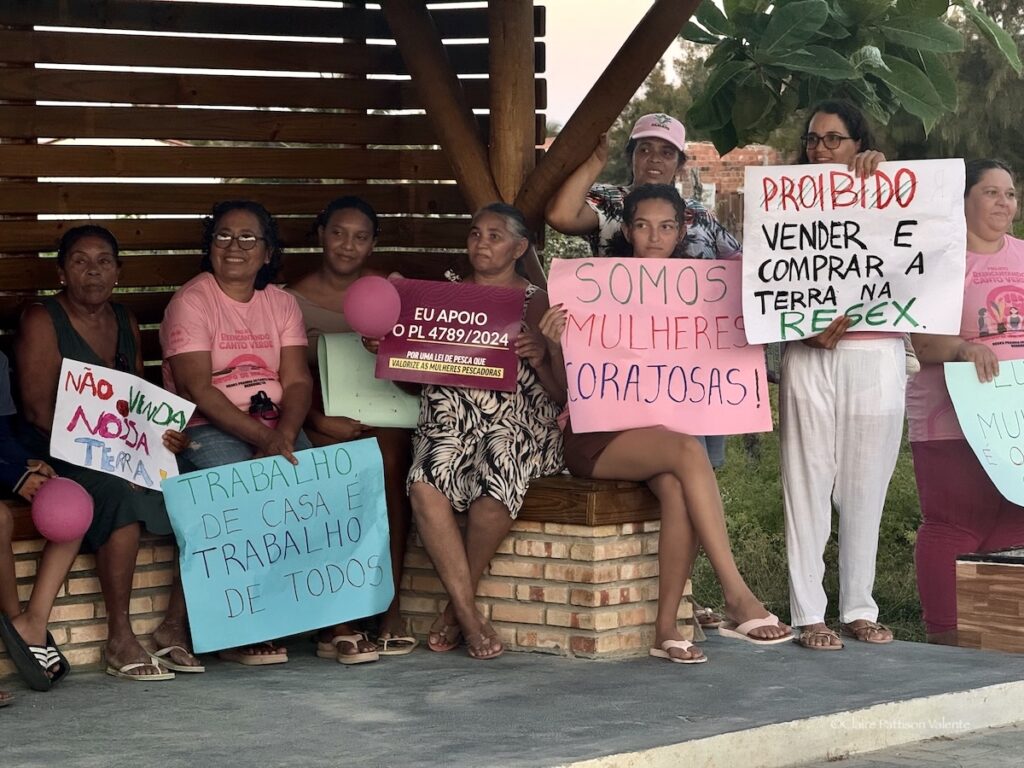
The placards in the photo far right read from left to right: – Don’t sell our land. – Housework is Everyone’s Work. – I support the movement for a fishing law that valorises women. – We are Courageous Women! –It is Prohibited to Sell or Buy Land in the RESEX.