Tags
baby manatee, filhote de peixe-boi, Manatee, manatee calf stranded on beach, manatee rehabilitation, NGO Aquasis, ONG Aquasis, peixe boi
Yesterday Neu went down to the beach early morning and then came back to wake me up. A fisherman had found a newborn manatee (known here as Peixe boi) that had washed up on the beach.
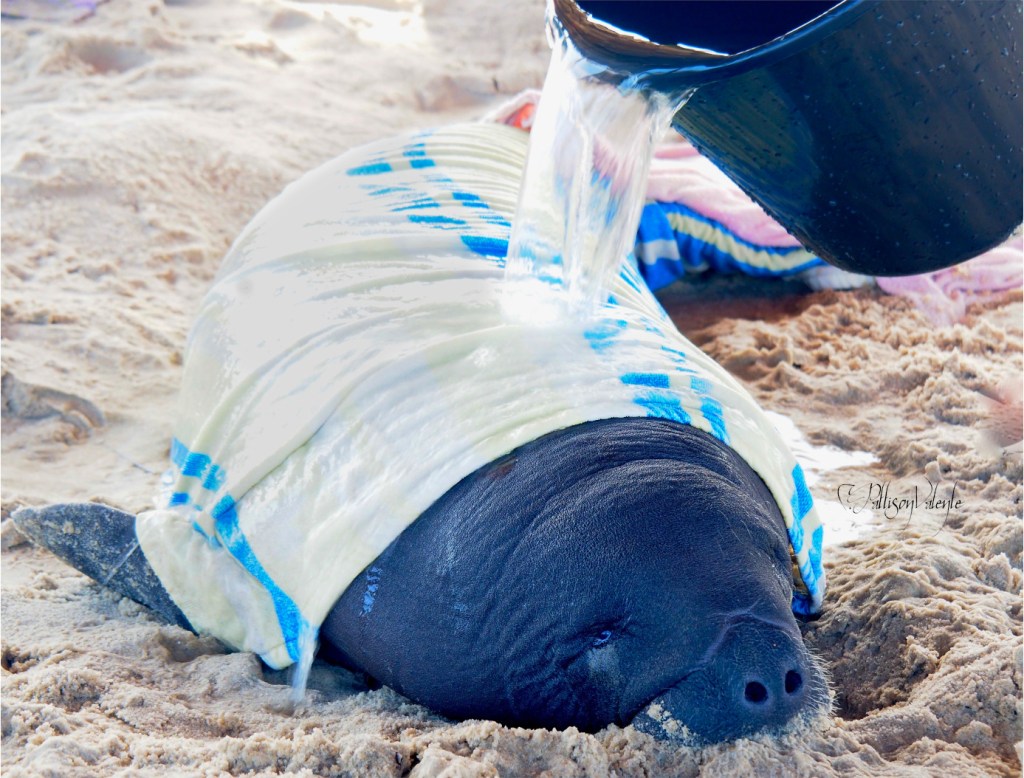
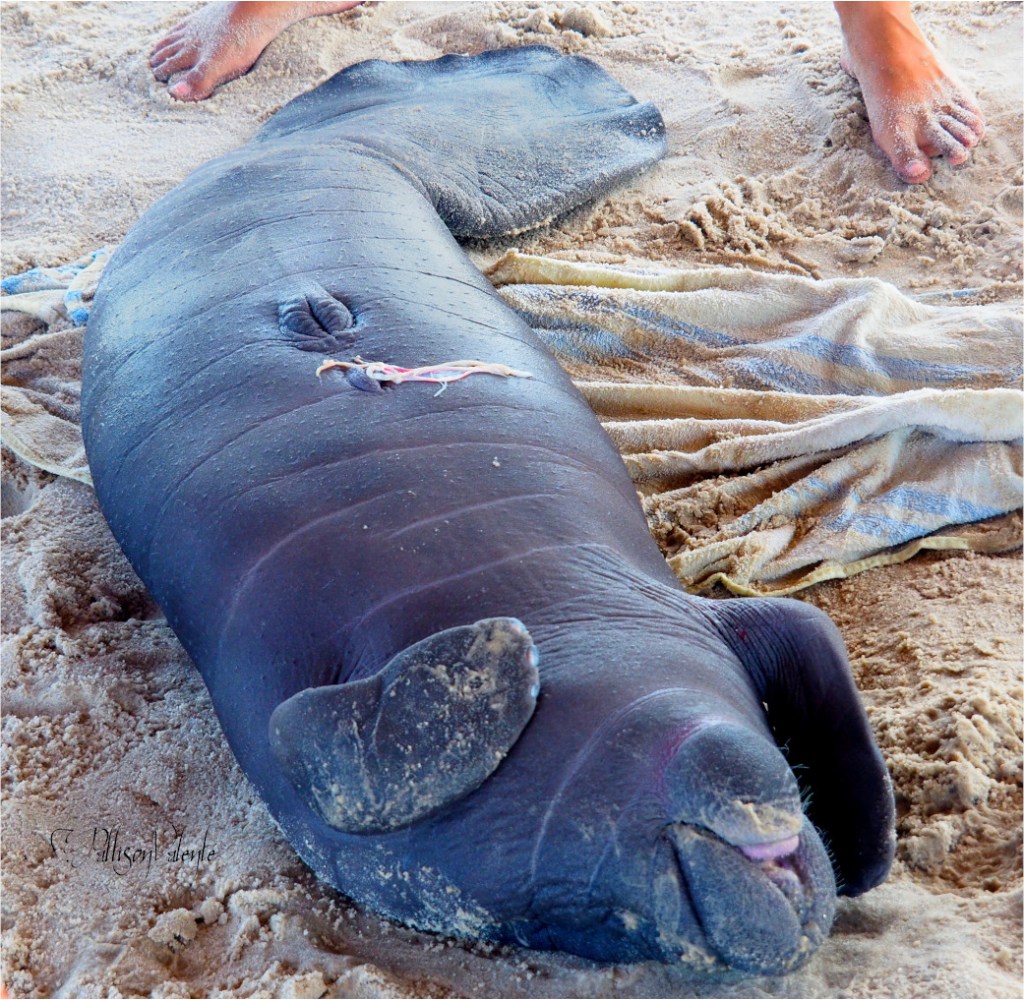
It had been brought to a quiet area of the beach, where it could be kept in the shade until the team from the NGO Aquasis (based in Fortaleza) could get here to rescue it. The poor thing was newborn, its umbilical cord was still attached, which meant it had probably not even had a drink of its mother’s milk. So sad to think of her looking for it too.
Manatees normally give birth in the calm waters of estuaries or mangroves. They need to reach the surface to breathe and the mother will normally support her calf in the water until it becomes a stronger swimmer. The calf also feeds exclusively on its mother’s milk during the first few months of life, so it is vital that they remain together in calm waters.
Unfortunately, like so many other animals, manatees are suffering from habitat loss. As mangroves are cut back, the increased wave action on the remaining area brings in large amounts of sand, making the water too shallow for the mother to enter. Forced to give birth at sea, if the waves are at all rough she is unable to prevent them washing the calf away and, if they don’t drown, they end up on a beach.
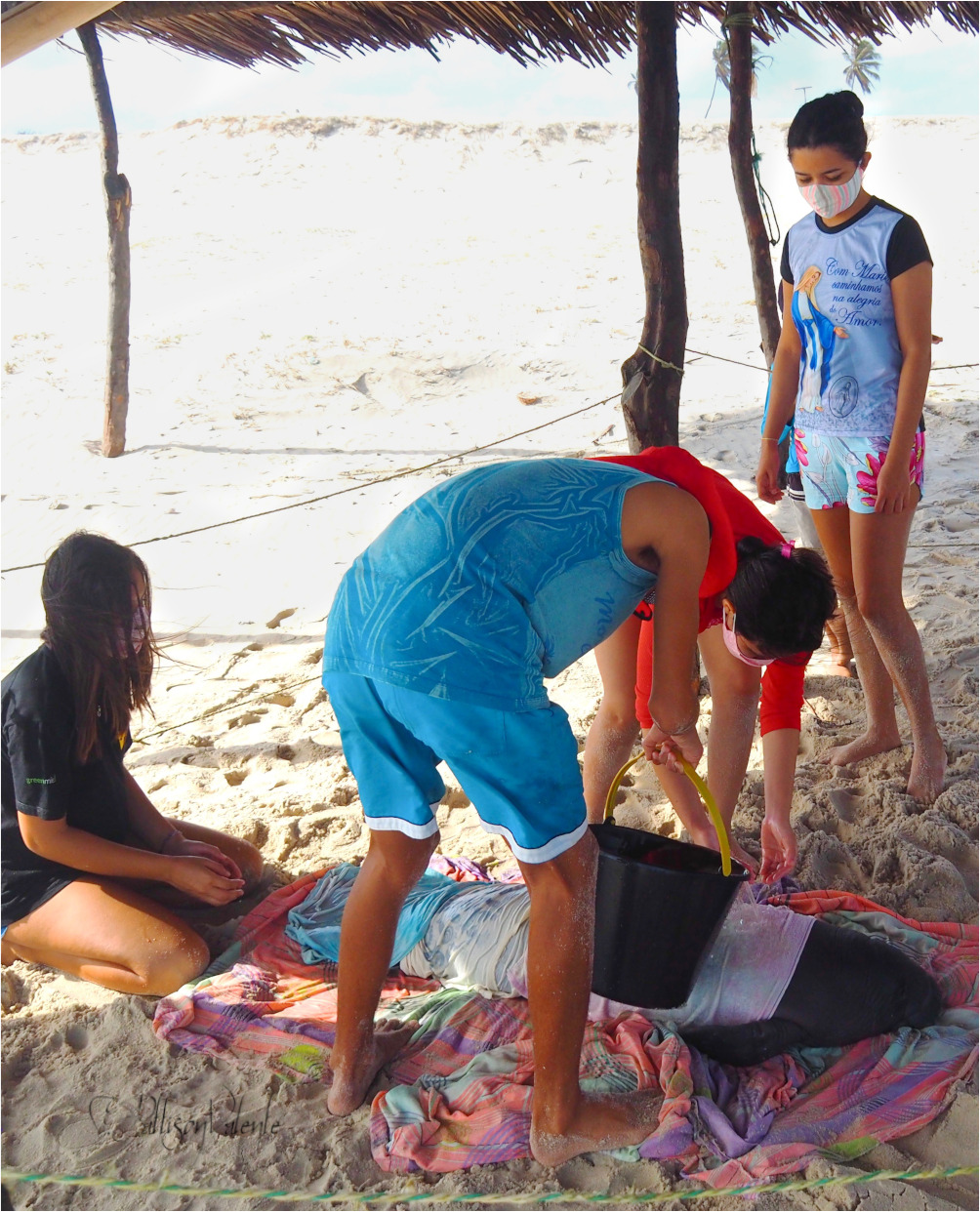
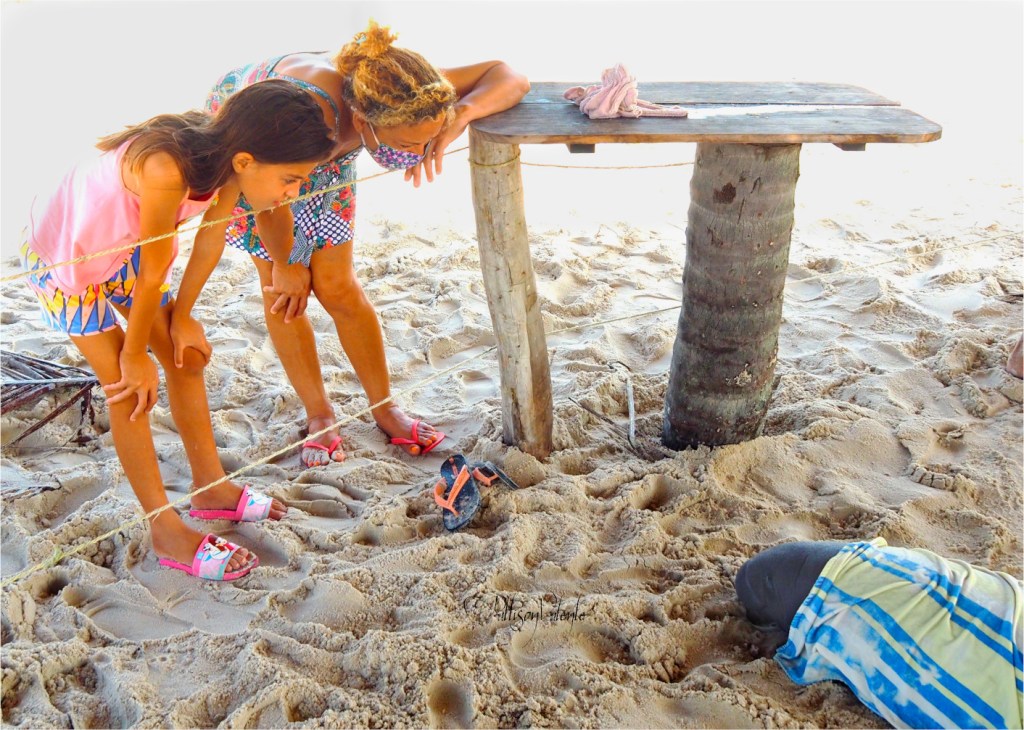
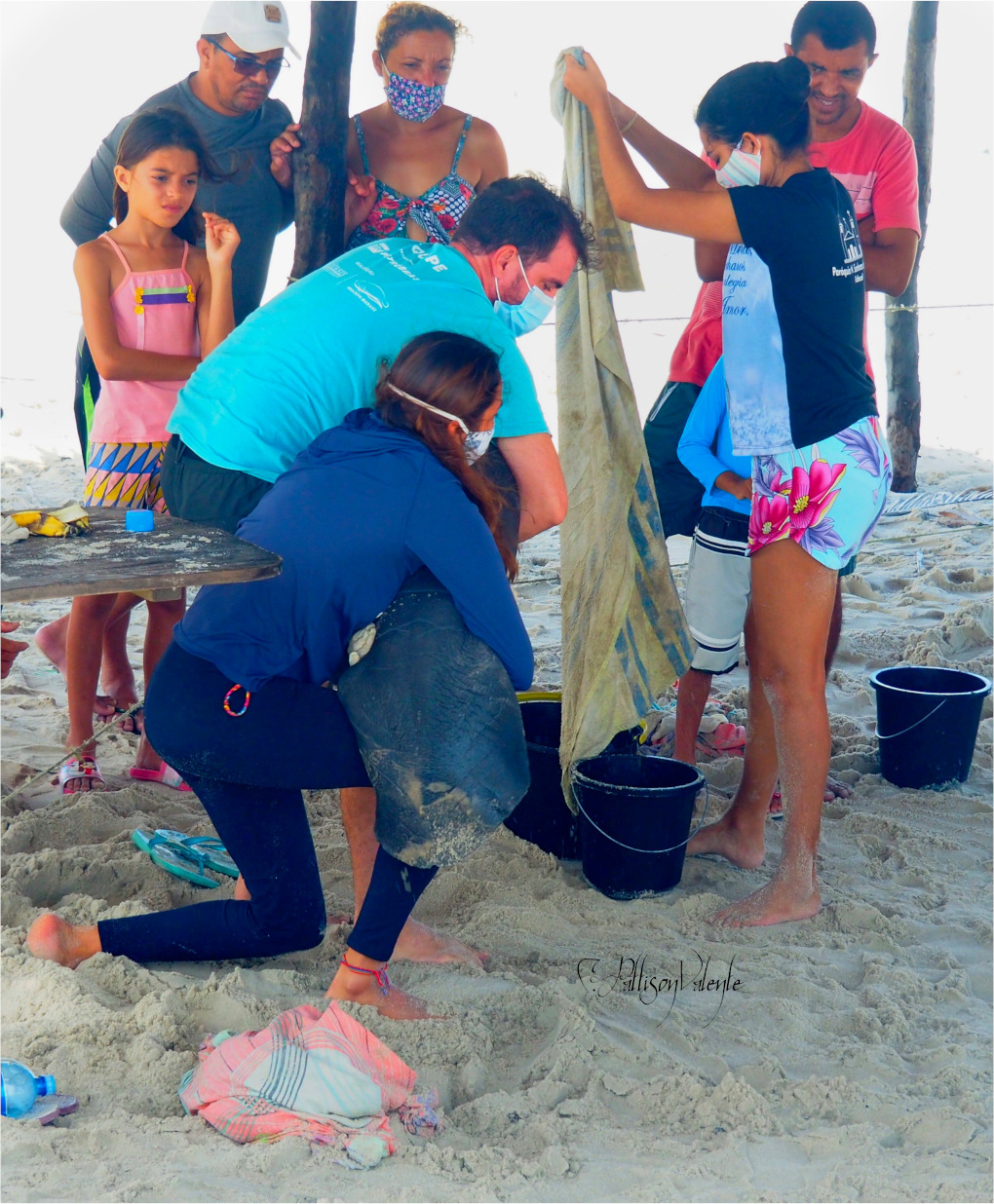
The young people who were caring for the calf did a fantastic job. They had roped off the area around the shelter, which was respected by the onlookers who came and went. The carers kept up a regular supply of buckets full of seawater to pour over it and keep it cool, it is always hot here but especially so at the moment. The poor calf must have been very scared and obviously had an instinct to get away, occasionally thrashing about or rolling over onto its back but the group remained calm and just gently rearranged it again.
As the team from Aquasis had a long way to come, we knew it would take them about three hours to get here. Many buckets of water later, everyone was greatly relieved when the team, consisting of technicians Letícia Gonçalves and Vitor Luz and volunteer Beatriz Queiroz, arrived just before 9 am.
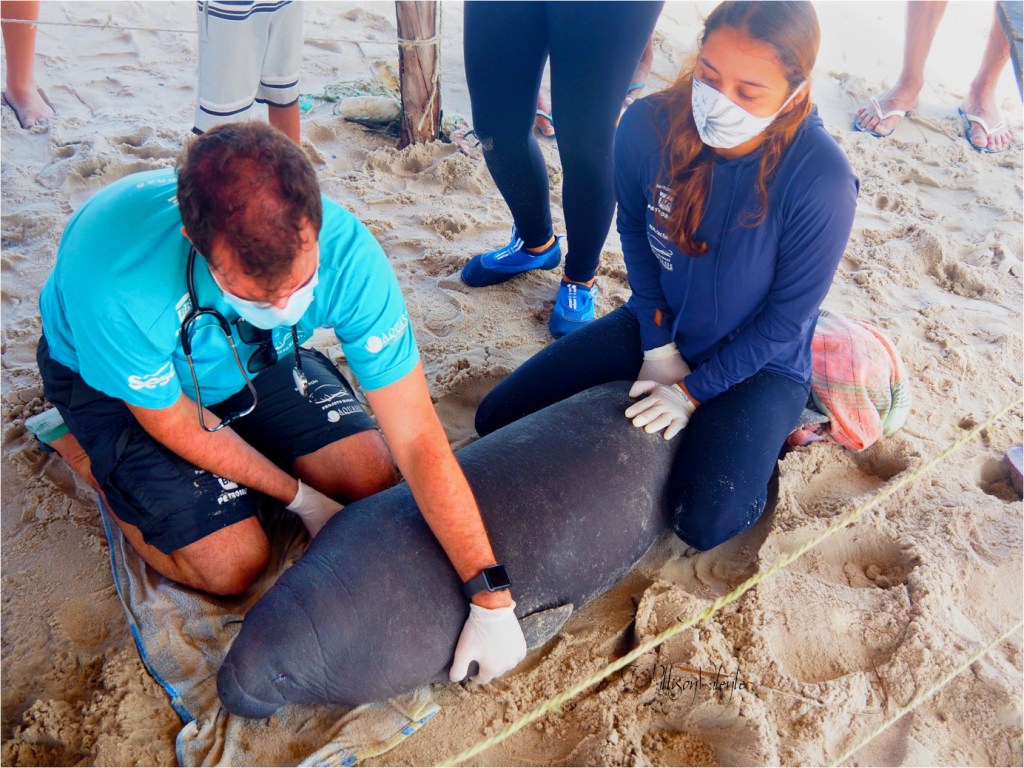
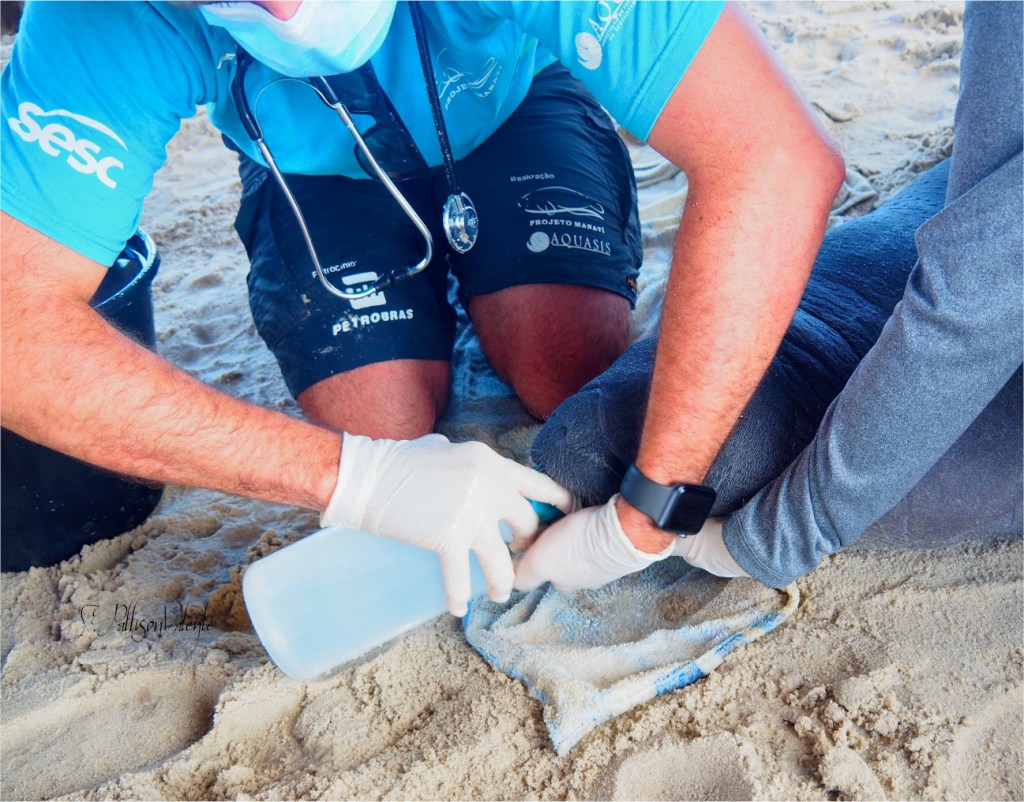
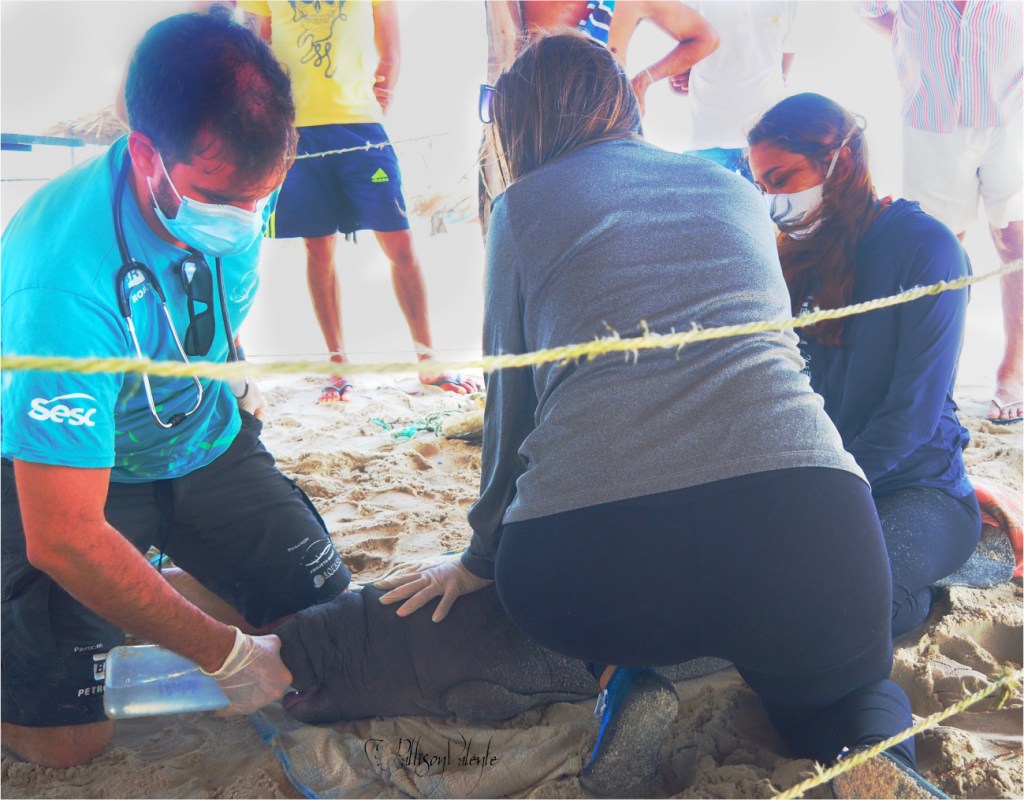
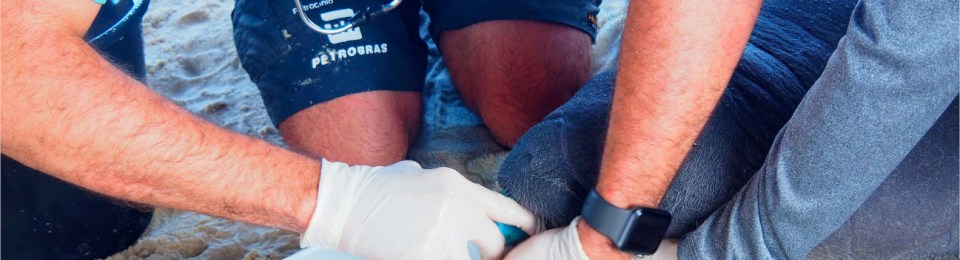
The vet gave the calf a quick check-up. It was a male, less than 24 hours old and very debilitated. The vet said it wouldn’t have suckled before it was washed away from its mother. It got a much-needed drink of rehydration fluid, which it gulped with gusto. Back at the rehabilitation centre, it will be bottle-fed with a special formula until, hopefully, it is big and strong enough to be released back into the wild.
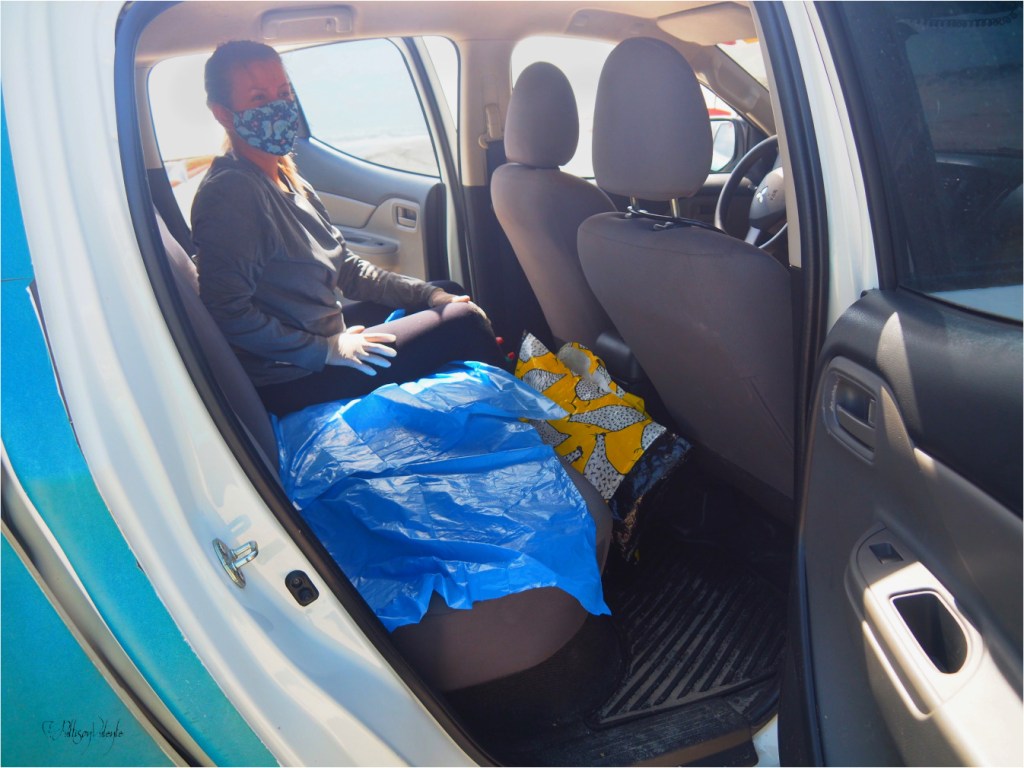
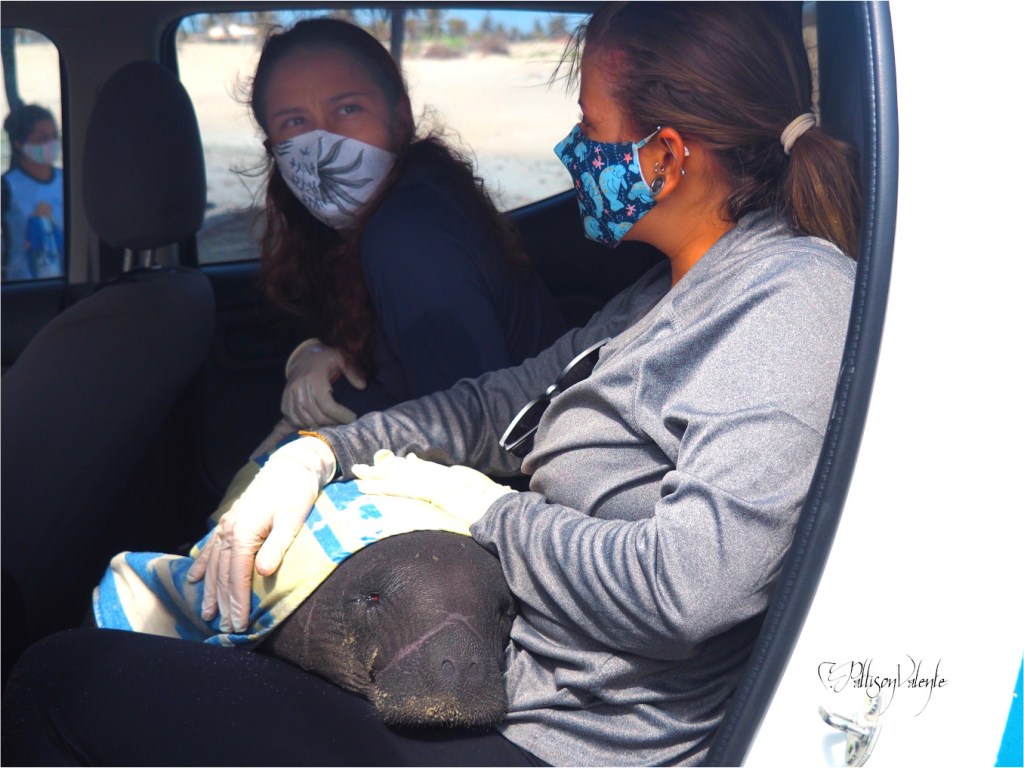
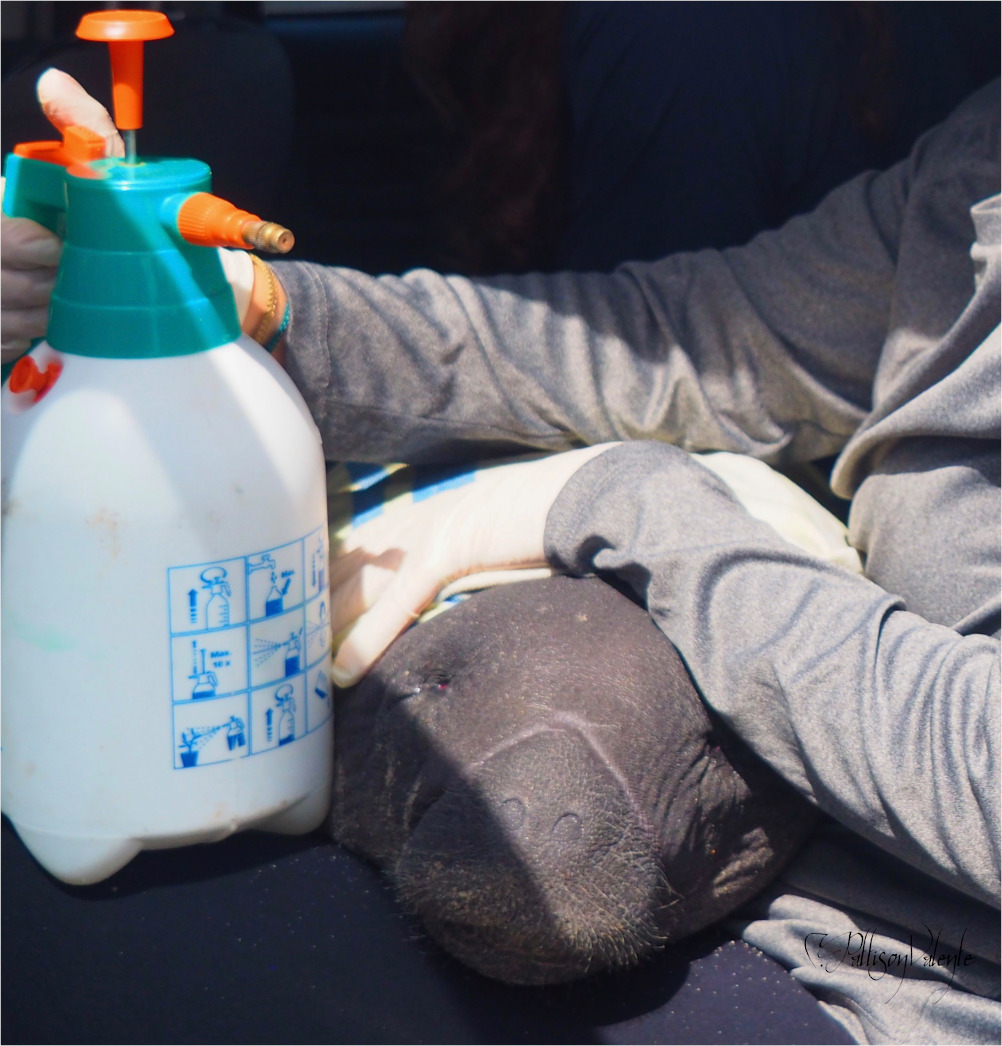
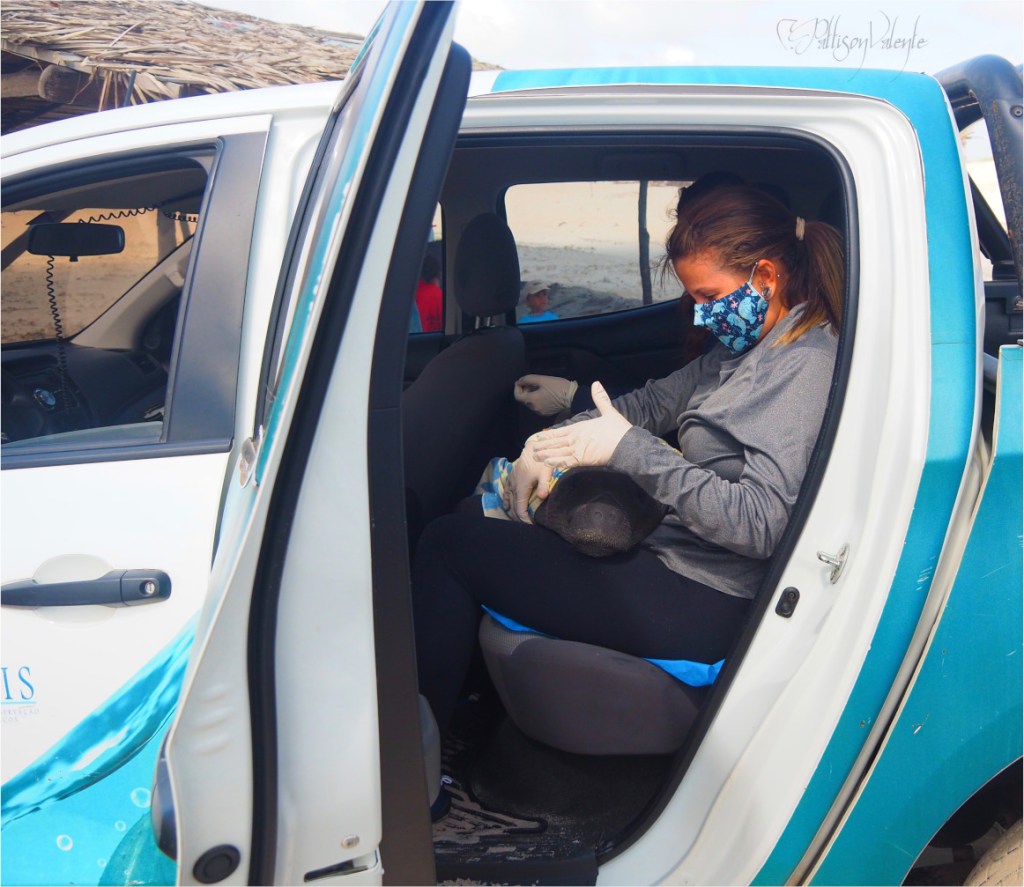
It was to be transported back to the centre, lying across the laps of the two female team members in the back of their vehicle, that way they can keep it misted with water and I guess, give it more fluid. I have no idea how much it weighed but I imagine their legs will feel it after a while, though quite clearly they were not in the least bit concerned about that. Twenty minutes after they arrived in Prainha, the team drove off with the calf back to Fortaleza.
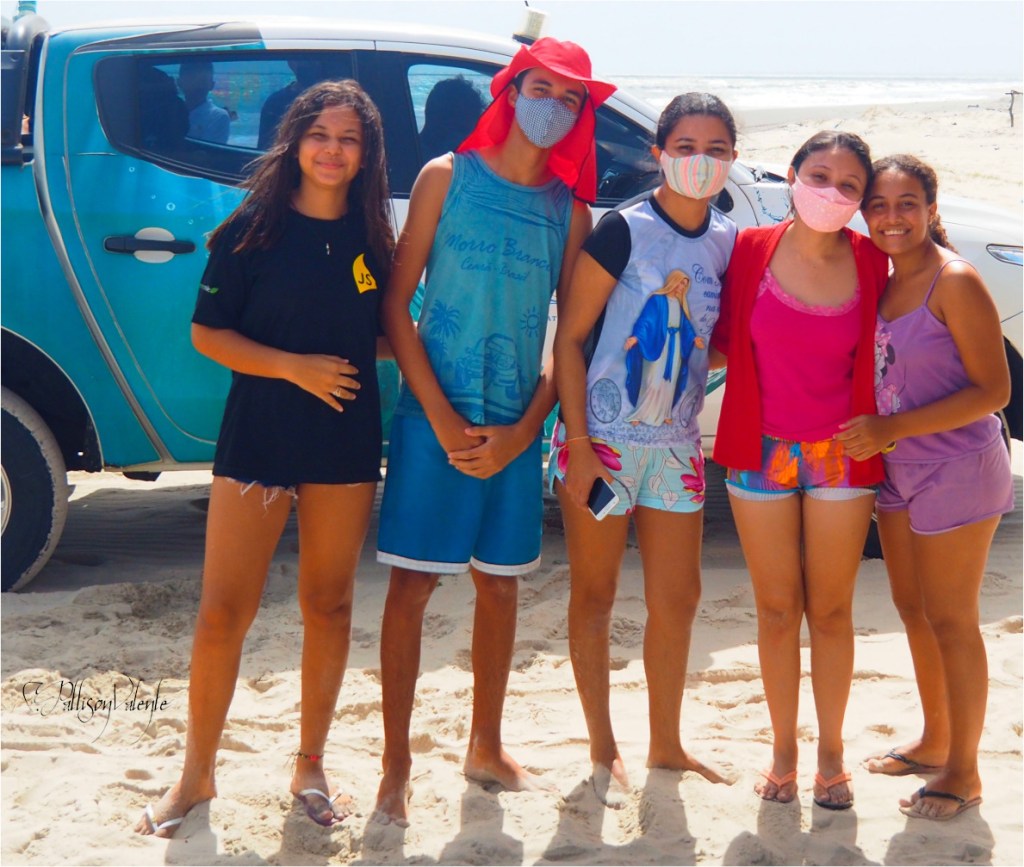
It was such a privilege to see the calf and the young people from here who looked after it did such a good job. Great that Aquasis were on hand to rescue it and do the fantastic rehabilitation work that they do, once again I was impressed by them all BUT…. it is so frustrating that here is yet another victim of human activity, it is us that are destroying the habitat of the manatee.
I’m keeping my fingers crossed for this little chap, hoping this story has a happy ending, if I get any updates, I’ll let you know.
Manatees, are herbivores, eating mostly seagrass and consuming up to a tenth of their body weight in a day. Adults reach between 2 and a half and 3 meters in length on average and easily weigh 500 kilos or more. They are related to elephants.
In a previous post, I’ve written about Aquasis and my visit to their rehabilitation centre in Fortaleza. Here is the link to that post.
This link will take you to the web site of Aquaisis, available in English and Portugese
UPDATE 23 Nov 2020
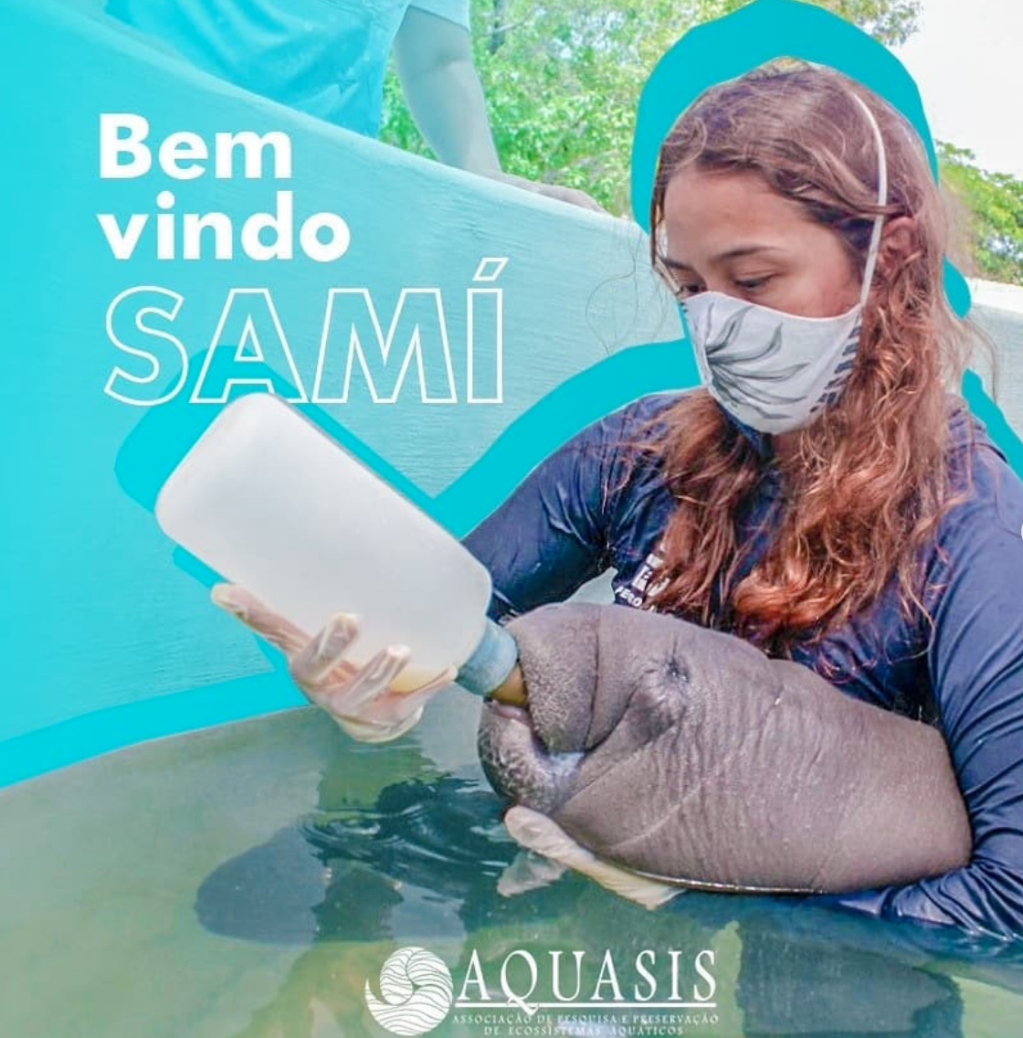
I spoke to Letícia from Aquasis today, she told me that the calf, named Sami, has adapted well to his new environment, is feeding properly and tomorrow, will have more tests to evaluate his clinical condition. That sounds positive news.
 The English Woman's Blog