Tags
4 wheel drive, Canoa Quebrada, Landscape photography, mud, Parajuru, profesional photographer, Reservas Extrativistas, Reserves of Brazil, stuck in the mud
The photographer Luiz Neto is part of a small team who have been travelling around the country, tasked with photographing the Reserves of Brazil for a book about them. Prainha do Canto Verde is an Extractive Reserve and at the beginning of August Luiz came here.
Having a bit of a passion for photography myself, I jumped at the chance of acting as his guide, taking him around the landscape I love so much. Luiz had told us in advance that his schedule was tight, with only 2 days to get the photos he needed. Thankfully, going about in his 4 wheel drive would allow us to cover the area far more quickly than on foot.
Luiz arrived on the Saturday morning and we set off immediately before the light got too harsh and the sun too hot. First stop; Lagoa Salgado.
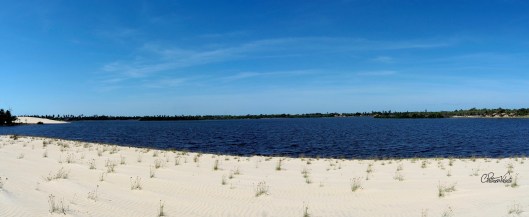
Lagoa Salgado
Lovely to see the lagoon so full, thankfully this rainy season was a good one. The whole of the North East region of Brazil has had many years of insufficient rainfall and in 2013 the lagoon was reduced to nothing more than a muddy puddle. Hard to believe that looking at it now.
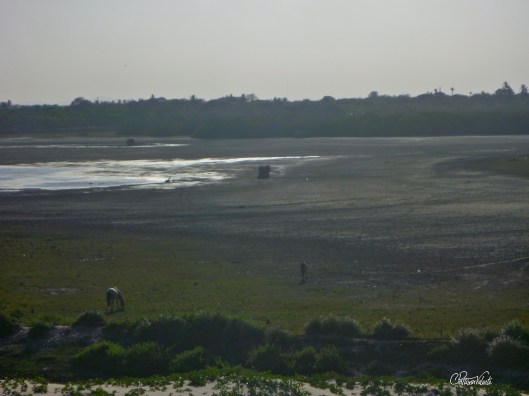
Lagoa Salgado in 2013
A few photos later and we were back in the vehicle, heading overland towards the beach. Sometimes Luiz would stop and get out but more often than not, he’d simply lean out the window to take a photo. This really was a whistle-stop tour.
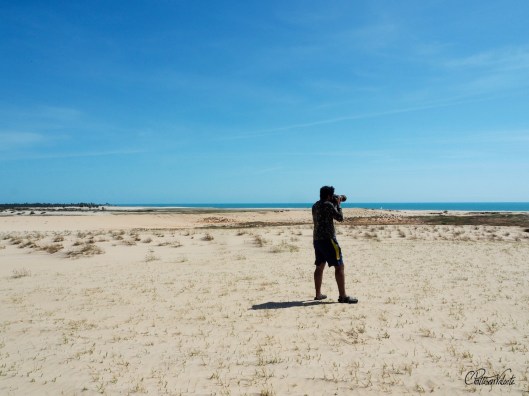
Luiz Neto, photographer.
Down on the beach, we came across a dead turtle. Sadly this wasn’t the only one we were to see over the weekend, we found another on the other side of the village. No way of knowing what they died of.
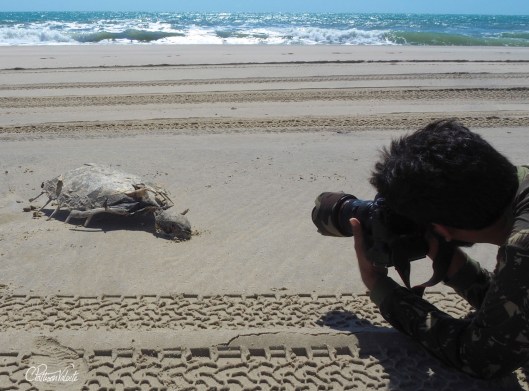
Remains of a turtle
We waited on the beach for some of the jangadas to come back. One boat had a small lobster catch so Luiz got some of his needed fishing photos.


By now the sun was high and the heat intense. We headed home to eat and wait for things to cool down a little.
Mid-afternoon, we headed out over the dunes to Lagoa Jardim, a smaller lagoon in the opposite direction from Lagoa Salgado.
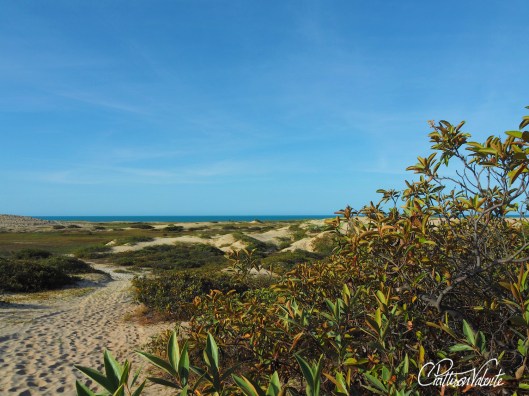
Then down to the beach and along, out of the Reserve to Sucatinga. The sandstone cliffs looked imposing as the light from the lowering sun played across them.
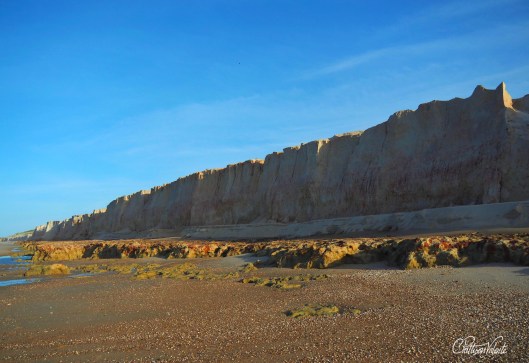
Cliffs near Sucatinga
From there, back towards the village, going up to the top of the high dune known as Morro das Cacimbas. Morro means Dune or Hill and Cacimba means something that holds water within the ground, as in a well or cavern. Morro das Cacimbas is one of my favourite places, I always feel a deep sense of peace there and the views and sunsets are spectacular.


Clicking on any photo will enlarge them all.
Sunday, 6.30am start. We drove up to where a dune is encroaching on the forest, then walked down to and through the forest that bounds the reserve. Another favourite of mine. Neu and I have often seen snakes, unusual birds and other wildlife in the forest but, today it seemed everything was being camera shy, all was still and quiet.
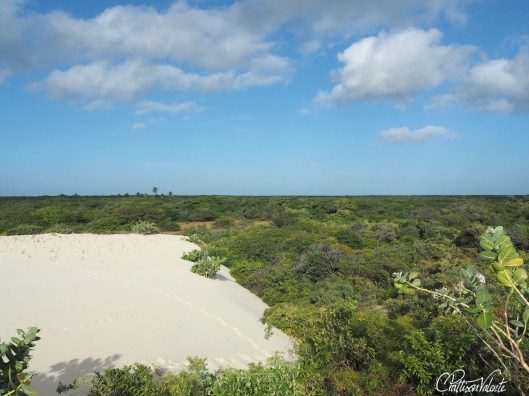
The encroaching dune
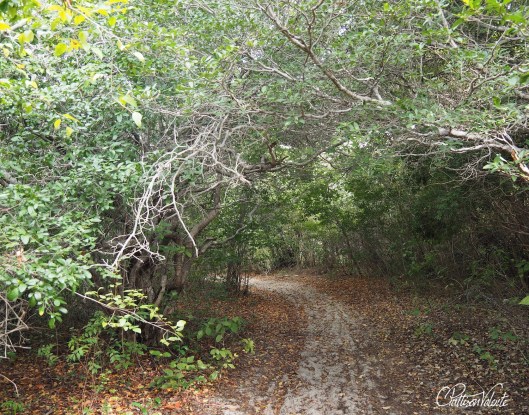
A stroll through the forest
Coming out of the forest we drove over the dunes to the last areas Luiz wanted to photograph.
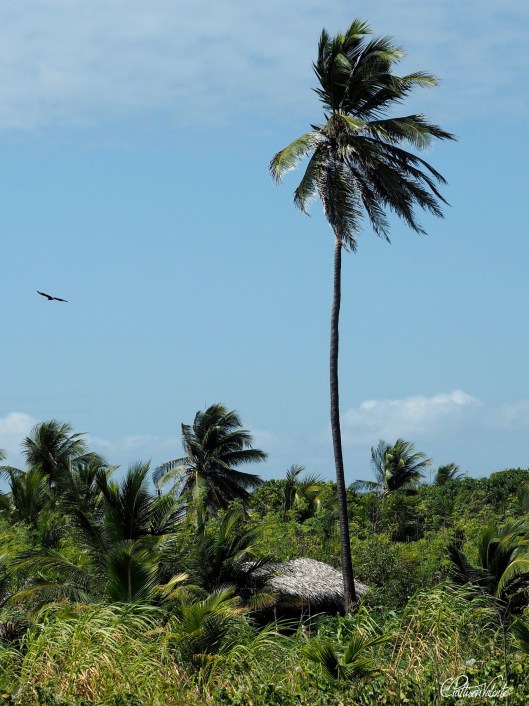
By 10am, our photographic tour of Prainha was complete, Luiz was very pleased. All that remained was to get some shots of the boats going to sea, which would have to be done at the crack of dawn on Monday morning, before he moved on to his next location.
On a previous project, Luiz had driven along and photographed the whole of the coast of Ceará, Wow! The only part he had missed out, was the stretch between Prainha and Canoa Quebrada. Now, as he’d basically finished his work in Prainha, he would take the opportunity to complete that project, by visiting Canoa in the afternoon.
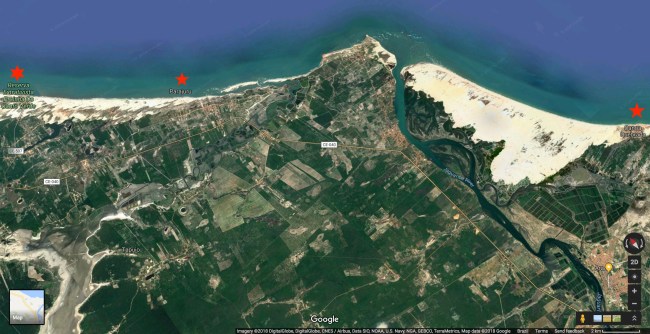
Marked by the red stars, from left to right, Prainha, Parajuru and Canoa
The main road runs parallel to the coast but inland, with no views of the sea. Luiz wanted to drive along the beach as far as possible but he knew there were two rivers to be crossed. Neu explained that at Parajuru the only way to get over the river Piranji is by going back to the main road. Further on, it is possible to drive back to the coast and cross the mouth of the bigger Jaguaribe river on the car ferry, then continue along the beach to Canoa.
My dad loved driving and on family holidays he would take us on “Magical Mystery Tours”. My mother’s face always fell when he suggested one of these trips. In those pre- Google maps days, setting off with nothing more than a compass point in mind, could result in hours of driving with querulous children and a disappointing destination.
Having arrived in the back of beyond, we’d go off down some promising looking lane, only to find ourselves in a cement works or such like. Not quite the day out we’d envisioned. However, sometimes, sometimes, we’d end up somewhere special and I have some very fond memories of those unplanned trips. As a consequence, I am rather fond of going off the beaten track on Magical Mystery tours.
I have never been to Canoa, which always surprises people here, it is one of the most well-known places on this coast but its reputation as a tourist resort doesn’t appeal to me at all. However, I was happy to take Luiz up on his offer to take us with him, more for the drive than the destination. I love driving along the coast and we should have Plenty of time to explore and photograph.
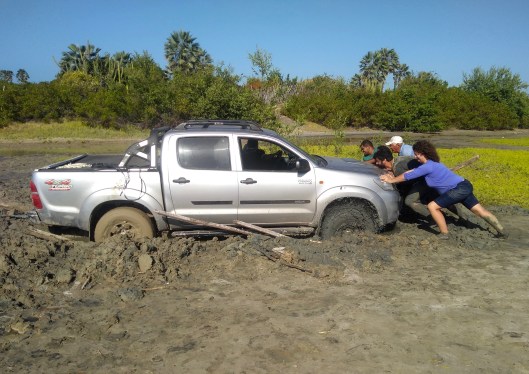
At midday, we set off for Canoa along the beach. About half an hour later we arrived in Parajuru. We passed the road that would take us up to the bridge but Luiz was keen to see how close we could get to the river. A little further on, it was obvious we’d got as far as we could go. Whilst doing a U-turn, what looked like firm ground, suddenly wasn’t. We were stuck and quickly sank up to the engine block in thick black mud. We were not going anywhere!
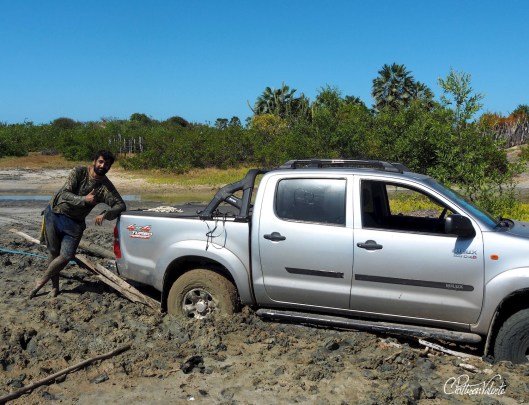
Mud, mud, glorious mud!
Of course we tried. Getting out of the car, we found some of the ground firm but another step and you’d sink up to the knees in mud. In no time at all the ground around the car turned into a slippery mess. With bare hands we dug out the wheels, only to have muddy water rush in to fill the space. We found some timber and wedged the pieces under the tires, but it was hopeless. More digging, more timber and more frustration. Luiz wouldn’t have looked out of place in a mud wrestling competition. The vehicle was, if anything, sinking further into the mud. Lucky for us, the tide wasn’t coming in.
Another car was parked nearby and the owner came and helpfully told us that lots of people get stuck where we were. Knowing it trapped others might have helped Luiz’s hurt pride but it wasn’t going to get us out. The man offered to try and pull us out, which was kind but his car was tiny, a city run around. Luiz’s vehicle was big, heavy and very stuck. The man took Neu off to see if they could find anyone who’d be able to help. Luiz and I continued digging and, as if by magic, out of nowhere more people appeared and even came with a couple of shovels too.
Finally, the cavalry arrived. Neu had managed to find some guys at a small garage and they brought a huge car jack, strapped to the back of a motorbike. First they jacked up the front of the car. Once clear of the mud we shoved as much wood under there as we could, to stop it settling back down in the mud again. Then the back of the car was jacked up and more timber put under the back wheels. It was lucky for us that the timber was there, though I felt a bit bad that if someone had purposefully collected it, they would come back to find their pile greatly reduced.
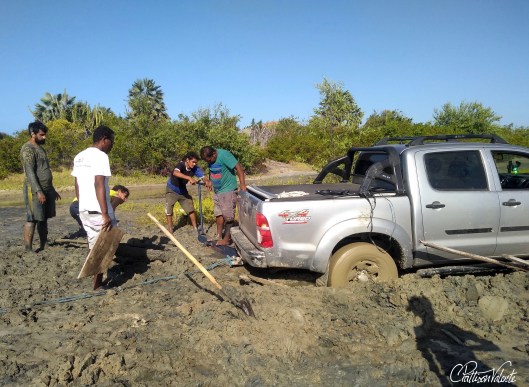
Jacking up the back
The car still refused to budge. The guys from the garage made a phone call and shortly after, reinforcements arrived in the form of a guy with a brand new off-road vehicle. The first rope snapped, the second rope snapped but finally, with a heavy duty towing belt, they were able to drag the car out. What a relief. We had been stuck there for over 3 hours!
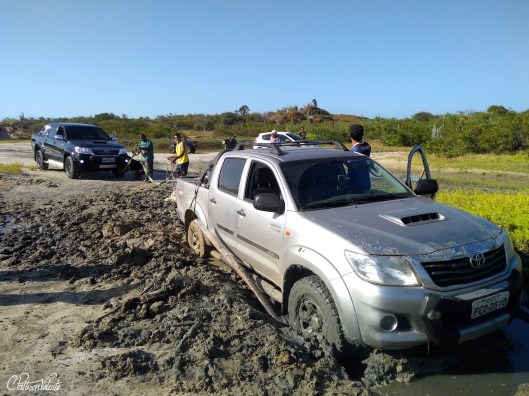
About to be pulled out
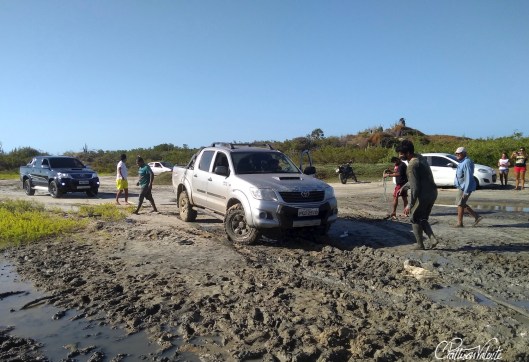
Free at last!
The guys who helped were great, hats off to them, we’d have never got out of there without them. Everyone kept their humour, no one was hurt and no damage done. Though Parajuru will no doubt, remain etched in Luiz’s mind forever!
We gratefully accepted the offer of going to the garage to wash the mud off ourselves, before heading on to Canoa. By now we had little daylight left but hoped we’d get there before sunset at 6pm and without further unexpected events.

View from the ferry crossing the river Jaguaribe.
At the river Jaguaribe, waiting for the ferry took a while and by the time we crossed the river, the sun was going down. Luiz managed to get some shots as we drove along the beach but by the time we reached Canoa, it was dark. I don’t feel I can really say I’ve been there yet.
We headed for home. Not so much of a magical mystery tour, as a lark in the mud but one that we will laugh over for many years to come.
 The English Woman's Blog